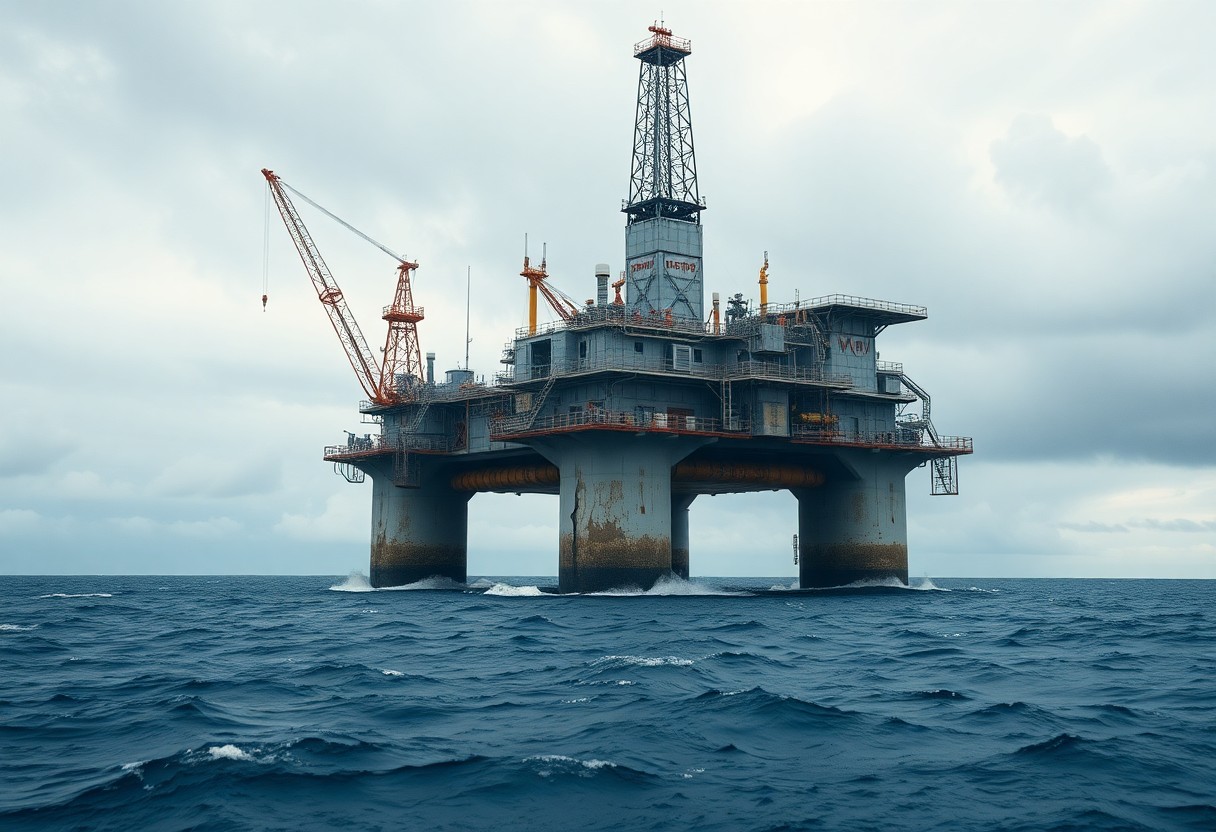
It’s important to understand the implications of EU regulations on offshore structures, as many projects face scrutiny for compliance. This blog post will explore the types of offshore structures that have encountered challenges under European Union standards, highlighting key factors that contribute to their failure. From environmental assessments to safety measures, we will explore into various cases and outline the significant lessons learned for future developments in the offshore sector.
The Backbone of Offshore Structures in EU Waters
Key Regulatory Frameworks Surrounding Offshore Developments
EU regulations governing offshore structures tend to focus on safety, environmental protection, and resource management, ensuring that developments in these waters are sustainable and responsible. The Offshore Safety Directive (2013/30/EU) is a cornerstone of this regulatory environment, aimed at preventing major accidents and minimizing their impacts. Compliance with Environmental Impact Assessment (EIA) regulations also plays a major role, with project developers required to evaluate potential ecological consequences before commencing any construction. With the European Commission’s stringent criteria, structures face rigorous assessments that could significantly affect timelines and budgets, especially if further studies or modifications are necessary to meet the requirements.
Additionally, the Marine Spatial Planning Directive calls for balanced use of marine resources while safeguarding marine ecosystems. These regulations are designed not only to harmonize approaches across member states but also to provide clear frameworks for investors and developers, ensuring transparency and accountability across projects. The collective goal of these regulatory frameworks is to harmonize development processes while facilitating growth within the renewable energy sector, particularly as Europe aims to meet its ambitious climate goals and shift towards sustainable energy sources.
Technological Innovations Empowering Offshore Construction
Advancements in technology have been pivotal in enhancing the efficiency and safety of offshore constructions, significantly streamlining the processes involved. Drones and remote-operated vehicles (ROVs) are increasingly utilized for inspections and surveys, minimizing risks and labor costs while providing high-resolution data for decision-making. Furthermore, computer-aided design (CAD) and building information modeling (BIM) tools enhance project planning and management, allowing for real-time simulations that facilitate stakeholder collaboration. Innovations in materials, such as high-performance composites and corrosion-resistant coatings, contribute to the longevity and resilience of offshore structures in harsh marine environments.
Moreover, automation and artificial intelligence (AI) are beginning to reshape construction methodologies, allowing for predictive maintenance and operational efficiencies that were previously unachievable. For instance, AI algorithms enable projects to optimize resource allocation and manage logistics effectively, often resulting in reduced downtime and cost overruns. As these technologies continue to evolve, they promise to contribute more effectively to the creation of safer, more robust offshore facilities that can withstand the scrutiny of EU regulations without compromising on performance or sustainability.
Financial Pitfalls: The Costs of Non-Compliance
Understanding Economic Implications of EU Regulations
The economic landscape for companies operating offshore within the EU is heavily tinted by regulatory compliance requirements that can significantly impact operational budgets. Non-compliance with EU regulations often leads not only to financial penalties but also to costly project delays and increased scrutiny from investor stakeholders. A case in point is the offshore wind sector, which has seen investments soar to around €150 billion annually, guided by strict adherence to environmental and safety regulations. Companies must integrate these compliance costs into their financial forecasting, as failure to do so may lead to unexpected liabilities that disrupt project timelines and budgets.
Moreover, the ramifications of not meeting compliance benchmarks can extend beyond direct financial costs. Companies that fall out of favor with regulatory agencies may also face diminished market competitiveness, as partners and clients increasingly prefer to work with firms that demonstrate reliability and accountability in regulatory matters. A thorough understanding of the economic implications of these regulations is vital for any offshore operator aiming to build sustainable operations in a challenging regulatory environment.
Penalties and Fines: A Look at Historical Precedents
Penalties for non-compliance with EU regulations have set a precedent that offshore operators cannot afford to overlook. For instance, in 2019, a major operator in the North Sea faced fines exceeding €4 million when it failed to adhere to emissions standards set forth by the European Commission. Such financial repercussions serve as stark reminders of the costly consequences of neglecting compliance, which can also include damage to reputations and future business opportunities.
Historical instances underscore a pattern in punitive measures handed down to operators. An analysis of cases from the past decade illustrates a trend toward increasing fines and penalties, often correlating with the severity and duration of the compliance failures. For example, a subsea development project in the Mediterranean faced penalties reaching upwards of €10 million due to non-compliance regarding environmental assessments. These incidents not only exemplify the potential financial impact but also send ripples through the industry, prompting companies to reevaluate their compliance strategies to mitigate risks associated with regulatory oversight.
Environmental Safeguards: The EU’s Green Mandates
Examining Biodiversity Impacts on Offshore Engineering
Offshore engineering projects often collide head-on with environmental concerns, particularly those related to biodiversity. The EU has implemented stringent regulations aimed at protecting marine ecosystems, mandating extensive environmental assessments before any offshore initiative can begin. Projects involving wind farms, oil rigs, and other structures must evaluate the potential impact on local wildlife, especially vulnerable species. For instance, studies show that the installation of offshore wind turbines can alter fish habitats and impact migratory patterns of marine birds, necessitating a careful balance between energy generation and biodiversity preservation.
Notably, the EU’s Marine Strategy Framework Directive requires member states to achieve “good environmental status” of their marine waters. This places a significant burden on offshore projects to ensure that whatever benefits they provide in terms of energy or resources do not come at an unacceptable cost to marine life. Projects that fail to adequately assess their impact on local ecosystems risk not only legal ramifications but also public backlash that can severely hinder operations.
Evaluating Carbon Footprint Reduction Initiatives
Offshore structures face increasing pressure to demonstrate sustainability, particularly concerning their carbon emissions. The EU aims to significantly reduce greenhouse gas emissions by 2030, compelling offshore ventures to evaluate and implement carbon footprint reduction strategies. For instance, the integration of renewable energy sources into traditional offshore platforms can help offset operational emissions. Projects that have successfully transitioned to hybrid designs—combining wind, solar, and wave energy—offer notable examples of this initiative in practice. The Hywind Scotland project, a floating wind farm, is a prime case, showing how offshore design can harness the power of natural resources while limiting environmental impact.
Another aspect of evaluating carbon footprint initiatives involves the implementation of advanced technologies to improve efficiency. For instance, the adoption of carbon capture and storage (CCS) systems is becoming more viable for offshore oil and gas platforms. By capturing CO2 emissions at the source and storing them under the seabed, these initiatives can significantly reduce the overall carbon output of fossil fuel extraction processes. Moreover, this technology can extend beyond traditional extraction, lending itself to biogenic or industrial CO2 sources, contributing to a more holistic approach towards climate mitigation in offshore engineering.
Structural Integrity and Safety Standards at Risk
Dissecting Structural Failures: Lasting Consequences
In examining structural failures within offshore installations, the repercussions extend far beyond immediate safety concerns. For instance, the 2010 Deepwater Horizon disaster serves as a grim reminder of what can transpire when structural integrity is compromised. This incident not only led to the loss of 11 lives but also triggered an unprecedented environmental crisis with over 4 million barrels of oil spilled into the Gulf of Mexico, resulting in devastating effects on marine biodiversity and local economies. Investigations revealed multiple flaws in design, construction, and operational protocols, emphasizing the dire need for stringent adherence to safety standards.
The aftermath of such failures affects stakeholders on multiple fronts, including investor confidence and regulatory scrutiny. Companies involved in offshore operations face heavy fines and legal battles, which can stifle further investment and innovation. Reports indicate that the fallout from major incidents can result in financial losses estimated in billions, as stakeholders seek to recoup damages and address the fallout from public relations disasters. The critical nature of maintaining structural integrity thus underlines the importance of rigorous safety practices and compliance with EU regulations.
Scrutinizing Engineering Practices Under EU Regulation
Engineering practices within offshore construction have come under intense scrutiny following a series of high-profile failures. The European Union has responded by tightening regulations, mandating a comprehensive review of engineering designs and construction methodologies. Recent amendments to regulations, such as the Offshore Safety Directive, demand operators to conduct thorough risk assessments and implement robust monitoring systems throughout the lifecycle of offshore structures. These measures aim to prevent structural failures, yet they also place a significant burden on companies to exhibit transparency and accountability.
The focus on infrastructural resiliency is underscored by the EU’s commitment to sustainability and environmental protection. The integration of advanced technologies such as real-time monitoring systems can enhance the ability of operators to identify potential risks before they result in failure. Moreover, the necessity for continual training and education for engineers ensures that they remain informed about the latest advancements in materials and techniques. Ensuring compliance with these rigorous standards not only safeguards lives but fortifies the reputation of the offshore industry as a whole.
The regulatory environment demands that engineering practices evolve constantly, necessitating a shift towards a culture of safety and responsibility. As the EU continues to refine its regulatory framework, companies will be compelled to rethink their engineering methodologies, implementing innovative solutions and enhancing their operational standards. This shift not only heightens the emphasis on safety but also challenges companies to innovate and adapt, mitigating the risks associated with offshore operations.
Unpacking the Legal Labyrinth: The Role of EU Law
The Intersection of National Laws and EU Directives
EU law operates through a complex tapestry of directives and regulations that member states must incorporate into their own legal frameworks. This creates a dual layer of regulations affecting offshore structures, where national laws can differ significantly in their interpretation and implementation of EU directives such as the Offshore Safety Directive and the Marine Strategy Framework Directive. For instance, while some countries may adopt stringent safety standards in response to EU mandates, others might allow for more lenient approaches based on their national interests or regional priorities, leading to a patchwork of legal compliance that can complicate the operational landscape for developers.
The variances in national legislation can also lead to discrepancies in enforcement and oversight practices. A notable example is the differences in how countries approach environmental assessments prior to project approval. Nations like Denmark have integrated rigorous biodiversity assessments closely aligned with EU directives, while others may bypass comprehensive evaluations altogether, endangering marine ecosystems. These contradictions often lead to increased scrutiny from EU bodies, especially when projects fail to align with the overarching goals of EU environmental and safety standards.
Legal Hurdles for Non-Compliant Offshore Projects
Non-compliance with EU directives can result in significant legal hurdles for offshore projects, including hefty fines, project delays, and the possibility of revocation of operational licenses. When an offshore structure is flagged for failing to meet EU standards, it may face immediate cessation of operations, pending a thorough reevaluation by relevant authorities. The European Court of Justice has repeatedly upheld sanctions against member states that fail to enforce compliance, illustrating the judiciary’s commitment to ensuring that EU law is upheld across all projects, regardless of financial repercussions.
Projects like the controversial Nord Stream 2 pipeline serve as prime illustrations of these legal challenges. Despite having significant backing, the project encountered numerous legal battles predominantly due to environmental compliance concerns outlined in EU regulations. Compliance challenges force operators to navigate through prolonged legal disputes, which can significantly strain budgets and timelines. As projects increasingly attract scrutiny from environmental advocacy groups and national courts, the need for thorough legal audits and comprehensive planning aligned with EU laws becomes more pressing. Developers must effectively balance national interests with stringent EU regulations to avoid undue friction that can halt operations.
Political Turmoil and Its Ripple Effect on Offshore Structures
Shifts in Government Policies: Navigating Uncertainty
Changes in government policies can dramatically affect the trajectory of offshore projects. Policies focused on environmental protection, sustainability, and compliance with new regulations can render previously approved structures obsolete or require significant modifications. For instance, recent shifts in the European Union’s climate strategy, which aims to achieve carbon neutrality by 2050, have put existing offshore oil and gas operations under the microscope, creating uncertainty and forcing operators to reconsider their strategic plans. The rising costs associated with retrofitting structures to meet new requirements can also place unwelcome financial burdens on operators, leading to delays and potential cancellations of ongoing projects.
Navigating this uncertain landscape calls for adaptability and strategic foresight. Regulatory changes often follow public sentiment and geopolitical dynamics. Operators may need to engage in continuous dialogue with governmental bodies to align their projects with evolving policies. For example, as various EU member states prioritize renewable energy investments, offshore operators may pivot to developing wind farms or other sustainable solutions, not only to comply with regulations but also to capitalize on new market opportunities.
The Role of Lobbying in Influencing EU Regulations
Lobbying plays a significant role in shaping regulatory frameworks that govern offshore structures within the EU. Industry stakeholders, including corporations and trade associations, invest heavily in lobbying efforts to ensure that their interests are represented in policy discussions. By providing data, research, and expert testimonies, these groups attempt to influence lawmakers and regulators to consider the implications of proposed changes on their operations before finalizing regulations. This back-and-forth can lead to tensions between environmental advocates and industrial stakeholders, particularly when it comes to balancing economic activity against ecological preservation.
The influence of lobbying can often be seen in the adjustments made to draft regulations based on input from affected industries. For example, certain provisions aimed at tightening emissions standards for offshore drilling were softened following extensive lobbying from oil and gas representatives, who argued that the economic repercussions could affect thousands of jobs across Europe. This dynamic highlights a complex interplay where economic priorities may clash with sustainable development goals, leaving policymakers to navigate a fine line to satisfy various stakeholders while striving for comprehensive and effective regulations.
Human Factors: The Impact of Workforce Competence
The success of offshore structures hinges not only on engineering precision and adherence to regulations but also on the competency of the workforce involved. A multitude of incidents over the years underscores the dire consequences that stem from inadequate training and expertise. In the offshore industry, where safety is paramount, skilled labor is important for navigating complex environments. Suboptimal workforce competence can result in errors that lead to disastrous outcomes for both personnel and infrastructure.
- Inconsistent training methodologies can create knowledge gaps among workers.
- Failure to address human error in risk assessments can skew safety metrics.
- High turnover rates contribute to a loss of institutional knowledge.
- Insufficient funding for training programs severely limits workforce development.
- A lack of investment in continuous professional development can render operational teams vulnerable to outdated practices.
Training Protocols for Workers in Offshore Environments
Well-defined training protocols tailored to the unique challenges of offshore operations are important for fostering a competent workforce. Extensive training programs should cover a wide range of topics, including emergency response, equipment handling, and regulations compliance. For example, specific simulations that mimic real-life scenarios can prepare workers for potential crises, significantly improving their reaction times when danger arises. Such hands-on experience complements theoretical knowledge and promotes teamwork, which is vital in high-stakes environments.
Implementing stringent assessment processes post-training is imperative to ensure that workers genuinely understand the material. Regular refresher courses can also serve as a critical component in keeping knowledge current, especially when technology and regulatory standards evolve rapidly. Engaging with workers to gain feedback on training effectiveness can lead to adaptive training improvements, helping them remain at the forefront of industry practices.
The Consequences of Inadequate Expertise
Neglecting workforce training and competency has immediate and long-term ramifications. For example, the infamous Macondo blowout in 2010 highlighted significant lapses in knowledge and preparedness within the workforce. The catastrophic results not only caused environmental devastation but also resulted in financial losses exceeding $60 billion for BP. When personnel lack the requisite skills, the potential for accidents escalates, leading to injuries, fatalities, and legal repercussions that can cripple companies.
Moreover, the repercussions extend beyond direct accidents; a workforce that is not adequately trained fosters a culture of negligence and complacency. Employees may become desensitized to risks, creating a dangerous dynamic in high-pressure environments. Data from industry reports indicate that companies with a robust training framework experience 25% fewer incidents over time. By investing in workforce competence, organizations can bolster their safety culture and enhance operational efficiency, ultimately sustaining their competitive edge in the offshore market. Thus, organizations must prioritize developing expertise to mitigate risks associated with complex offshore operations.
Future-Proofing Offshore Structures Against Regulation Changes
Strategies for Building Resilient Infrastructure
Robust infrastructure design must now consider adaptability as a fundamental principle. Employing modular construction techniques can significantly increase a structure’s resilience against evolving regulations. By designing offshore installations with interchangeable components, operators can more easily upgrade or replace parts without the need for extensive overhauls. For instance, some companies are now using prefabricated sections that can be swapped as standards change, allowing for a smoother transition to compliance with new EU directives. This approach not only reduces downtime but also minimizes the economic impact of regulatory shifts.
Emphasizing redundancy in design is also vital. Offshore structures that incorporate multiple safety and operational systems—such as alternative power sources or emergency response capabilities—are better positioned to withstand both technical failures and regulatory pressures. The integration of real-time monitoring systems allows operators to make informed decisions that maintain compliance and operational integrity, further ensuring that infrastructure remains viable under shifting legal frameworks.
Innovations on the Horizon: Adapting to Evolving Standards
Emerging technologies are reshaping how offshore structures can meet future regulations. For example, advancements in materials science are leading to the development of high-strength, corrosion-resistant materials that extend the lifespan of offshore installations. These innovations not only help meet current standards but can also adapt to stricter future codes, thus providing an edge against potential failures under EU scrutiny. Furthermore, the rise of digital twinning technology enables predictive modeling, allowing for simulation of various scenarios where regulations might change, thus better equipping structures to adapt proactively.
Additionally, alternative energy solutions, such as wind, solar, and tidal power, are being integrated into designs to not only meet current environmental regulations but also to preemptively address stricter targets for emissions reductions. Offshore structures that harness renewable energy sources will be more resilient to future changes in energy policies within the EU. Through strategic investments in these innovative technologies and practices, developers can ensure their projects are not just compliant today but are also well-suited for the regulatory landscape of tomorrow.
A Closer Look at Failed Offshore Ventures
Analyzing Notable Failures and Their Causes
Examining recent offshore ventures that succumbed to EU scrutiny reveals common themes that often precipitate failure. A prime example includes the withdrawal of several offshore wind farm projects in European waters, attributed to insufficient environmental assessments. Consider the case of an ambitious offshore oil drilling initiative in the North Sea that faced multiple legal challenges after failing to adequately address the potential impacts on local marine life and habitats. This shortfall was primarily due to a lack of comprehensive stakeholder engagement, leading to overwhelming public opposition and eventual project termination. Similarly, the regulations regarding decommissioning have frequently caught offshore operators off guard, with sudden financial liabilities derailing previously well-funded projects.
Financial instability has also been a significant factor contributing to project failure. Notably, major investments in floating solar energy platforms met with economic realities that highlighted the risk of dependence on volatile technologies without rigorous feasibility studies. Tight capital markets and fluctuating commodity prices compounded these challenges, forcing many offshore ventures to scale back or shutter entirely. These failures underscore a pressing need for an integrated risk management approach where technical feasibility matches regulatory expectations.
Lessons Learned: Transforming Failures into Success Stories
Failures in the offshore domain often serve as invaluable learning opportunities, prompting industry-wide shifts toward enhanced practices and regulations. Companies that experienced setbacks adopted more robust frameworks for environmental assessment and technological readiness, creating resilience in future projects. Engaging with stakeholders early in the planning process has emerged as a pivotal strategy, ensuring that diverse interests are considered and regulatory requirements are met. For instance, a prominent European offshore wind project that was previously stalled due to environmental concerns successfully evolved after implementing comprehensive consultation strategies and adaptive design changes.
The concepts of failure and success are often intertwined in the offshore industry. Firms that have transformed initial setbacks into recovery plans set a precedent for others. Investing in emerging technologies, such as advanced modeling systems for environmental impact predictions, illustrates this evolution. Case studies show that companies leveraging learnings from failed ventures exhibited a more progressive approach to sustainability and compliance, leading to innovative solutions that protect both the environment and their investments. As the offshore sector continues to navigate the complex landscape of EU regulations, the ability to adapt and innovate will likely determine long-term viability.
Comparative Insights: Global Perspectives on Offshore Failures
| Global Region | Approach to Offshore Structural Integrity |
|---|---|
| North America | Regulatory frameworks focus on rigorous testing, with regular inspections mandated by the Bureau of Safety and Environmental Enforcement (BSEE). An emphasis is placed on risk management practices that aim to preempt failures. |
| Asia-Pacific | Countries like Australia implement strict adherence to the International Organization for Standardization (ISO) standards, often requiring independent audits and third-party validation to ensure compliance. |
| Middle East | In regions like the Gulf Cooperation Council (GCC), stringent safety regulations are observed, yet enforcement varies significantly, often leading to inconsistencies in operational safety. |
| Africa | Developing nations face challenges due to limited resources for oversight; however, some countries are adopting frameworks based on the best practices from Europe and North America. |
How Other Regions Handle EU Scrutiny
Countries outside the European Union have taken cues from the EU’s stringent regulations, adapting their own offshore structural integrity standards. For instance, Norway’s offshore sector operates under the Petroleum Safety Authority (PSA), which emphasizes a proactive safety culture that includes mandatory reporting and thorough investigation of incidents. Australia has initiated comprehensive compliance frameworks that align closely with EU regulations while also incorporating unique local conditions and established best practices. This proactive approach helps mitigate risks, thereby fostering trust among stakeholders and ensuring environmental protection.
On the other hand, certain regions exhibit reluctance to fully embrace EU scrutiny principles. Some nations, particularly in the Gulf, prioritize rapid economic growth over comprehensive environmental oversight. This often leaves crucial environmental safeguards overlooked, raising alarms about the potential for catastrophic failures. Nevertheless, emerging regulatory awareness is prompting some countries to reform their frameworks, aiming to balance economic ambitions with sustainable practices.
Success Stories from Beyond Europe
Internationally, several offshore engineering projects serve as shining examples of successful management of structural integrity and environmental protection. In Norway, the Ormen Lange project not only maintained tight adherence to safety regulations but also implemented cutting-edge technology that significantly reduced the risk of environmental impact while maximizing efficiency. Australia’s Gorgon LNG project has also been recognized for its responsible management strategies, including rigorous monitoring systems that minimize risks associated with offshore developments. These success stories demonstrate how proactive regulatory frameworks and innovative engineering solutions can lead to both successful operations and environmental stewardship.
In addition, Canada’s offshore industry has made significant strides by integrating indigenous knowledge into their operational protocols. The use of local expertise has not only enhanced safety standards but has also led to a stronger relationship with coastal communities, ensuring that development respects both the environment and cultural heritage. As countries around the globe evaluate their approaches to offshore engineering, these positive examples underscore the importance of regulatory compliance paired with innovative practices that safeguard both structural and environmental integrity.
Public Perception: How Communities View Offshore Developments
The Rise of Environmental Activism and Its Influences
Communities increasingly express concerns over offshore developments, largely driven by a surge in environmental activism. Grassroots movements have mobilized public opinion, prompting communities to scrutinize the ecological implications of new projects. For instance, initiatives like “Protect Our Coasts” in several EU countries have raised awareness about the negative impacts on local wildlife, particularly marine biodiversity, resulting from offshore oil drilling and wind farm installations. Activists leverage social media platforms to amplify messages, rallying support for sustainable practices while pressuring policymakers to prioritize environmental safeguards.
These activist movements have significantly influenced regulatory frameworks, compelling both companies and governments to adopt more transparent practices. Campaigns advocating for stricter assessments of environmental impact assessments (EIAs) highlight the importance of community engagement before approving vast offshore projects. The discrepancy between ambitious EU climate goals and community resistance underscores a tension that developers must now navigate, making consensus-building a central element of project planning.
Balancing Local Concerns with Global Goals
While multinational corporations and governments champion offshore technologies as innovative solutions to combat climate change, local communities often voice concerns rooted in the tangible impacts on their environment and livelihoods. For example, fishing communities along the Mediterranean coast fear that offshore wind farms could disrupt traditional fishing grounds, diminishing local economies and threatening cultural heritage. The challenge lies in addressing these local worries without undermining broader objectives associated with reducing carbon footprints.
Finding a compromise requires a careful examination of both local and global implications. Effective community consultation processes can lead to the development of adaptive management strategies that integrate stakeholder feedback, allowing for modifications in project design. Increasingly, developers are investing in initiatives that support local economies, committing to job creation, and providing financial backing for community-led environmental projects. By creating avenues for dialogue, the potential exists for alignment between community aspirations and global sustainability targets.
The Ripple Effects of Non-Compliance Across Industries
Interconnectedness of Offshore Operations and Other Sectors
Offshore operations are often intricately linked with various sectors, making compliance a matter of collective significance. For instance, the oil and gas industry heavily relies on maritime supply chains, where failures in offshore structures can lead to production downtimes and costly delays. The interconnectedness extends further to the shipping and transportation sector, as oil and gas products must be transported safely to their destinations across international waters. A breach in safety standards not only jeopardizes these operations but can also have a cascading effect on the economy, impacting prices, availability, and ultimately shaking consumer confidence across multiple industries.
The financial ramifications can be profound, especially in a globalized market where industries look for efficiency. A leakage or structural failure can trigger a rapid increase in insurance premiums, affecting profit margins for companies reliant on shipping hydrocarbons. For example, the Deepwater Horizon incident in 2010 not only led to catastrophic environmental damage but also caused billions in losses across various sectors, including fishing and tourism, demonstrating how a single failure can reverberate through interconnected industries.
Long-Term Socioeconomic Implications of Structure Failures
The socioeconomic implications of offshore structure failures transcend immediate financial losses, extending into community livelihoods and national economies. When structures fail, it doesn’t only mean direct job losses; ripple effects can lead to decreased demand for local services and products, ultimately destabilizing regional economies. In communities reliant on the oil and gas sector, structured failures can lead to long-term unemployment, affecting families and local businesses trying to recover from economic downturns.
Long-term socioeconomic impacts include increased government intervention as local and national authorities step in to provide economic relief or stimulus packages. Such actions often divert funding from important developmental programs, hindering overall progress. The toll on local resources could also lead to a decline in infrastructure and public services, further exacerbating the situation. A case in point is the aftermath of the Elgin gas leak in the North Sea in 2012, where not only were immediate jobs at risk, but the longer-term future of the local economy grappling with concerns over safety and stability became a pressing issue.
These socioeconomic consequences reveal the complexity of offshore structural failures, as they affect everything from environmental stability to community well-being. The long-term effects can linger for years, leading to increased skepticism about offshore projects and greater regulatory scrutiny, which, while necessary for safety and compliance, can stifle innovation and investment in offshore developments. Ensuring that compliance is maintained is not just about meeting regulations; it’s about securing the future of communities and industries that depend on offshore operations.
Navigating the Future: Vision for Offshore Projects in Europe
The Role of Innovation in Sustainable Development
Innovation in offshore technology is paving the way for a more sustainable future, particularly within the EU’s rigorous regulatory framework. For instance, the integration of floating wind turbines is revolutionizing energy generation; with a 30% greater production capacity than traditional fixed structures, they represent a promising alternative that minimizes ecological disruption. Moreover, advancements in materials science are leading to the development of bio-based composites that can reduce the carbon footprint of structures while increasing their durability. The EU’s Horizon 2020 program has already invested significantly in these innovative technologies, supporting numerous projects aimed at reducing environmental impact while bolstering energy output.
Digitalization also plays a vital role in achieving sustainability goals. The deployment of AI-driven predictive maintenance systems can enhance safety and operational efficiency while minimizing resource waste. A report by the International Energy Agency suggests that digital solutions could reduce operational costs in offshore wind farms by as much as 20%, translating into more responsible, long-term investment decisions. By embracing these innovative solutions, European offshore projects can better align with the EU’s Green Deal objectives, ensuring a more resilient energy landscape.
Building Collaborative Frameworks for the Future
Establishing collaborative frameworks is important to navigating the complexities of offshore project implementation in Europe. Such frameworks could unite governments, private companies, environmental groups, and local communities to ensure a holistic approach to offshore development. Initiatives like the North Sea Wind Power Hub are exemplary in this regard, promoting transnational partnerships to optimize energy generation while addressing socio-environmental concerns. By fostering open dialogue and shared responsibilities, these collaborative efforts can cultivate trust and transparency, fundamentally benefitting all stakeholders involved.
Moreover, cooperation between different European nations can lead to the adoption of uniform standards, ultimately facilitating smoother project execution. The planned establishment of the European Offshore Wind Alliance aims to streamline regulatory processes, sharing best practices from various countries to provide a common ground for compliance and innovation. This approach ensures that all projects adhere to the robust safety and environmental thresholds set by the EU, enhancing overall project efficacy and public acceptance.
Summing up
Summing up, the scrutiny of offshore structures under EU regulations underscores the need for stringent compliance with safety, environmental, and operational standards. Structures that fail to meet these criteria often face withdrawal or enhancement orders, demonstrating the EU’s commitment to upholding a high level of protection for both the marine environment and public safety. As the regulatory landscape evolves, operators must remain vigilant in adapting their practices to align with these expectations, ensuring that their offshore installations do not compromise environmental integrity or human safety.
Furthermore, as the EU continues to emphasize sustainable practices and invests in technological advancements, structures that do not innovate or adhere to updated regulations may find themselves increasingly under pressure. The complex interaction between environmental legislation and offshore operations calls for a proactive approach from operators to avoid potential pitfalls. Engaging in transparent practices and embracing innovative solutions will not only facilitate compliance with EU regulations but also enhance the longevity and success of offshore ventures in a competitive market.
FAQ
Q: What are the primary factors that lead to the failure of offshore structures under EU scrutiny?
A: The failure of offshore structures under EU scrutiny often results from several key factors. These include non-compliance with safety regulations, inadequate risk assessments, and the use of outdated technology. Additionally, issues such as environmental impacts, insufficient emergency protocols, and the integrity of engineering designs are also closely examined. The EU expects offshore structures to adhere to strict sustainability and safety standards, and any deviation from these guidelines can trigger scrutiny.
Q: How does the EU assess the safety and reliability of offshore structures?
A: The EU employs a comprehensive assessment framework for evaluating the safety and reliability of offshore structures. This includes rigorous inspections and performance evaluations that look at material integrity, structural resilience, and compliance with established EU directives. Furthermore, operators are required to provide detailed reports on maintenance practices, incident history, and environmental impact assessments. The findings from these evaluations inform decisions regarding the continued operation of the structures in question.
Q: What consequences do operators face if their offshore structures fail to meet EU standards?
A: Should operators be found in violation of EU standards, they may face a range of consequences. These can include substantial fines, mandatory repairs, or even the shutdown of operations until compliance is achieved. In serious cases, legal action may follow, and operators might be held liable for environmental damage or safety incidents. The EU has a vested interest in ensuring the safety of offshore structures; therefore, attaining compliance is not just preferred but important for continued operation within EU jurisdictions.