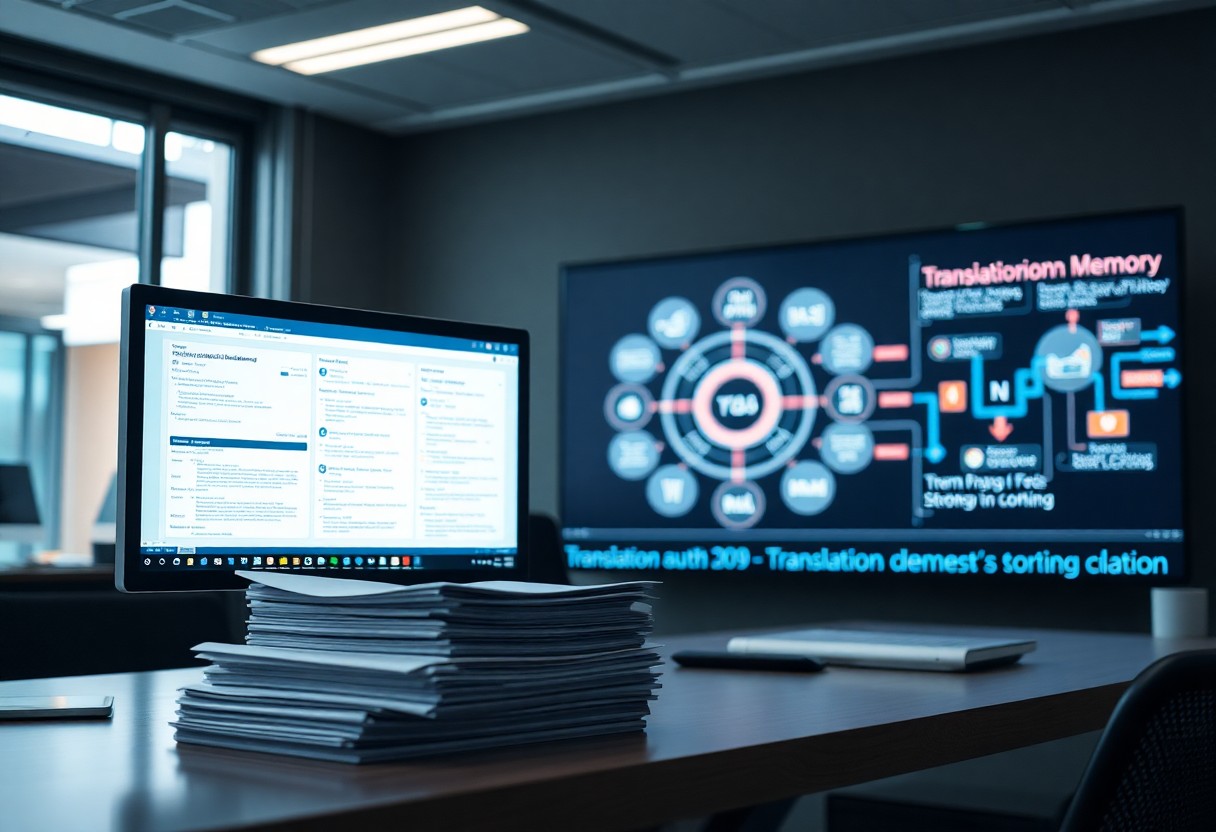
It’s important for any organization that relies on translated content to maintain a level of consistency and accuracy across its materials. One effective tool for achieving this is translation memory ™, which is a technology used in computer-assisted translation (CAT) software. Translation memory stores previously translated sentences or segments, allowing translators to reuse them in future projects. This capability not only facilitates efficiency but also plays a critical role in ensuring uniformity in language, style, and terminology across various documents.
First and foremost, translation memory helps in maintaining terminological consistency. For businesses that operate in specialized fields like legal, medical, or technical industries, precise terminology is paramount. By using TM, translators can easily access previously translated terms or phrases that have been authenticated for accuracy. This minimizes the risks of discrepancies that often arise when different translators work on various sections of the same project, leading to potential confusion for readers and clients alike.
Moreover, translation memory enhances efficiency by reducing the amount of repetitive work. When managing large volumes of text, having a database of past translations enables the translator to reference and leverage prior work instead of starting from scratch. This not only speeds up the translation process but also helps in keeping a consistent voice and tone throughout the communication. For businesses that frequently produce content, such as marketing materials or technical manuals, this efficiency allows them to respond quickly to market changes without compromising quality.
The use of TM also substantially lowers costs in the long run. Organizations often have to translate similar content across different platforms or projects. By leveraging previously translated segments, businesses can avoid unnecessary duplication of work, resulting in lower translation expenses. This is particularly useful for companies that need translations for product updates or marketing campaigns aimed at multiple regions.
Another important aspect of translation memory is its ability to support collaboration among multiple translators working on the same project. In many cases, teams of translators are involved in large multilingual projects. TM enables these translators to remain aligned on key terminologies, phrases, and stylistic choices, even if they are working on different sections or in different locations. This collaborative feature not only saves time but also enhances the overall quality of the translation.
Lastly, growing databases of translation memory can significantly enhance future translations. The more segments are stored in TM, the more accurate and complete the database becomes. This evolution means that over time, organizations can build a rich repository of resources that aids in maintaining a consistent, high-quality output in different languages, helping them solidify their global presence.
In summarization, translation memory is not just a convenience but a vital asset for organizations engaged in multilingual communication. By ensuring consistency, boosting efficiency, and ultimately reducing costs, TM stands out as a critical element in the translation process, providing businesses with the support they need to thrive in a global marketplace.