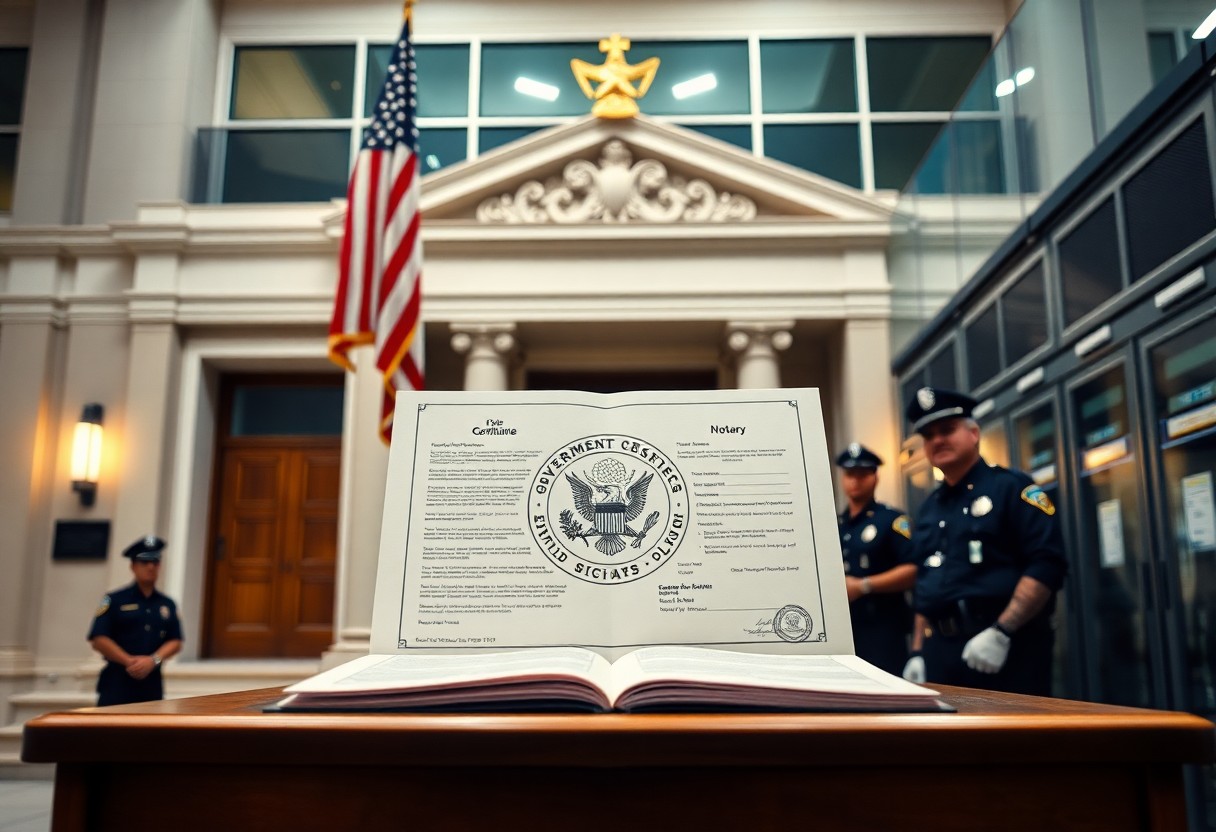
There’s a gap when disclosed data lacks verification; I insist you demand evidence and audit trails, or your transparency claim misleads stakeholders, undermining accountability and trust.
Defining the Core Paradox: Transparency versus Verification
The conceptual evolution of transparency in modern governance
Transparency has shifted from periodic reports to continuous data streams, and I have watched public expectations move toward real-time openness while oversight mechanisms lag. You can see this tension in civil movements demanding dashboards and in agencies posting raw datasets without explanation.
Historical practice treated disclosure as a completion, which I argue is insufficient when raw releases can be curated or partial. Your scrutiny only matters when released material is paired with means to test and interpret it.
Verification as the functional requirement for objective truth
Verification demands codified checks on provenance, methodology, and reproducibility, and I insist that audits and independent reprocessing are nonnegotiable parts of oversight. You need standards and tooling that convert disclosure into corroborated evidence rather than hopeful assertions.
Systems that embed cryptographic proofs, timestamped chains of custody, or randomized audits raise the barrier to manipulation, which I emphasize when advising policymakers. I view verification as the operational link that turns access into accountability.
I describe specific checks-replication, provenance metadata, and falsification tests-that reveal whether disclosures reflect reality or curated narratives, and I urge you to insist on public validation reports so claims become verifiable facts.
Why disclosure without validation creates a false sense of security
Disclosure alone can create a veneer of openness that I find dangerous because you may assume problems are addressed when no one has corroborated the underlying claims. Audits often reveal selective omissions that raw datasets conceal.
Data released without context or independent checks lets actors hide bias, omit variables, or present misleading aggregates; you then trust appearances while risks persist. I argue that verification is what converts released information into usable, challengeable evidence.
My recommendation is mandatory validation pipelines and public verification summaries so you can assess trustworthiness rather than take openness at face value.
Transparency without verification is not oversight
Visibility: The baseline requirement of information access
I treat visibility as the baseline for oversight: access to logs, datasets, and decision traces lets you observe behavior, but I require structured outputs and clear annotations so your review is meaningful.
Context sharpens what visibility provides; I insist on provenance metadata, timestamps, and schema definitions so you or your auditors can assess intent and scope without guessing.
Validity: The processes required to authenticate disclosed data
Verification requires reproducible methods and independent checks; I run deterministic replays, checksum verification, and cross-source comparisons so you can trust disclosed evidence.
Cryptography and signed logs protect integrity while third-party attestations reduce bias; I push for verifiable receipts and sample audits so your conclusions rest on authenticated facts.
Velocity: Ensuring oversight keeps pace with institutional action
Timeliness keeps oversight relevant by matching monitoring cadence to operational tempo; I configure real-time feeds and alert thresholds so you or your team can respond before actions cascade.
Automation connects detection with prescribed responses, enabling continuous enforcement while preserving human review; I design playbooks and throttled interventions so your oversight remains swift and proportionate.
Transparency without verification is not oversight
The “Data Dump” phenomenon: Hiding critical facts in plain sight
Organizations often flood public feeds with raw files so I and your scrutiny get lost in volume; the appearance of openness substitutes for clarity, and critical context disappears into unreadable spreadsheets and zipped archives.
Performative openness vs. substantive accountability
I see press statements and dashboards designed for optics, not auditability, where you get visuals but lack provenance, methodologies, or independent validation that would let me test claims.
Exposing how I verify transparency means demanding retention logs, reproducible queries, and third-party attestations so your oversight can move from rhetoric to evidence.
Distinguishing between raw data and actionable intelligence
Distinguishing raw dumps from intelligence requires me to insist on schemas, annotations, and error bounds so you can interpret patterns rather than chase noise.
Actionable checks I use include sampling notes, timestamp integrity, and documented processing steps that let your analysis be replicated and challenged by others.
Verification Methodologies in High-Stakes Environments
Forensic auditing and the trail of evidence in financial systems
Audit teams reconstruct transaction flows from raw logs and preserved records; I trace timestamps and authorization chains so you can challenge reported balances, and I insist on reproducible scripts and independent retention to preserve the evidentiary trail.
Physical inspections and the “Boots on the Ground” requirement
Inspectors verify physical assets against ledgers during scheduled and unannounced visits; I document condition, serial numbers, and custody changes so you can see whether reported inventories match reality.
Hands-on checks reveal tampering and theater: I test seals, compare hardware identifiers, and interview custodians to expose staged records that transparency alone would miss.
Digital provenance and the role of cryptographic verification
Cryptographic proofs link records to origin and time; I validate digital signatures, hashes, and secure timestamps so you can detect any retroactive alteration.
Verified provenance depends on key governance and reproducible verification: I require public audit logs, key rotation policies, and open verification tools so your chain of custody holds up in court.
The Role of Independent Third Parties
I see independent third parties as the hinge between disclosed information and enforceable oversight: I rely on their scrutiny to turn raw data into verified facts you can act on and trust.
The necessity of non-partisan regulatory bodies and ombudsmen
Regulators must be insulated from political influence so I can use their findings to challenge abuses and ensure your complaints receive impartial investigation and remedy.
Civil society and investigative journalism as external verifiers
Civil society groups and investigative journalists replicate and test official claims, giving me the evidence needed to show where transparency is performative rather than substantive.
Journalists often work with NGOs and whistleblowers to trace money, corroborate documents, and publish narratives that force your regulators and courts to respond when records alone do not.
Professional standards and the liability of the independent auditor
Auditors must follow enforceable standards so I can evaluate the credibility of their attestations and use their failures as grounds for remedial action on your behalf.
Liability rules, licensing, and sanctions let me hold auditors accountable when audits miss fraud or misstate risk, converting verification into real consequences for negligent or biased practice.
Technological Challenges to Modern Oversight
Algorithmic opacity: The “Black Box” problem in automated systems
Algorithms in automated systems often act as black boxes that I cannot inspect, leaving you unable to trace how your data produces outcomes and weakening any attempt at meaningful oversight.
Deepfakes and synthetic data: The erosion of visual evidence
Visuals produced by generative models increasingly mimic reality, and I see how deepfakes can mislead investigators, media, and you into accepting fabricated evidence as genuine.
I confront an accelerating arms race between generators and detectors, so I push for provenance standards, cryptographic watermarks, and shared forensic benchmarks to help you verify authenticity.
Encryption vs. Access: The tension between privacy and public safety
Encryption preserves the private communications I defend, yet it also creates blind spots for oversight when lawful access is required to investigate harms that affect you.
Your privacy matters to me, which is why I argue for narrow, auditable access frameworks, independent warrant oversight, and transparency reporting that balance investigative needs without undermining encryption.
Institutional Resistance and the Weaponization of Secrecy
Institutions often convert transparency into a performance: I see documents released without verifiable data, timelines delayed under procedural pretenses, and oversight rendered cosmetic while accountability erodes.
National security and trade secrets as shields against verification
Agencies and companies routinely invoke national security or trade secrets to block independent verification, and I find that your requests for data are redirected into summaries that cannot be audited.
The administrative burden of compliance as a deterrent to scrutiny
Cumbersome reporting requirements, opaque exemption processes, and fee structures make it costly for you to pursue verification, and I have seen small watchdogs shelved by paperwork alone.
Procedural complexity also allows agencies to delay disclosures indefinitely; I recommend streamlined timelines, capped fees, and triage rules so legitimate scrutiny can proceed without being strangled by red tape.
Cultural inertia and the “Need to Know” vs. “Right to Know” conflict
Culture within organizations prizes control over information, and I observe that executives default to secrecy even when disclosure would improve trust and reduce risk.
Secrecy persists because employees are rewarded for caution; I urge changing incentives, protecting whistleblowers, and giving oversight bodies real access so the “need to know” stops overriding the public’s right to know.
Geopolitical Implications: Verification on the Global Stage
I see that transparency without rigorous verification leaves states able to game disclosures, so I argue you need verified evidence to make oversight meaningful across borders.
Nuclear non-proliferation: The gold standard of intrusive verification
Inspection regimes like the IAEA have shown me I cannot accept declarations alone, and you must rely on on-site inspections, environmental sampling, and continuous monitoring to convert transparency into real assurance.
International trade: Monitoring labor and environmental standards across borders
Trade agreements that publish supplier lists leave me skeptical because you need surprise audits, worker testimony, and tamper-resistant traceability to detect violations the reports hide.
Supply-chain technologies can help me map flows, but I insist your compliance data be independently verified to prevent superficial reporting and greenwashing.
Beyond audits I push for enforceable remedies tied to verified breaches so you see penalties and remediation follow proof, not promises.
Cybersecurity treaties: The challenge of attribution and technical validation
Attribution difficulties show me I cannot accept public blame without reproducible forensic evidence, mutually agreed signals, and third-party verification to validate state-level claims.
Technical standards for logging and evidence preservation must be transparent to me and to you, including cryptographic proofs and reproducible procedures that withstand adversarial scrutiny.
Enforcing cyber agreements requires verification bodies I trust and incident-sharing protocols that let you compare independent analyses rather than rely on contested assertions.
The Ethics of Oversight: Balancing Privacy and Scrutiny
Protecting individual rights in an era of total transparency
I insist that verification regimes protect your autonomy by requiring consent, limiting data collection to what is necessary, and providing avenues for redress when verification is misapplied.
The risks of surveillance overreach under the guise of verification
You should be wary when verification tools are repurposed for continuous monitoring, because I have seen how mission creep turns targeted checks into intrusive, indefinite surveillance that chills dissent and harms marginalized groups.
When authorities invoke verification, I demand independent oversight, narrow mandates, and transparent retention policies to stop unverifiable claims from becoming permanent records used against your community.
Ethical guidelines for the handling of sensitive verified data
Another responsibility I accept is minimizing harm by encrypting verified data, restricting access to vetted personnel, and applying strict retention limits so your verified information cannot be weaponized.
Consider requiring user control over verification profiles, clear consent mechanisms, and enforceable penalties for misuse so I can preserve public confidence while you retain meaningful privacy.
Designing Future-Proof Oversight Systems
I propose architectures that preserve auditable trails while adapting to new actors and tools, so your oversight remains meaningful as capabilities evolve and evidence standards tighten.
Integrating real-time monitoring and automated verification triggers
Automated monitoring pipelines let me detect anomalies immediately, and I set verification triggers to demand cryptographic receipts or multi-source corroboration before accepting claims as proven.
Cross-sectoral collaboration: Public-private verification partnerships
Partnerships between regulators and private labs let me obtain independent attestations and shared telemetry, and you should require contractual audit rights and open verification endpoints.
Standards for data schemas, signed APIs, and neutral certification bodies give me the means to cross-check vendor assertions, so your procurement can condition deployment on third-party verification.
Moving from reactive disclosure to proactive, verifiable transparency
Shifting disclosures to include embedded proofs-signed datasets, immutable logs, and reproducible tests-allows me and your teams to validate statements without special access to proprietary systems.
Designing incentive structures that reward verifiable reporting makes me concentrate oversight on substantive harms, reducing wasted effort chasing unverifiable disclosures.
Final Words
Presently I argue that transparency without verification is not oversight; I observe that raw openness can create a veneer of accountability that hides errors and bias. I expect you to require proof, audits, and reproducible records before accepting claims, and I will apply scrutiny to ensure your trust is earned rather than assumed.
FAQ
Q: What does “Transparency without verification is not oversight” mean?
A: The phrase means that releasing information alone does not create accountability. Oversight requires independent checks that disclosed data are accurate, complete, timely, and unaltered. Examples include published reports that lack audits or algorithmic systems that present outputs without reproducible tests. True oversight pairs disclosure with verification processes that can detect errors, omissions, or manipulation and trigger corrective action.
Q: Why is verification necessary in governance, technology, and regulation?
A: Verification prevents several failure modes that transparency alone cannot address. Data can be incomplete, selectively released, or manipulated to create misleading impressions. High-stakes areas such as public procurement, financial reporting, and automated decision-making require audits, sampling, and independent testing to find errors or abuse. Verification also builds public confidence by producing evidence that stated policies and practices match real-world behavior.
Q: How can organizations implement meaningful verification to turn transparency into true oversight?
A: Organizations can operationalize verification through concrete measures: require independent audits and third-party reviews; publish machine-readable raw data together with methodology and code; maintain tamper-evident logs and provenance metadata; perform randomized spot checks and sample-based reconciliations; mandate clear corrective procedures and sanctions for false or misleading disclosures; and create accessible channels for complaints and whistleblowers. Combining these practices with public reporting of verification results and remedial actions makes transparency verifiable and oversight effective.