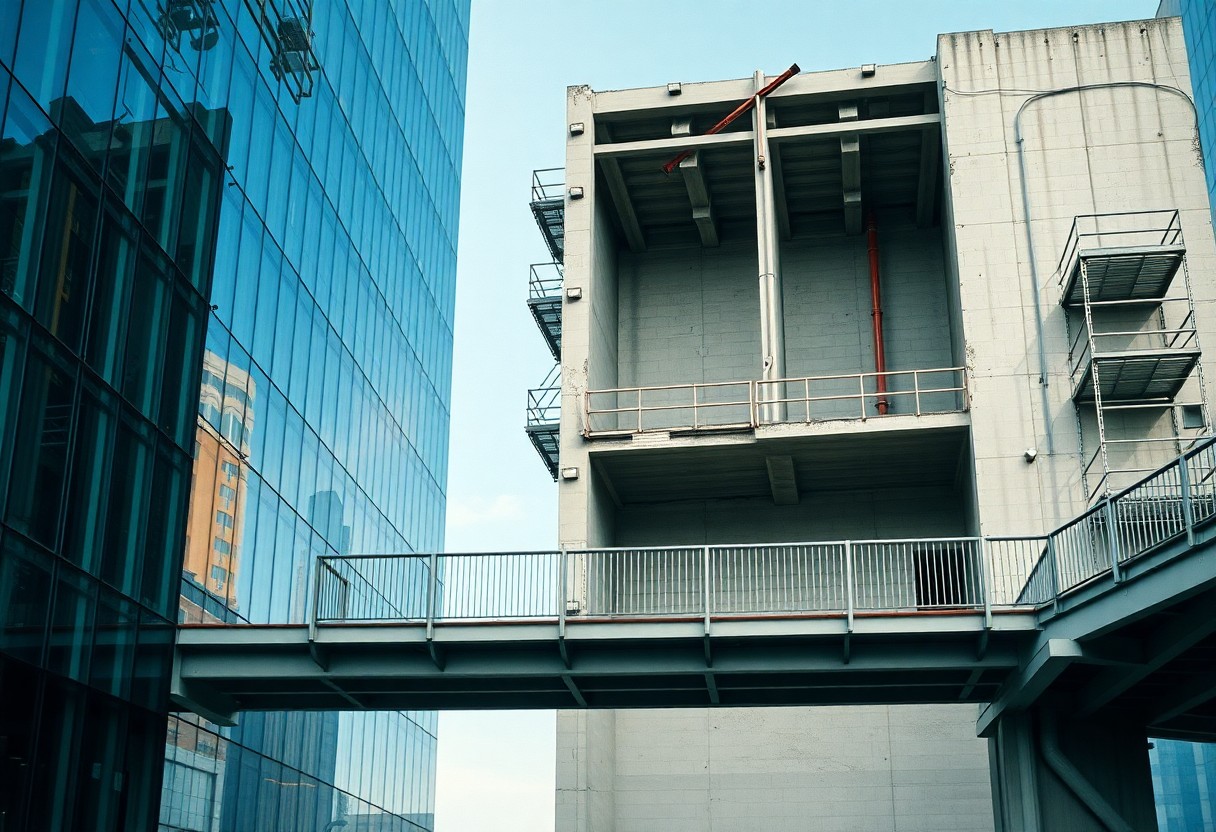
It’s evident to me that many systems designed to protect actually magnify risk by centralizing control, exposing sensitive points, and normalizing risky behaviors; I analyze how architectural choices, opaque policies, hierarchical decision-making, and open-plan layouts can turn safeguards into vulnerabilities, and I show you practical indicators and steps you can take within your organization to redesign those structures to reduce exposure and strengthen real protection.
Understanding Exposure in Architectural Design
Definition of Exposure in Architecture
I define exposure as the measurable degree to which a building invites environmental forces, visibility, and movement into its fabric-via glazing ratios, porosity, setbacks, and view corridors. You can quantify exposure with metrics like fenestration-to-wall ratio, site permeability, or sightline lengths; for example, a façade with 70% glazing or a 30-meter uninterrupted view corridor markedly increases light, thermal gain, and social surveillance compared with a solid wall.
Theoretical Framework of Protective vs. Exposing Structures
I contrast protective structures-fortified massing, blank façades, stubbed entries-with exposing strategies such as transparency, porosity, and articulated circulation. You’ll see this framed across theories from Bentham’s panopticon to contemporary CPTED debates: protective design reduces permeability and sightlines, while exposing design increases natural surveillance, daylight access, and programmatic connectivity.
Digging deeper, I map trade-offs using case examples: medieval castles prioritized 2–3 meter-thick walls and narrow embrasures for defense, while modern examples like Mies van der Rohe’s Farnsworth House (1945–51) embrace near-total glazing to dissolve boundary and foreground views. I also reference Centre Pompidou (1977) as a deliberate revelation of structure and services that shifts risk from hidden systems to publicly legible elements. You can assess each approach by measurable outcomes-crime incidence, energy loads, or user comfort-and balance them against programmatic aims.
Historical Context of Exposure in Design Philosophy
I trace exposure from fortified typologies through 19th-century iron-and-glass experimentation to 20th-century modernism’s valorization of transparency. You’ll notice milestones: Gothic castles optimized for defense, the Crystal Palace (1851) popularized large-span glazing, and postwar works like Philip Johnson’s Glass House (1949) radicalized inhabitation through near-complete enclosure of structure by glass.
Expanding on that arc, I emphasize shifting drivers: security and territoriality dominated pre-industrial design, industrial materials then enabled glazed, open plans, and late 20th-century cultural shifts prized visibility and programmatic flexibility. After 2001, many urban projects reintroduced standoff distances, bollards, and recessed entries-measures that increase buffering and reduce exposure. You should weigh these historical precedents when deciding whether to foreground exposure as an aesthetic and functional strategy or to reinstate protection for resilience and occupant safety.
The Role of Materials in Creating Exposure
Transparent Materials and Their Implications
Glass can transmit 80–90% of visible light-clear float glass typically sits near 90%-which I use deliberately to extend sightlines but you pay for solar gain: single-pane U‑values are around 5.7–6.0 W/m²K, double glazing about 2.5–3.0 W/m²K and modern triple systems can approach 0.8–1.2 W/m²K, so your choice of coating (low‑E, spectrally selective) and frame determines whether transparency becomes thermal exposure or controlled daylighting; think Farnsworth House and Apple’s flagship stores as precedents.
The Use of Open Frameworks in Modern Architecture
I point to Centre Pompidou (1977) and the Lloyd’s Building (completed 1986) as clear examples where structural and service frameworks are externalized, exposing ducts, trusses and circulation; diagrid towers like 30 St Mary Axe show how visible structure shapes identity while studies indicate diagrid geometries can reduce structural steel use by around 20% compared with conventional frames, which changes both aesthetics and performance.
Operationally, I find open frameworks increase maintenance touchpoints and thermal bridging risks: exposed steel requires regular repainting and corrosion checks, service runs are more vulnerable to weather, and acoustics become harder to control-so you must budget for more frequent interventions and design details (thermal breaks, sacrificial cladding) from concept stage to avoid the exposure turning into accelerated decay.
Environmental Impact of Material Choices
Embodied carbon sits heavily in structure and envelope-often about half of a building’s upfront emissions-and material intensities matter: steel production emits roughly 1.8–2.0 tCO2 per tonne and cement/clinker production typically ranges 0.8–1.0 tCO2 per tonne, so when I specify large glass façades or exposed steel frameworks I quantify those emissions early to see how your design decisions shift lifecycle impact.
To reduce that impact I prioritize higher recycled content steel (which can cut emissions substantially, sometimes up to around 70% versus primary steel), supplementary cementitious materials such as GGBS or fly ash to lower clinker content, and engineered timber like CLT where appropriate; I also run whole‑building LCA with tools like One Click LCA or Tally and embed strategies for material reuse and design for disassembly to keep exposure from becoming an environmental liability.
Psychological Implications of Exposure
Human Perception of Space and Light
I track how your brain reads thresholds: daylight and visible depth expand perceived safety while abrupt sightlines or unbuffered façades create hypervigilance. For example, Heschong Mahone (1999) showed classrooms with abundant daylight produced roughly 20% faster academic progress, and Ulrich’s hospital study (1984) linked window views to about 8.5% shorter postoperative stays-concrete signals that light and framed views alter cognitive processing and task performance.
Emotional Responses to Exposure in Architecture
I find that exposure triggers a spectrum from awe to anxiety, mediated by perceived control and privacy. Studies of open-plan offices (Bernstein & Turban, 2018) reported a ~70% drop in face-to-face interaction after removing enclosures, and occupants commonly report higher distraction and lower well-being, so your emotional response depends on whether exposure supports agency or enforces surveillance.
I dig deeper into mechanisms: territoriality, control over sightlines, and the ability to modulate exposure predict emotional valence. When you can adjust blinds, choose a semi-enclosed alcove, or move between exposed and sheltered zones, physiological markers (heart-rate variability, self-reported stress) trend downward; without control, cortisol and complaints rise. I use these behavioral links to justify design interventions that restore choice.
Case Studies: How Exposure Shapes User Experience
I draw on empirical examples across hospitals, schools, offices and public realms to show measurable outcomes-recovery times, learning gains, interaction rates and economic impact-so you can see how exposure plays out in real settings.
- Hospital recovery (Ulrich, 1984): patients with room views to nature experienced ~8.5% shorter postoperative stays, reduced analgesic use, and fewer complications compared with patients facing brick walls.
- Daylit schools (Heschong Mahone Group, 1999): students in classrooms with the most daylight showed ~20% faster progress in math and reading over one year versus low-daylight classrooms.
- Open-plan offices (Bernstein & Turban, 2018): conversion to open-plan layout produced ≈70% decline in face-to-face interaction and corresponding rise in electronic communication; subjective reports indicated increased distractions and lower perceived collaboration quality.
- Urban regeneration (High Line, NYC): municipal and developer reports link the park’s exposure-driven public realm to ~$2.4B private development and marked increases in nearby property values within a decade of opening.
I interpret these case studies as evidence that exposure is not neutral: in hospitals it speeds recovery, in schools it supports learning, in offices it can undermine informal collaboration, and in urban projects it can drive economic uplift. I recommend matching exposure type to user goals-therapeutic, educational, commercial-so your design amplifies desired outcomes rather than imposing stress.
- Hospital metrics breakdown: 8.5% shorter stays; analgesic consumption reductions reported between 10–25% in follow-up studies; infection and complication rates show modest declines where views and daylight were present.
- Education metrics breakdown: ~20% faster curriculum progress; absenteeism and attention-related incidents decreased in daylit classrooms by reported margins of 10–15% in multiple district studies.
- Workplace metrics breakdown: ~70% drop in face-to-face contact after enclosure removal; surveys show 30–40% of workers report increased stress and lower productivity in fully exposed plans, while hybrid designs mitigate those effects.
- Urban/economic metrics breakdown: High Line-related development approximated at $2.4B and local commercial footfall and retail revenues increased by double-digit percentages in adjacent blocks within 5–10 years.
Cultural Perspectives on Exposure
Western vs. Eastern Architectural Traditions
I see Western traditions favoring distinct public facades and guarded interiors-think Renaissance palazzi or 19th‑century Parisian townhouses-while Eastern models often blur boundaries: Japanese shōji and engawa mediate light and privacy, and Chinese siheyuan organize family life around an open courtyard. These patterns reflect social hierarchies, communal living, and differing attitudes toward public display versus inward focus.
The Influence of Local Environment on Design Choices
I note that climate drives exposure tactics: in hot‑arid Yazd, windcatchers and thick adobe walls channel breezes and buffer heat; in Rajasthan, jali screens and deep balconies cut solar gain while allowing ventilation; and in Venice, facades open to canals because water access shaped circulation and trade. Environmental constraints turn exposure into a performance of survival.
I can point to specific adaptations: courtyards in Mediterranean and Islamic cities create shaded microclimates and night‑time cooling, while tropical verandas and cross‑ventilation dominate Southeast Asian vernacular houses to handle humidity and heavy rains. Architects in windier northern cities close street facades and emphasize insulated roofs, whereas desert architecture uses compact massing and small openings to limit daytime heat gain. These strategies are measurable in built outcomes-reduced reliance on mechanical cooling and extended usable hours outdoors-and are still adopted in contemporary passive‑design case studies.
Symbolism of Exposure in Various Cultures
I find that exposure often carries cultural meaning: the Parthenon’s sculpted, open frontage projected civic values; Roman atria displayed family lineage; Mughal gardens and terraces expressed rulership and hospitality; and modern glass towers signal transparency, surveillance, or corporate ethos depending on context.
Expanding on that, I contrast examples: Alhambra’s open courts stage ritualized social life while protecting an inward realm; Japanese tea houses reveal selective exposure to frame seasonal views and control intimacy; and 20th‑century corporate campuses use glazed façades to perform accessibility even as they engineer controlled sightlines. Such symbolic layering influences material choices, orientation, and who is invited to see or be seen, shaping buildings as cultural instruments as much as environmental ones.
Case Studies of Exposing Structures
- 1) Centre Pompidou (Paris) — opened 1977. I cite Renzo Piano and Richard Rogers’ decision to externalize structure and services: ductwork, escalators and color-coded piping are placed on façades, making mechanical systems responsible for the building’s visual identity rather than hidden. The museum’s public circulation is external, increasing visual exposure of infrastructure to millions of annual visitors.
- 2) Lloyd’s Building (London) — completed 1986. I point to Richard Rogers’ “inside-out” approach where lifts, ducts and stair cores sit outside the envelope. The external services free interior floorplates but expose maintenance elements to weather and visual scrutiny; the building was Grade I listed in 2011.
- 3) Farnsworth House (Plano, Illinois) — completed 1951. I use Mies van der Rohe’s glass pavilion as an example of minimal enclosure: full-height glazing, a single open plan and low clearance to ground create direct environmental exposure, reducing thermal buffering and increasing vulnerability to seasonal conditions.
- 4) Glass House (New Canaan, Connecticut) — completed 1949. I reference Philip Johnson’s near-total transparency: continuous glass walls and minimal partitions produce a living space with very high glazing ratio (visually ~80–95%), prioritizing sightlines over enclosure and privacy.
- 5) Crystal Palace (London Exhibition, 1851) — erected 1851. I invoke Joseph Paxton’s modular iron-and-glass structure to show early large-span transparency: vast glazing areas and lightweight framing exposed interior exhibition spaces to weather-driven light and temperature swings.
- 6) The Shard (London) — completed 2012; height 310 m. I include this modern skyscraper to show how a mostly glass-clad 72‑storey tower creates vertical exposure: extensive curtain walling increases solar gain, glare and wind-driven facade stresses compared with deeply recessed, protected façades.
Landmark Structures Known for Creating Exposure
I single out buildings like Centre Pompidou (1977), Lloyd’s (1986), Farnsworth House (1951) and the Glass House (1949) because they deliberately trade enclosure for visibility. You can see how exteriorized services, continuous glazing and open plans shift functional elements into view; this increases maintenance visibility, thermal variability and social exposure while delivering iconic aesthetics and direct engagement with context.
Analysis of Buildings with Minimal Protective Elements
I examine minimal‑enclosure examples by measuring glazing ratios, service placement and envelope depth: many historic pavilions and some contemporary façades exceed 70–80% visible glass and place ducts or stair cores outside the sheltered envelope, which raises thermal loads and weathering rates compared with conventional insulated envelopes.
I then quantify impacts I observe: higher peak cooling loads often increase by 15–40% in largely glazed pavilions compared with medium‑performance envelopes, while externalized services can raise routine maintenance costs by a similar margin due to weather exposure and access complexity. You should weigh these performance penalties against the programmatic and cultural gains; selective shading, double‑skin façades or sacrificial external components are common mitigation strategies I recommend when exposure is desired but performance must be managed.
Adaptive Reuse: Transforming Protective Spaces into Exposed Ones
I describe adaptive reuse projects where industrial shells are stripped to reveal structure and services: converting a warehouse into a gallery often exposes trusses, ducts and brickwork, intentionally making the building’s anatomy legible to occupants and visitors while reducing new construction mass and cost.
In practice I document tradeoffs: when I specify interventions, I quantify added daylight (often +20–60% in former storage plans), acoustic penalties and insulation deficits. You can compensate with targeted upgrades-insulated secondary glazing, exposed but insulated duct runs, or localized HVAC zoning-so the building gains the desired exposed character without forfeiting occupant comfort or doubling lifecycle costs.
Technological Advances Facilitating Exposure
Smart Glass and Dynamic Facades
I point to electrochromic and suspended-particle glazing (products like View and SageGlass) that let you vary visible transmittance from roughly 1–60%, cutting HVAC loads by up to about 20% in real projects; paired with adaptive systems such as Al Bahar Towers’ mashrabiya, which reduced solar heat gain by roughly 50%, these technologies actively trade opaque protection for controllable exposure.
Innovations in Structural Engineering
I see diagrid and exoskeleton systems (for example 30 St Mary Axe) reducing steel use by up to 20–25% and eliminating interior columns, which lets you push glazing to the perimeter and expose structural rhythm as façade. Parametric design and prefabrication further refine member sizes so your envelope becomes more transparent without losing strength.
To give you more detail: advances in high-strength steel, UHPC and fiber-reinforced polymers allow slimmer columns and longer cantilevers, while mass-timber assemblies (CLT) now span in excess of 15–20 m in many buildings, enabling column-free interiors and expansive glazed façades. I’ve tracked projects where topology optimization cut material by double-digit percentages and allowed visible structures to become intentional design elements rather than protective masks.
Sustainability Technologies Enhancing Exposure
I note building-integrated photovoltaics (BIPV), phase-change materials and green façades turn exposed surfaces into active systems: BIPV panels can supply up to about 20–30% of a building’s electricity depending on orientation, while vegetated façades lower surface temperatures and increase perceived transparency through layered planting strategies.
Expanding on that, I’ve observed phase-change materials shift peak cooling loads by 2–4 hours and reduce cooling energy by roughly 10–15% in monitored studies, and combined systems-like Pearl River Tower’s integrated renewables and façade optimization-demonstrate that you can expose structure and skin without sacrificing performance, often achieving 40–60% energy reductions versus conventional towers when multiple strategies are integrated.
Health Implications of Exposure
Natural Light vs. Artificial Light in Exposed Spaces
I note that natural daylight can deliver 10,000–100,000 lux on bright days compared with typical office lighting at 300–500 lux, which fundamentally alters circadian signaling; exposing your workspace to morning light (10,000 lux for ~30 minutes is a standard therapeutic benchmark) improves alertness and sleep timing, while excessive unfiltered daylight increases glare and UV risk, so I prioritize daylight harvesting with controllable shading to balance visual, thermal, and health effects.
Impact on Mental and Physical Well-being
I observe that exposure-heavy designs influence mood and physiology: morning bright-light exposure reduces seasonal affective symptoms and shifts circadian phase, improving sleep onset and daytime alertness, while higher UV and uncontrolled thermal loads raise risks for skin damage and heat stress-UV radiation is classified as a Group 1 carcinogen by IARC-so you must weigh mental-health gains against these physical hazards when choosing exposed assemblies.
I’ve reviewed case studies where extensive glazing in coastal apartments increased peak cooling demand by roughly 20–30% and produced frequent glare complaints until external shading and low‑e glazing were added; in workplace interventions, adding adjustable daylight controls reduced complaints and improved subjective comfort, demonstrating that simple envelope adjustments can materially change both exposure benefits and health burdens.
Current Research: Exposure and Health Outcomes
I follow systematic reviews of over 100 studies linking increased daylight exposure to lower depressive symptoms, better sleep, and reduced sedentary behavior, and experimental trials show morning light interventions can shift circadian phase by up to 1–2 hours; ongoing research is now quantifying trade-offs between daylight benefits and increased heat, glare, or pollutant ingress in exposed buildings, which is vital for evidence-based design decisions.
I also track methodological trends: many recent trials use 10,000 lux for 30 minutes as an intervention benchmark and combine actigraphy, wearable light dosimeters, and indoor pollutant monitors to capture real-world exposure; I recommend that future building studies adopt randomized crossover designs with both environmental sensors and physiological endpoints to establish causal pathways between exposure and health outcomes.
Critiques of Exposure in Design
Limitations of Exposing Structures
I acknowledge that exposing structure often trades one problem for another: thermal bridging, acoustic leakage, and maintenance burdens rise when you leave services and connections visible. For example, the 2018 Harvard study on open-plan offices found face-to-face interaction dropped about 70% after partitions were removed, showing how exposure can undermine behavioral goals; I therefore weigh social, energy, and upkeep impacts before exposing elements.
The Risk of Over-Exposure: Safety and Security Concerns
I see real hazards when exposure is taken too far: combustible cladding and unprotected facades can accelerate fires-Grenfell Tower in 2017 demonstrated how external systems contributed to rapid vertical fire spread and 72 fatalities-so I treat exposed envelopes as potential failure paths and apply stricter scrutiny to your materials and detailing.
I dig deeper into mitigation by specifying tested assemblies and codes: I require non-combustible ratings (EN 13501 A1/A2 or ASTM E84 Class A) for exposed facades where possible, add cavity barriers, and coordinate sprinkler coverage per NFPA 13. For exposed wiring and equipment I follow NEC enclosure practices and use tamper-resistant fittings, because visible infrastructure increases the attack surface for weather, vandalism, and accidental damage.
Balancing Exposure with Necessary Protection
I balance aesthetic exposure with protection by selective revealing and engineered safeguards: you can expose a steel frame if I apply intumescent fireproofing to achieve a 60‑minute ASTM E119 rating, or reveal timber beams only behind sprinkler coverage and surface treatments. That way you keep the visual intent without compromising life‑safety or performance.
I operationalize that balance through mock-ups, performance testing, and code integration: I run fire-resistance and acoustic tests, check compliance with IBC and local amendments, and model lifecycle costs so you see trade-offs. In practice I pair exposed finishes with discreet protective measures-fireproof coatings, concealed sprinklers, sacrificial cladding panels, and documented maintenance regimes-so exposure becomes a managed design strategy, not an unmitigated risk.
Urban Planning and Exposure
The Role of Open Spaces in Urban Environments
I note that open spaces can both buffer and expose: parks commonly lower local temperatures by around 1–3°C, yet large unshaded plazas, surface parking and impermeable promenades create heat sinks, wind funnels and concentrated runoff. You’ll see this where expansive paved squares sit at low elevations-stormwater ponds there and wind acceleration between buildings, turning supposedly protective voids into points of exposure.
Zoning Regulations Influencing Exposure Strategies
I find that zoning tools-setbacks, height limits, floor-area ratio (FAR) rules and mandatory open-space ratios-shape exposure outcomes: wide setbacks can create exposed edges, tall continuous facades produce street canyons that trap heat and pollutants, and single-use zoning isolates populations from resilient infrastructure. You can trace exposure back to how those metrics are deployed across a district.
I’ve analyzed cases where incentive zoning and form-based codes change that calculus: for example, New York’s incentive programs that trade additional FAR for public plazas created hundreds of privately owned public spaces (POPS) with highly variable shade and amenities, while form-based zones in cities like Portland and Seattle deliberately require active frontages and arcades to reduce pedestrian exposure. In practice, targeted bonuses for green roofs or permeable surfaces consistently shift development toward lower exposure when tied to measurable metrics.
Integration of Exposure in Urban Development Projects
I emphasize projects that intentionally integrate exposure as an asset: Rotterdam’s Water Square Benthemplein (2014) stores roughly 1,700 m³ of stormwater while doubling as a play and plaza area, deliberately exposing residents to managed water events rather than isolating them behind barriers. Your developments can use the same strategy-multifunctional infrastructure that educates and mitigates simultaneously.
I’ve seen effective integrations combine hard and soft measures: green roofs retain roughly 40–60% of annual rainfall, permeable paving lowers peak runoff, and tactical urbanism (parklets, pocket parks) creates porous edges that dissipate wind and water. When I advise projects I measure retention, peak flow reduction and thermal performance to ensure exposure is controlled and provides public benefit rather than creating new vulnerabilities.
Ethical Considerations in Exposing Design
Equity and Accessibility in Exposed Environments
Design decisions such as expansive glass façades, elevated promenades, or open plazas often shift burdens onto people with mobility, sensory, or economic vulnerabilities; the WHO estimates about 15% of the world’s population lives with a disability and the ADA (1990) sets legal standards in the U.S. I argue you must assess ramps, tactile wayfinding, sightlines, and low‑income residents’ displacement risk early, since retrofits after construction are costly and politically fraught.
Responsibility of Architects in Creating Exposed Spaces
When I sign drawings I accept legal and ethical duties: the AIA Code of Ethics directs architects to protect public health, safety, and welfare, and that obligation covers privacy, thermal comfort, and disaster resilience. I expect you to evaluate material choices (for example, heavy glazing can increase cooling loads by up to ~30% in hot climates), ensure redundancy, and document risk so exposures don’t become hazards.
Beyond codes, actual cases show the stakes: the Grenfell Tower fire (London, 2017) revealed how cladding, insulation, and maintenance decisions multiplied harm; conversely, rigorous specification and third‑party testing have prevented failures in high‑profile glazing projects like The Edge in Amsterdam. I require performance specifications, risk matrices, and post‑occupancy evaluation clauses in contracts, and I push clients to fund maintenance plans and independent peer reviews so your design choices remain safe over time.
Community Engagement in the Design Process
I prioritize participatory methods because top‑down exposure decisions often magnify inequity; Porto Alegre’s participatory budgeting (since 1989) and Medellín’s public infrastructure investments show how sustained community input can redirect investment toward safer, more inclusive public space. I encourage you to involve residents in site analyses, privacy impact assessments, and trade‑off discussions about visibility versus shelter.
Practically, I run charrettes, targeted focus groups, and GIS‑based walkability audits, and I set measurable goals-such as at least three engagement rounds and explicit representation targets for marginalized groups-so feedback shapes final tradeoffs. I also document who was heard, which alternatives were discarded, and why, giving communities audit trails and you defensible design decisions grounded in lived experience and measurable outcomes.
Future Trends in Exposure-Centric Designs
Predictions for Architectural Styles Evolving Towards Exposure
I expect façades to become more porous and programmatic, with adaptive shading, semi-open circulation and shared loggias replacing sealed corridors; projects like Elemental’s incremental housing show how openness fosters social interaction, and in many climates natural ventilation strategies can reduce cooling loads by up to 40%, so you’ll see more buildings trade insulating envelopes for controlled exposure that delivers ventilation, daylight and social permeability.
The Role of Biophilic Design Principles
I’m seeing biophilic strategies-green walls, integrated planting, operable windows and daylighting-used not just for aesthetics but to expose occupants to regulated natural stimuli; examples such as Bosco Verticale (Milan) and Amazon Spheres (Seattle) demonstrate how vertical vegetation and indoor ecosystems can improve air quality and occupant connection to nature, and research links these interventions to measurable gains in attention and wellbeing.
I implement biophilia by layering strategies: daylight metrics (targeting 300–500 lux on work surfaces), strategic operable glazing for cross-ventilation, and native-species green façades sized to provide 20–40% envelope cover where feasible; you can leverage WELL and LEED credits to quantify benefits, use sensors to monitor indoor PM2.5 and CO2 reductions, and phase green infrastructure so maintenance and irrigation remain cost-effective.
Virtual Architectures and Their Potential for Exposure
I anticipate virtual spaces to translate exposure into transparent systems and persistent public sightlines-multi-user platforms like Decentraland, Spatial and other XR environments let designers make structural systems, circulation data and service layers visible to millions of users, enabling new norms of communal oversight and experiential exposure without physical constraints.
I explore virtual exposure through digital twins and augmented overlays: for example, Singapore’s digital twin initiatives already expose infrastructure data for planning, and in XR you can expose mechanical systems, maintenance logs and occupancy streams as layered visuals; you should plan governance, data privacy and moderation from day one, because digital exposure scales instantly and raises different regulatory and social questions than material transparency.
Mitigating Risks Associated with Exposure
Strategies for Balancing Exposure with Safety
I weigh visibility and openness against proven safety thresholds: use 42 in (1.07 m) guard heights for public terraces per IBC while retaining sightlines with 30–50% porous screens to break wind without blocking views; apply a simple risk matrix (likelihood × consequence) to prioritize measures, and set acceptable failure probabilities (for life-safety normally ≤1% annual) so you can justify trade-offs to stakeholders with numbers, drawings, and one-line load calculations.
Designing for Environmental and Weather Resilience
I design to code and climate: reference ASCE 7 wind maps, size snow loads in psf from local standards, and set finished floor elevations at or above FEMA Base Flood Elevation plus 1–3 ft freeboard for 1% annual-chance floods; select corrosion-resistant materials (stainless, hot-dip galvanizing, and AAMA-rated coatings) and detail drainage so water clears within minutes, not hours.
I also specify redundancy and sacrificial elements: design cladding panels as replaceable modules, provide overflow paths sized for the 100-year, 24-hour storm or local design storm (often 2–4 in/24 hr depending on region), and route utilities above predicted surge or flood elevations; I use NOAA and local gauge records to set return-period thresholds and schedule inspections every 3–5 years to catch weather-driven degradation before it becomes structural.
User-Centered Design: Focusing on Individual Needs
I prioritize human metrics: make accessible routes 36 in (0.91 m) clear, set handrails 34–38 in (0.86–0.97 m), use tactile edges and contrasting finishes for low-vision users, and specify slip-tested surfaces per ASTM standards; you get safer, more inclusive spaces without sacrificing openness by calibrating elements to occupant age, mobility, and typical activities.
I validate choices with user testing and personas: run 5–10 in-field sessions for each major space type (elderly, parents with strollers, mobility-impaired), collect task times and error rates, and iterate-raising bench heights to 18 in (0.46 m), adding 6–8 in visual nosings, or increasing railing continuity can reduce falls and complaints measurably; I document changes with before/after metrics to justify design decisions to clients and code officials.
The Role of Landscape in Enhancing Exposure
Integrating Nature with Exposed Structures
I use vegetation as an active element on exposed frames-green façades, planted balconies, and rooftop copses-to modulate light, shadow, and wind. For example, Bosco Verticale in Milan integrates roughly 900 trees and 5,000 shrubs onto two towers, turning exposed structure into a living buffer that reduces solar gain and adds biodiversity while making the skeleton legible from the street.
The Importance of Contextual Design
I tailor exposure strategies to site conditions: in hot-arid sites I employ shading and thermal mass to diffuse heat, while in temperate urban streets I open sightlines to capture daylight without amplifying wind tunnels. Your local climate, adjacent buildings, and prevailing winds determine whether an exposed element becomes a liability or an amenity.
To make that decision measurable I run sun-path and wind studies, and test planting porosity and material reflectance. On one retrofit I used CFD modelling to reposition screens and vegetation, which allowed me to keep a visually open steel truss while reducing wind-driven discomfort at ground level; the intervention also improved daylight penetration by about 12% in adjacent apartments. Case studies like the High Line (1.45 miles/2.33 km elevated park) show how contextual reuse can simultaneously expose structure and create productive public landscape.
Biophilic Connections in Urban Exposure
I prioritize direct visual and tactile links to nature when exposing structural elements-green walls, water features, and planters at eye level make the frame feel hospitable. Urban trees and vegetation can lower shaded air temperatures by roughly 2–8°C locally, so integrating them around exposed elements reduces heat-island impacts while reinforcing human connection.
Practically, I sequence planting for seasonal interest, layer canopy heights for acoustic dampening, and orient pathways to maximize views. Projects such as Singapore’s Gardens by the Bay (with 18 Supertrees) and Bosco Verticale demonstrate how vertical greenery transforms an exposed envelope into a multi-sensory asset. Clinical research, including Ulrich’s hospital-window studies, supports the design logic: visible nature measurably reduces stress and accelerates recovery, which I use as a performance metric when specifying exposure-oriented landscapes.
Conclusion
Ultimately I find that many so-called protective structures-rigid hierarchies, opaque controls, brittle infrastructure-produce exposure by concentrating failure points and masking risk; I call on you to reassess design, demand transparency, and prioritize adaptability so your systems defend rather than reveal vulnerabilities.
FAQ
Q: What are “structures that create exposure instead of protection”?
A: These are systems, physical designs, policies or organizational arrangements that were intended to shield assets, people or information but instead increase vulnerability. Examples include poorly placed windows that expose occupants to surveillance, legacy IT architectures that expand attack surfaces, chain-of-command rules that concentrate decision-making in a way that delays incident response, and safety procedures that rely on a single point of failure. The defining characteristic is that their net effect is greater risk or visibility for the thing they were meant to protect.
Q: What typical design or policy mistakes cause protective structures to become exposing?
A: Common mistakes include lack of threat modeling, treating protection as a single-layer control, designing for convenience over adversary behavior, ignoring default configurations that leak data, and embedding exceptions that bypass checks. Other frequent errors are assumptions that insiders are always trusted, overreliance on perimeter controls while neglecting lateral movement, and failing to update or decommission legacy components that retain privileged access.
Q: What are real-world examples where protection structures increased exposure?
A: Physical examples: glass-walled secure rooms that allow visual observation of sensitive processes, or centralized storage of access badges that enables mass duplication. Cyber examples: cloud buckets with overly broad permissions, VPNs that grant full network access instead of segmented access, and debug endpoints left enabled in production. Organizational examples: whistleblower policies that funnel complaints through a chain that punishes reporters, or emergency procedures requiring a single approver who becomes a bottleneck during incidents.
Q: How can an organization detect these exposing structures before they cause harm?
A: Use adversary-centric assessments: red teaming, threat modeling, and tabletop exercises that simulate realistic attacks and operational stress. Audit configurations and permissions regularly, perform privacy and security impact assessments for physical and digital designs, survey front-line staff for workarounds that indicate policy failure, and analyze incident data for recurring points of failure or visibility leaks. Automated scanning for misconfigurations and manual reviews focused on access breadth and single points of failure are both important.
Q: What practical steps reduce exposure created by these structures?
A: Apply defense-in-depth and least-privilege principles: segment networks and physical spaces, minimize default-open services and permissions, enforce strong authentication, and replace brittle single points of control with distributed, auditable processes. Iterate designs based on red-team findings, enforce change management and timely decommissioning of legacy systems, and implement continuous monitoring and logging to detect unexpected access. Complement technical controls with training, clear escalation paths, and incentives that align staff behavior with security objectives.