There’s a growing need for effective communication in a globalized world, making multilingual terminology alignment crucial for diverse teams. This post will guide you through the key steps to successfully conduct a terminology alignment session, ensuring clarity and consistency across languages. By focusing on best practices and proven strategies, you can enhance collaboration and streamline your terminology management process, making it easier to achieve accurate translations and meaningful communication across different linguistic contexts.
Crafting a Multilingual Agenda
Creating a comprehensive agenda is vital for a productive multilingual terminology alignment session. The agenda should outline key topics, break down complex issues, and allocate time for each language group to discuss and suggest terminology. Incorporating various input methods, such as breakout sessions or collaborative tools, can enhance engagement and facilitate a smoother flow of discussion, ultimately leading to aligned terminologies across different languages.
Defining Goals and Objectives
Clearly defined goals and objectives keep the session focused and productive. Establishing what the team aims to achieve—be it achieving consistent terminology, improving comprehension, or standardizing expressions—ensures all participants are aligned and purposeful in their contributions. By sharing these goals in advance, participants can prepare relevant data and insights to support the discussion.
Selecting Relevant Terminology
Choosing relevant terminology is a foundational step in enhancing communication effectiveness. Each language may have unique nuances, and selecting terms that resonate across linguistic boundaries minimizes misunderstandings. Focus on terminologies that reflect the project’s context while being mindful of cross-cultural implications. Engaging subject matter experts during this phase can provide additional context and clarity, ensuring that the chosen terms are not only accurate but also culturally appropriate.
During the selection of relevant terminology, consider creating a glossary that includes not just the terms but also their definitions and context of use. This glossary can serve as a reference for participants, especially in larger teams with varied language backgrounds. Collaboration tools, like shared documents, enable real-time updates, allowing members to suggest alternatives and comment on proposed terms. Involving native speakers or linguists can also mitigate challenges arising from slang or regional dialects, ensuring alignment across all languages represented in your session.
Assembling Your Expert Team
Building a proficient expert team is foundational for successful multilingual terminology alignment. This group should encompass members with diverse linguistic backgrounds and subject-matter expertise to ensure comprehensive coverage of terminology nuances across languages. Engage specialists who can not only provide translations but also contextual understanding, helping to bridge any cultural or technical gaps that could impact clarity and accuracy.
Identifying Key Stakeholders
Pinpointing necessary stakeholders is vital for streamlining communication and decision-making. Consider including representatives from different departments such as legal, marketing, and product development, as they will all have unique insights into the terminology used within their domains. Their engagement helps guarantee that the terminology aligns with the organization’s overall objectives and addresses specific needs across varying contexts.
Ensuring Linguistic Diversity
Incorporating linguistic diversity within your expert team enhances the richness of your alignment session. Invite professionals who are fluent in the target languages and represent varying dialects and regional nuances. This approach helps capture local expressions and phrasing, which may differ significantly even within the same language group, thus providing a more holistic understanding of terminology usage. With over 7,000 languages spoken worldwide, ensuring representation from multiple linguistic backgrounds not only enriches the meeting but also fosters inclusivity, making the resulting terminology more universally relatable.
Facilitating Productive Discussions
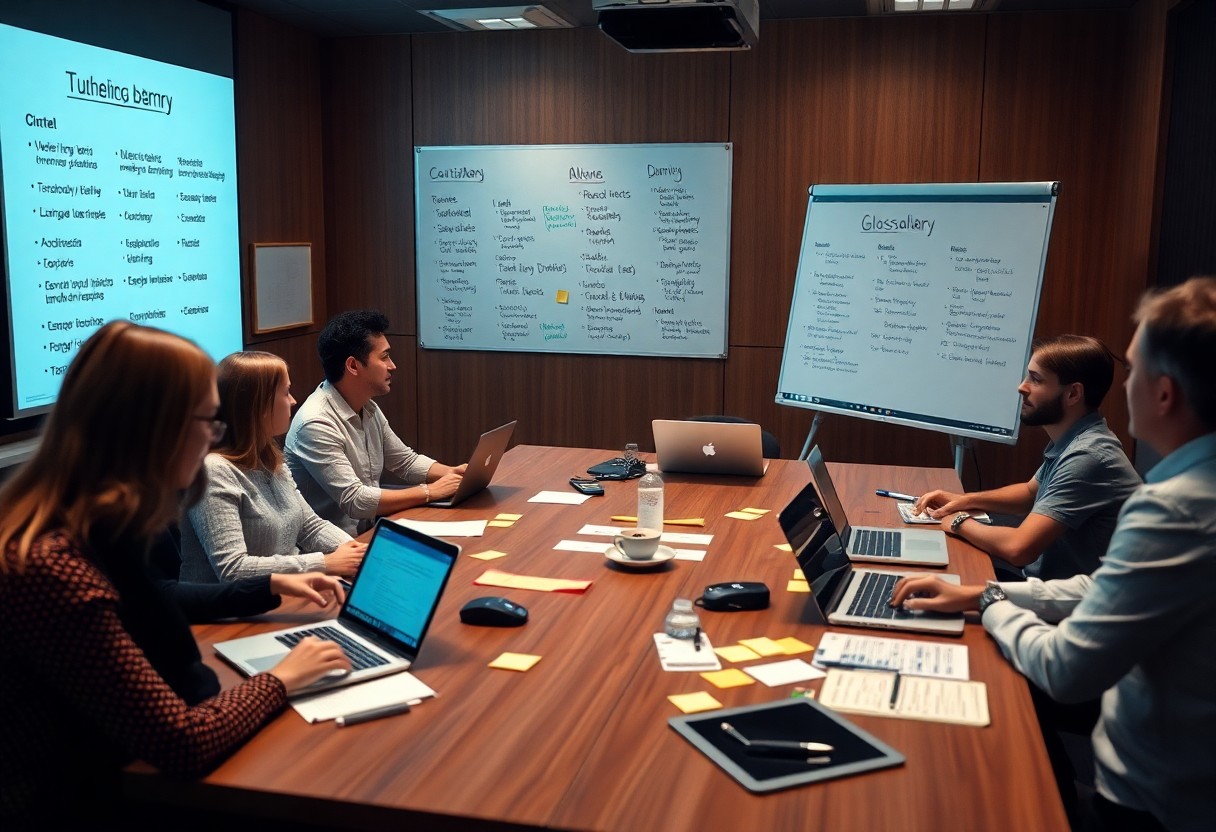
Maintaining focus and momentum during discussions is key to effective terminology alignment. Ground rules should be set to encourage clarity and respect, ensuring each participant feels valued while sharing their insights. Utilizing visual aids like whiteboards or digital collaboration tools can help illustrate points, making abstract concepts more tangible. Encourage active listening, where participants paraphrase or summarize what others have shared, reinforcing an atmosphere of collaboration and understanding.
Techniques for Effective Communication
Active listening and open-ended questions form the backbone of effective communication in a multilingual setting. Utilize techniques such as summarization to confirm understanding and encourage participants to express their viewpoints freely. Incorporating translation tools or interpreters can also minimize language barriers, allowing for smoother dialogues across diverse groups. Providing time for reflection after complex discussions can reinforce comprehension and lead to more thoughtful contributions.
Encouraging Collaborative Input
Promoting an inclusive environment fosters creativity and engagement, leading to richer discussions. Encourage participants to share not only their expertise but also personal experiences related to terminology challenges in their language contexts. For instance, sharing case studies where terminology misalignment affected product understanding can highlight the importance of collaboration. By facilitating small group conversations before a larger plenary discussion, quieter voices can emerge, adding valuable insights to the overall conversation.
Involving every participant in collaborative input goes beyond merely encouraging them to speak up; it means integrating diverse perspectives through structured approaches, like round-robin sharing or brainstorming sessions. Such strategies help ensure that no single viewpoint dominates the conversation, allowing for a more holistic approach to terminology alignment. Regularly summarizing contributions can help tie the input back to the overall objectives, reinforcing the idea that every voice contributes to a collective solution and enhancing group cohesion.
Navigating Cultural Nuances
Addressing cultural nuances can elevate the effectiveness of terminology alignment. Each language embodies specific cultural references that shape its interpretation. For instance, a term commonly understood in one culture may hold a double meaning or no significance in another. Understanding these subtleties fosters better communication and helps avoid pitfalls during discussions. Engaging local experts can provide invaluable insights, ensuring that terminology resonates appropriately across diverse audiences.
Understanding Contextual Differences
Context plays a pivotal role in how terms are perceived in different languages. A word that appears straightforward may have various interpretations influenced by regional practices, historical events, or social norms. By conducting thorough research before the session, participants can appreciate these variances, making discussions more meaningful and aligned with cultural expectations. This awareness helps prevent misunderstandings that could derail alignment efforts.
Mitigating Semantic Misinterpretations
Semantic misinterpretations can arise when terms with similar translations don’t convey the same underlying concepts. To mitigate these misunderstandings, encourage open dialogue among participants about their interpretations. Using examples from within their respective cultures allows team members to clarify potential ambiguities. Furthermore, incorporating visual aids or metaphors relevant to specific cultures can bridge gaps in understanding, leading to a more robust alignment of terminology.
Delving deeper into semantic misunderstandings, consider employing tools like bilingual glossaries or analytical frameworks that categorize terms by their cultural significance. For instance, using a visual mapping technique can illustrate how a singular concept may have distinct interpretations across different cultures. This method of displaying relationships between terms not only clarifies meanings but also facilitates a discussion of cultural associations tied to those words. Creating space for reflection on these nuances during the session is imperative, allowing members to share personal experiences or examples that further enrich the conversation.
Documenting and Finalizing Alignments
Comprehensive documentation is necessary in solidifying the outcomes of your alignment session. Every agreed-upon term, translation, and context must be recorded accurately to ensure consistency across future projects. An organized summary should reflect not only the alignments but also the reasoning behind each choice, enhancing clarity for anyone who references the document later. Finalizing the document with input from all team members fosters accountability and ensures that everyone is on the same page moving forward.
Creating a Collaborative Terminology Database
A collaborative terminology database serves as a living resource that centralizes all aligned terms, definitions, and notes. Utilizing platforms such as terminology management software can streamline this process, allowing team members to access and contribute to the database in real-time. This shared resource not only enhances consistency in language use but also promotes knowledge-sharing across diverse teams, making it easier to onboard new members and integrate additional languages in the future.
Establishing Follow-Up Protocols
Follow-up protocols are necessary for monitoring the implementation of aligned terminology and facilitating continuous improvement. Scheduling periodic reviews can help address any discrepancies or evolving needs in terminology use, creating an opportunity for team members to offer feedback and suggest adjustments. It’s beneficial to assign specific individuals or teams the responsibility of regularly updating the database and keeping team members informed about any changes to ensure ongoing alignment.
By integrating a structured follow-up approach, organizations can ensure that the terminology remains relevant and effective over time. Designating a quarterly review session allows for collaborative enhancements to the terminology database, adapting to shifts in project scope or language use. Furthermore, providing a feedback loop encourages team members to voice issues or propose new terms based on industry developments, ensuring that the terminological framework evolves with the team’s work and client needs.
Final Words
With this in mind, effectively running a multilingual terminology alignment session requires careful preparation, active engagement from all participants, and a systematic approach to discussion. Establishing clear objectives, utilizing relevant tools, and fostering an inclusive environment will not only enhance collaboration but also yield a cohesive and accurate terminology database. By prioritizing clarity and effective communication, you can ensure that the session meets its goals and contributes to a successful multilingual project.
FAQ
Q: What is a multilingual terminology alignment session, and why is it important?
A: A multilingual terminology alignment session involves gathering insights and terminological knowledge from different language speakers or experts to build a cohesive terminology database that is consistent across multiple languages. This process is important because it helps ensure that terminology is accurately represented and understood in all languages, which is vital for effective communication, localization, and translation projects. By aligning terminology, organizations can enhance clarity, reduce misinterpretations, and foster a unified approach to language use across various cultural and linguistic contexts.
Q: What steps should I take to prepare for a terminology alignment session?
A: Preparing for a terminology alignment session involves several key steps:
1. Define Objectives: Clearly outline the goals of the session to ensure participants understand what you wish to achieve.
2. Select Participants: Involve language experts, translators, and subject matter specialists from different linguistic backgrounds to provide diverse perspectives.
3. Gather Existing Materials: Collect existing terminology resources in all relevant languages, including glossaries, style guides, and reference documents.
4. Choose Tools: Decide on the tools or software you will use for collaboration and documentation, such as online platforms for real-time editing or shared spreadsheets for terminology databases.
5. Create an Agenda: Develop a structured agenda that includes discussion points, time allocations for each topic, and a timeline for the session, which will help keep participants focused and engaged.
Q: How do I facilitate discussions during the alignment session to ensure everyone contributes?
A: Effective facilitation is key to encouraging participation during a terminology alignment session. Here are several techniques:
1. Set Ground Rules: At the beginning of the session, outline rules for discussion, such as respecting differing opinions and allowing each participant to speak.
2. Use Icebreakers: Start with a brief icebreaker activity to help participants feel comfortable and create an open atmosphere for sharing ideas.
3. Encourage Equal Participation: Actively invite quieter participants to share their thoughts by specifically asking for their input or ideas on certain terms.
4. Employ Visual Aids: Utilize visual aids such as whiteboards or digital tools to illustrate concepts or terminology, fostering engagement through collaborative brainstorming.
5. Summarize and Validate: After discussions, summarize key points and validate contributions to demonstrate that every participant’s input is valued, which can motivate ongoing dialogue and collaboration.