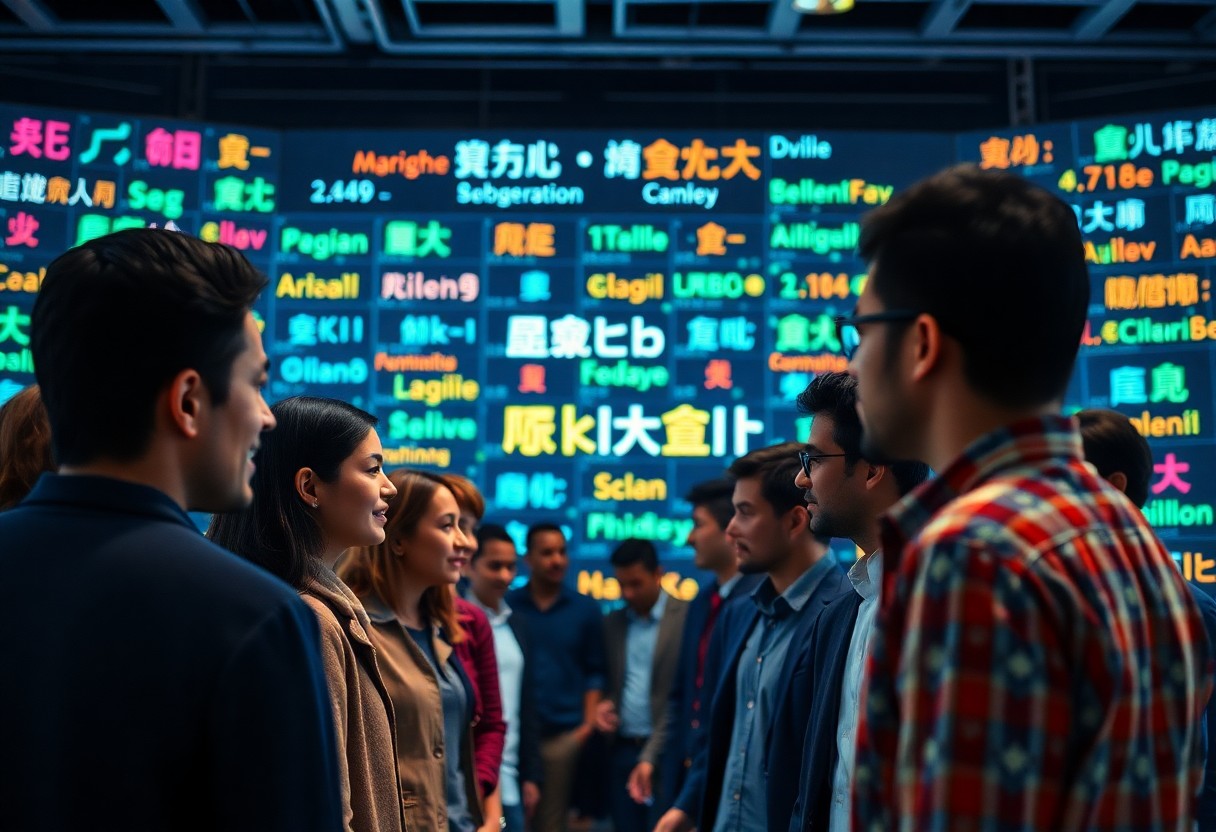
With the rapid advancement of technology, machine learning has become increasingly integral to the field of language translation. This innovative approach leverages algorithms and vast datasets to improve the accuracy and efficiency of translating text and speech across different languages. By analyzing patterns and context, machine learning models can offer more nuanced translations, ultimately enhancing communication in our globalized world. This blog post will explore the various applications of machine learning in language translation, along with challenges and future prospects in this dynamic field.
Fundamentals of Machine Learning in Translation
At the core of contemporary language translation technologies lies machine learning, a subset of artificial intelligence that equips systems with the ability to learn from data and improve over time without being explicitly programmed. By training models on extensive parallel corpora—datasets containing the same content in multiple languages—machine learning algorithms can identify patterns and relationships between linguistic elements. This approach has revolutionized how translations are executed, allowing for more nuanced interpretations that are not just literal but also contextually appropriate. Systems like Google Translate, powered by sophisticated machine learning algorithms, demonstrate remarkable efficacy in decoding and reconstructing human languages across various contexts and dialects.
Neural Networks and Deep Learning Basics
Among the myriad of machine learning models, neural networks, particularly deep learning architectures, have emerged as frontrunners in handling complex language translation tasks. Deep learning employs multiple layers of interconnected nodes, or ‘neurons,’ which process and analyze vast amounts of linguistic data. This layered approach enables neural networks to recognize intricate patterns in language, making them adept at capturing the subtleties of meaning, tone, and structure that traditional rule-based systems often struggle to handle. Consequently, deep learning has become integral in developing advanced translation engines that yield higher accuracy and fluency than their predecessors.
Natural Language Processing Components
Beside neural networks, various Natural Language Processing (NLP) components play a significant role in the overall translation process. NLP encompasses a collection of techniques that help machines understand, interpret, and generate human languages effectively. Among these components are tokenization, which breaks text into manageable units; part-of-speech tagging, which assigns grammatical categories to words; and syntactic parsing, which analyzes sentence structure. These critical steps ensure that the translation system not only converts words from one language to another but also maintains the integrity and flow of the original message.
Additionally, NLP components are imperative for enhancing the accuracy and applicability of machine translation systems. Techniques such as named entity recognition enable the model to identify and appropriately translate particular terms or names that may have specific cultural implications. Sentiment analysis further enriches this capability by assessing the emotional tone of the text, which can be pivotal for retaining the intended meaning during translation. As these NLP elements integrate with machine learning frameworks, they create a robust foundation for translating languages in a way that feels natural and relatable to the end-user.
Translation Architecture and Models
You might be aware that the landscape of language translation has evolved significantly with the introduction of advanced machine learning techniques. Central to this evolution are the various architectural models that facilitate the translation process, each designed to enhance the accuracy and fluidity of translated content. Among these, Sequence-to-Sequence (Seq2Seq) models have emerged as a cornerstone, helping to bridge the gap between source and target languages by leveraging a deep learning approach that processes sequences of words as dynamic units of meaning rather than individual tokens.
Sequence-to-Sequence Models
Before delving deeper into the intricacies of Seq2Seq models, it’s important to note how they function. These models typically consist of two main components: the encoder and the decoder. The encoder processes the input language by converting sequences of words into fixed-length representations, which capture the context of the sentence. Meanwhile, the decoder turns this representation back into a sequence of words in the target language, translating the meaning while considering grammatical and contextual nuances. This architecture has been a game-changer in producing more coherent translations compared to traditional rule-based systems.
Transformer Architecture
Around the same time that Seq2Seq models were gaining traction, the Transformer architecture was developed, which introduced a novel approach to handling language translation. This architecture abandons the sequential processing seen in traditional models, relying instead on self-attention mechanisms to detect relationships between words regardless of their position in a sentence. This allows the system to weigh the importance of various words contextually, leading to translations that are not only contextually accurate but also stylistically cohesive. The parallel processing of the Transformer significantly boosts efficiency as well, enabling quicker translations without sacrificing quality.
Consequently, the Transformer architecture has set new benchmarks in the field of natural language processing by allowing models like BERT and GPT to emerge, both of which excel in translating and comprehending human language. By utilizing attention mechanisms, Transformers manage to capture long-range dependencies that were often overlooked by traditional models, creating a more nuanced understanding of the source text. The flexibility and effectiveness of Transformer-based systems have led them to become a foundation upon which future advancements in machine translation continue to be built, making them a vital component of contemporary translation technology.
The Role of Machine Learning in Language Translation
Parallel Corpora Requirements
By their nature, machine learning models for language translation rely heavily on parallel corpora, which are collections of texts that exist in two languages, with each segment matched between the two. For effective training, these corpora must be extensive and diverse, covering various contexts, topics, and styles. This diversity ensures that the model can learn from a representative sample of language use, ultimately enabling it to translate not just common phrases, but also idiomatic expressions and specialized terminology that arise in specific fields. Moreover, the alignment of text segments should be precise, as any mismatches can lead to errors in translation that may misrepresent the original meaning.
Data Quality and Preprocessing
At the heart of effective language translation is the quality of the data used for training. High-quality parallel corpora must undergo rigorous preprocessing to ensure that they are free from noise and inconsistencies. This includes cleaning the text by removing irrelevant sections, standardizing formats, and eliminating duplicates. Additionally, linguistic preprocessing, such as tokenization and lemmatization, prepares the data by breaking it down into manageable pieces that the machine learning algorithms can efficiently process. The ultimate goal is to create a clean, uniform dataset that reflects the linguistic nuances of the source and target languages, thereby enhancing the model’s ability to produce accurate translations.
Data quality is not merely about removing errors; it also involves enriching the dataset with context and additional information, such as the intended audience or the subject matter. Including metadata can significantly boost a model’s performance by providing the algorithms with more insights into the decisions they need to make during translation. A well-structured dataset can empower machine learning models to better understand context, idiomatic expressions, and cultural subtleties, thereby facilitating more natural and fluent translations.
Performance Metrics and Evaluation
Not all language translation systems are created equal, and evaluating their effectiveness is fundamental to understanding their performance. In machine learning in language translation, various metrics have been developed to gauge translation quality and performance. These metrics help researchers and developers objectively assess their models and improve their systems continuously.
BLEU Score and Other Metrics
Metrics such as the BLEU (Bilingual Evaluation Understudy) score serve as benchmarks for comparing machine-generated translations against reference translations. BLEU operates by measuring the overlap of n‑grams between the translated text and one or more reference texts, thus providing a quantitative measure of quality. Aside from BLEU, there are additional metrics like METEOR and ROUGE, which explore different aspects of translation quality, such as synonyms and word order. These metrics collectively offer a well-rounded view of a translation system’s efficacy.
Human vs Machine Translation Assessment
Metrics may provide useful quantitative insights, but they can sometimes fall short of capturing the nuance and context of language. Human assessments are often deemed more reliable in evaluating translation quality, as human reviewers can consider aspects such as fluency, context, and cultural relevance. For this reason, a hybrid approach that utilizes both automated metrics and human evaluation can yield a comprehensive understanding of a translation’s accuracy and effectiveness.
The reliance on human assessments underscores the complexity involved in language translation. While machine learning has made significant strides, human translators excel in grasping idiomatic expressions, cultural nuances, and contextual subtleties that automated systems may overlook. Thus, leveraging both human and machine evaluations can help improve machine learning models, guiding further advancements in the language translation landscape.
Challenges in Machine Translation
For all the advancements in machine translation, numerous challenges still hinder its effectiveness and accuracy. These challenges not only present technical difficulties but also touch upon the intricacies of human language itself. Among these hurdles, cultural nuances and context play significant roles, and understanding them is important for improving machine translation outcomes.
Cultural and Contextual Nuances
Against the backdrop of globalization, language is not merely a tool for communication; it is deeply interwoven with cultural identity and social context. Each language carries its own set of idioms, proverbs, and dialects that may not have direct equivalents in other languages. This disconnect can lead to translations that miss the intended meaning or tone, resulting in a loss of cultural significance. For instance, humor, sarcasm, or emotional expressions can vary dramatically across cultures, making it difficult for machine translation algorithms to accurately interpret and convey the intended message.
Low-Resource Languages
Above the challenges faced by major languages are the complexities associated with low-resource languages, which often lack comprehensive datasets for training machine translation models. Many languages around the world have limited digital representation, leading to insufficient access to textual data. Consequently, these languages are at a disadvantage when it comes to the development and implementation of machine learning algorithms. Translations for low-resource languages fall behind, leaving speakers and communities underserved in terms of linguistic technology.
Translation quality is heavily reliant on the availability of diverse and comprehensive datasets. Low-resource languages often suffer from a scarcity of high-quality content, which impedes the ability of machine learning systems to learn and generalize effectively. As a result, the translations produced can be rudimentary or incorrect, failing to accommodate the complexities and nuances of these languages. Addressing the needs of low-resource languages calls for novel approaches to gather data, enhance training methods, and forge collaborations with native speakers to create resources that can improve machine translation comprehensively.
Applications and Implementation
To understand the transformative impact of machine learning in language translation, we must explore its applications across various sectors. Real-time translation systems have revolutionized communication, breaking down language barriers in settings such as international business, travel, and social media. These systems employ advanced algorithms that analyze text and speech in real time, allowing for instantaneous translations. This feature enables users to interact in a multi-lingual environment seamlessly, fostering a greater understanding among people from diverse linguistic backgrounds.
Real-time Translation Systems
Any conversation or exchange of information that occurs over platforms like video conferencing, chat applications, or customer service calls can benefit significantly from these real-time translation systems. By utilizing neural networks and sophisticated natural language processing techniques, these systems can provide accurate and context-aware translations, making communication smoother and more effective. Moreover, as machine learning continues to advance, the accuracy and fluency of these translation systems are expected to improve further, making them more reliable for everyday use.
Industry-specific Solutions
Implementation of machine learning in language translation doesn’t stop at general solutions; it extends into industry-specific applications that enhance operational efficiency. Industries such as healthcare, legal, and finance require translations that are not only accurate but also adhere to specific jargon and regulatory standards. Tailored solutions within these sectors ensure that all communication is precise, reducing misunderstandings that could lead to major repercussions.
For instance, in the healthcare industry, machine learning translation tools can assist medical professionals in communicating with patients who speak different languages. Such tools can facilitate the translation of medical records, consent forms, and patient instructions. This ensures that patients receive proper care, understand their health conditions, and adhere to prescribed treatments, ultimately improving health outcomes and patient satisfaction.
Summing up
Upon reflecting on the advancements in language translation, it becomes clear that machine learning has transformed the way we approach multilingual communication. Algorithms leveraging large datasets enable automatic translation systems to learn nuances, idioms, and contextual meanings of various languages, significantly improving accuracy. Through techniques such as neural networks and deep learning, these systems can analyze vast amounts of text, adapting and enhancing their performance over time. This ongoing evolution not only supports personal interactions across cultures but also fosters global business opportunities and accessibility in education and technology.
In the end, the integration of machine learning in language translation is reshaping our linguistic landscape by overcoming barriers that once seemed insurmountable. The technology continues to evolve, offering promising solutions for real-time translation and even conversational applications. As these tools become increasingly sophisticated, they are likely to play an integral role in connecting individuals and fostering understanding in an ever-diversifying world, making communication smoother and more inclusive across various languages.
FAQ
Q: How does machine learning improve the accuracy of language translation?
A: Machine learning enhances translation accuracy by utilizing algorithms that learn from vast datasets of bilingual text. These algorithms identify patterns, relationships, and contextual nuances in languages, allowing them to provide more precise translations. By implementing techniques like neural networks, particularly in neural machine translation (NMT), the system can generate translations that consider the full context of sentences rather than translating word-for-word. This leads to more coherent and contextually appropriate translations, making them sound more natural.
Q: What are some challenges that machine learning faces in language translation?
A: One of the primary challenges is dealing with idiomatic expressions, slang, and cultural references that may not have direct equivalents in other languages. Additionally, the variability in syntax and grammar across different languages poses challenges for machine learning models to understand. Low-resource languages with limited available data can also struggle to benefit from advanced machine learning techniques, leading to less accurate translations. Researchers are continually working on improving these models to better handle these nuances and broaden their applicability across various languages.
Q: How does the incorporation of user feedback influence machine learning translation models?
A: User feedback plays a significant role in refining machine learning translation models. When users provide corrections or rate translations, this information can be used to retrain the models, helping them learn from mistakes and adapt to individual language preferences. Over time, this leads to enhanced performance and greater accuracy in translations. Such feedback loops create a more responsive and personalized translation experience, enabling the system to better meet the users’ specific linguistic needs.