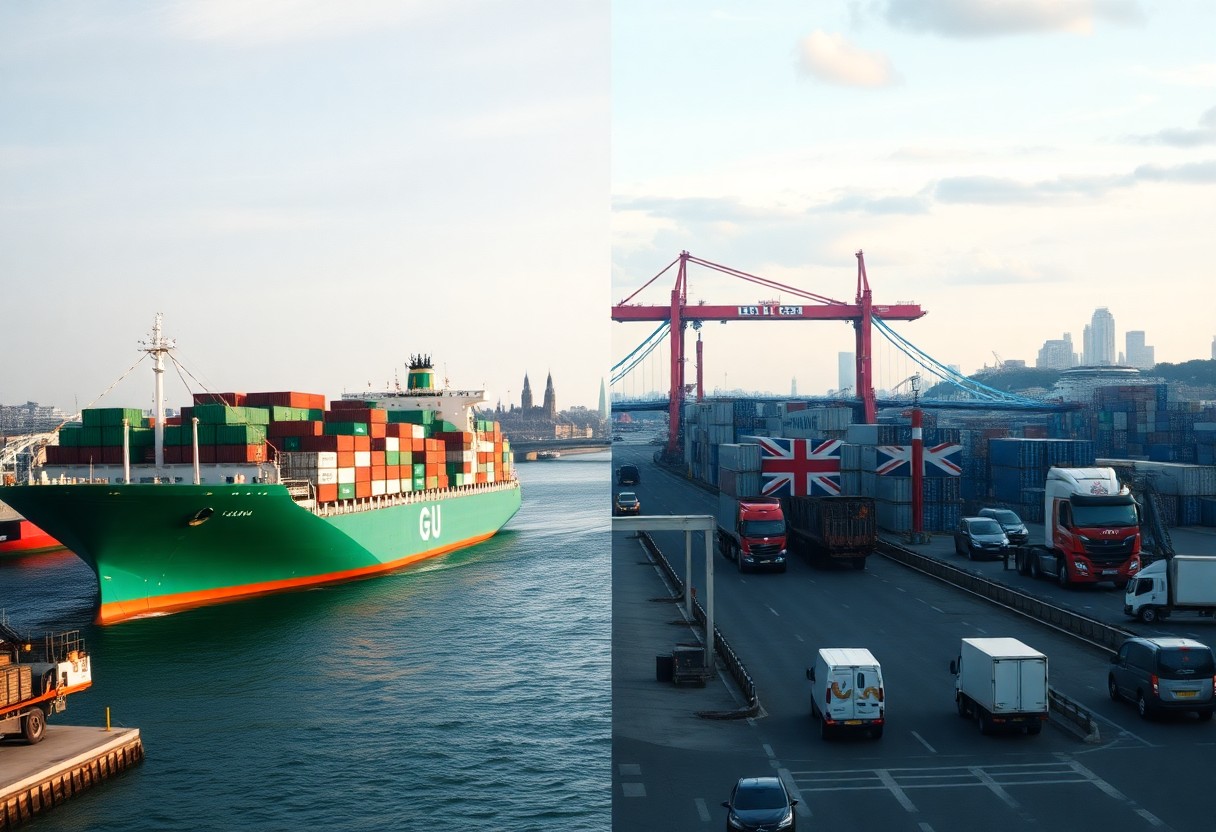
Most firms assessing entry to the EU compare Ireland and the UK on regulatory alignment, market size, language, corporate taxation, customs arrangements, market access to talent and capital. Ireland offers seamless EU law compliance and a corporate tax advantage within the single market; the UK provides scale, proximity, and a flexible regulatory environment post-Brexit. Choose based on product regulations, supply chains, and long-term market access strategy.
Key Takeaways:
-
- EU membership (Ireland) provides seamless single-market access, no customs barriers with EU partners, and EU regulatory/passporting benefits for goods and many services.
- UK offers a larger domestic market, language and legal-system advantages, and established financial/logistics hubs, but post‑Brexit requires separate EU compliance, customs formalities, and lost EU passporting.
Understanding market access is crucial for businesses evaluating Ireland and the UK.
- Choice hinges on priorities: regulatory market access and corporate tax incentives favor Ireland; scale, talent pools, and operating-cost tradeoffs may favor the UK.
Historical Context
Background of Ireland and the UK in Europe
Ireland and the UK entered the European Economic Community together in 1973, but their trajectories diverged: Ireland embraced deeper integration to secure market access and attract FDI-by the 1990s foreign investment in pharmaceuticals and tech surged-while the UK maintained a more transactional stance, negotiating opt-outs on the euro and Schengen and repeatedly balancing single-market benefits against sovereignty concerns.
Market access has been a critical factor influencing Ireland’s economic strategies.
Key Milestones in EU Membership
The evolution included the 1957 Treaty of Rome, UK accession attempts blocked by Charles de Gaulle in 1963 and 1967, the 1973 enlargement adding the UK, Ireland and Denmark, the Single European Act (1986) and Maastricht (1992) creating the EU and single market, Ireland adopting the euro in 1999/2002 while the UK stayed outside, and the 2004 eastward enlargement that reshaped EU trade patterns.
De Gaulle’s vetoes reflected Cold War-era geopolitics and delayed UK entry until Edward Heath’s government secured accession in January 1973, expanding the EEC from six to nine members. The Single Market’s 1993 completion removed many internal tariffs and regulatory barriers, directly boosting cross-border supply chains; Maastricht introduced EU citizenship and set the stage for Economic and Monetary Union, which Ireland joined but the UK negotiated out of, preserving sterling.
The Brexit Referendum and Its Implications
The June 23, 2016 referendum delivered a 52% Leave vote (72.2% turnout), triggering Article 50 in March 2017 and culminating in the UK’s exit on January 31, 2020 with the transition ending December 31, 2020; immediate effects included loss of passporting rights for UK-based financial services and new customs and regulatory checks on UK-EU trade.
Post-Brexit arrangements were formalized in the Trade and Cooperation Agreement (Dec 2020), which allows tariff-free trade for goods meeting rules of origin but introduced customs declarations, sanitary checks and regulatory divergence. The Northern Ireland Protocol kept the island of Ireland border largely open by aligning NI with some EU rules, while creating new checks between Great Britain and Northern Ireland; meanwhile, several banks and asset managers relocated legal entities or staff to Dublin, Paris and Frankfurt to preserve EU market access.
Economic Landscapes
Overview of the Irish Economy
Centered on a small, open economy of about 5 million people, Ireland relies heavily on multinational investment: tech and pharma firms like Apple, Google and Pfizer anchor manufacturing and services exports. Corporate tax at 12.5% has driven sustained FDI inflows-net FDI stock per capita among the highest in Europe-while exports often exceed GDP, reflecting contract manufacturing and profit repatriation distortions in headline figures.
The UK Economy: An Overview
By contrast, the UK is a large, diversified economy with roughly 67 million people, services accounting for around 75–80% of GDP and finance concentrated in London. Post-Brexit regulatory divergence and trade frictions altered trade patterns with the EU, yet the UK retains a deep domestic market, global financial services, major energy and pharma firms, and fiscal policy autonomy through the pound sterling.
Additional detail shows the UK’s scale advantage: nominal GDP is several times Ireland’s, enabling larger domestic demand and greater fiscal capacity. Manufacturing remains important in aerospace and automotive supply chains, while cities outside London-Manchester, Birmingham, Glasgow-drive regional growth, and inward investment often targets the UK as a European hub despite regulatory separation from the single market.
Comparative Analysis of Economic Structures
Compared side‑by‑side, Ireland’s economy is FDI‑and-export‑led with high GDP per capita and low headline corporate tax, while the UK offers broader domestic demand, deeper capital markets and diversified regional industries. Trade exposure differs: Ireland’s access to the EU single market contrasts with the UK’s independent trade policy but larger home market, influencing market-entry and supply‑chain strategies for European access.
Direct Comparison: Ireland vs United Kingdom
| Ireland | United Kingdom |
|---|---|
| Population ~5 million; small domestic market | Population ~67 million; large domestic market |
| Corporate tax 12.5%; FDI-centric | Higher headline CIT; varied incentives across regions |
| EU member; single market access | Non‑EU; independent trade policy |
| Export-driven, tech/pharma clusters | Service-led (finance), manufacturing hubs |
| High FDI stock per capita | Large inward investment but more domestically scaled firms |
Deeper analysis highlights structural trade‑offs: Ireland’s low tax and EU membership make it a gateway for companies seeking customs‑free EU access and efficient tax structures, whereas the UK’s scale supports domestic testing grounds, headquarters functions and capital raising. Supply‑chain choices hinge on whether firms prioritize single‑market frictionless access or a larger internal customer base and London’s financial services.
Structural Metrics: Sector Shares & Trade Dependence
| Ireland | United Kingdom |
|---|---|
| Services + industry; multinationals skew GDP per capita | Services ~75–80% of GDP; finance concentrated |
| Exports can exceed 100% of GDP (statistical effect) | Exports a smaller share of GDP; strong domestic demand |
| Labor costs competitive for high‑skill sectors | Wider wage distribution; higher aggregate labor pool |
| Regulatory alignment with EU rules | Regulatory divergence increasing post‑Brexit |
Trade Relationships
Trade between Ireland and the UK
Ireland and the UK remain tightly linked: roughly one-fifth of Ireland’s exports go to the UK and around 40% of goods bound for continental Europe historically used the UK landbridge, concentrating risk in ports and logistics. Agri-food, pharmaceuticals and components for manufacturing are particularly exposed; for example, Irish dairy and beef exporters still rely on fast clearance through UK ports to meet just-in-time retail and processing schedules across Europe.
Ensuring market access remains a priority for Irish and UK exporters alike.
EU Trade Regulations and Impacts
Regulatory alignment is essential for sustained market access.
Membership of the Single Market and customs union lets Irish firms move goods tariff-free across 27 markets and avoid duplicated conformity testing-CE/UKCA divergence is a tangible example, with UKCA introduced in 2021 forcing dual marking for UK/EU trade. Regulatory alignment also preserves access for services under EU rules, shielding financial firms and exporters from many non-tariff barriers that affect UK counterparts.
Market access facilitates smoother trade relationships within the EU.
Rules of origin and sanitary/phytosanitary controls still create paperwork: EU preferences require specific origin thresholds and documentation, and agri-food exporters face increased certification and testing compared with pre-Brexit routines. Firms use EU supplier networks and customs brokers to minimise delays; manufacturers often reroute logistics or adjust sourcing to retain tariff-free status under EU agreements.
The Role of Trade Agreements
EU-negotiated FTAs extend market access that Ireland inherits without separate negotiation-CETA, for example, removed about 98% of tariffs between the EU and Canada-while the UK must secure its own deals (Japan deal, CPTPP application). These agreements set tariffs, rules of origin and market access terms that materially affect supply-chain costs and destination choices for Irish exporters versus UK-based competitors.
Beyond tariffs, agreements govern services, investment protection and regulatory cooperation: the EU tends to include chapters easing mutual recognition and public procurement access, enabling Irish firms to export services and bid on projects across partners. Practically, Irish exporters exploit cumulation rules to combine EU inputs and retain originating status, simplifying compliance compared with firms operating under separate UK-only treaties.
Regulatory Frameworks
Understanding EU Regulations
The EU single market serves roughly 450 million consumers under harmonised rules such as CE marking, REACH for chemicals and centralized EMA procedures for medicines, enabling single-authorisation access across member states. Companies selling medical devices, toys or electronics rely on EU conformity assessment bodies and common standards, which simplify cross-border compliance but demand continuous monitoring of updates from Brussels and notified bodies.
Regulatory Divergence Post-Brexit
Since 2021 the UK has established parallel regimes-UKCA marking and a separate UK REACH-while Northern Ireland remains aligned with EU rules under the Protocol, creating a dual-regulatory landscape. Financial services lost EU passporting from Jan 1, 2021, forcing UK firms to seek local licences or EU subsidiaries to serve EU clients.
That divergence has tangible operational effects: manufacturers often need duplicate testing and certification to meet both CE and UKCA requirements, with GB acceptance of CE already time-limited and UK registries (like UK REACH) requiring separate substance dossiers and fees. In pharmaceuticals the split between MHRA and EMA approvals has driven firms to maintain parallel regulatory strategies, increasing submission work and, in some cases, staggered product launches. Automotive type-approval and agrifood sanitary rules similarly require either dual compliance or an EU-based foothold-hence the rise in UK companies establishing EU subsidiaries, notably in Ireland, to avoid repeated conformity assessments and border formalities.
Compliance Challenges for Businesses
Businesses now face higher administrative burdens: customs declarations, additional conformity assessments, new labelling and tracing rules, and sector-specific registrations. SMEs are particularly affected because fixed compliance costs (testing, local representatives, export health certificates) do not scale down with shipment size, eroding margins and complicating market-entry decisions.
Practical compliance steps include obtaining EORI numbers, appointing EU or UK authorised representatives, re-registering substances under UK REACH, and securing UKCA or CE certificates as appropriate. Logistics changes-such as added lead times for sanitary checks, customs holds or documentation audits-raise working-capital needs and force tighter inventory management. Many exporters mitigate risk by routing EU-bound shipments through Irish or Dutch entities, using trusted-trader schemes like AEO for reduced inspections, or consolidating regulatory functions into a single EU-based quality team to handle EMA dossiers and EU labelling updates centrally.
Financial Services and Market Access
Financial services benefit significantly from market access within the EU.
Ireland as a Financial Hub
IFSC Dublin (est. 1987) and Ireland’s status as the second-largest EU fund domicile draw asset managers and service providers; firms like AerCap and Avolon anchor a large aircraft-leasing cluster, while UCITS and AIF structures domiciled in Ireland provide seamless EU distribution. Post‑Brexit re-domiciliation trends have seen operations, compliance and fund servicing shift to Dublin to preserve passported access to EU clients.
The City of London’s Role Post-Brexit
London lost EU passporting for many wholesale services but retained dominant market infrastructure: BIS data indicates roughly 40% of global FX turnover routes through the UK, and LCH continues to clear substantial interest-rate swap volumes. Several banks moved EU-facing teams to Frankfurt, Paris and Dublin, yet capital markets, FX and wholesale trading remain heavily concentrated in the City.
Estimates suggest EU-facing relocations numbered in the low thousands, with Citi, Goldman Sachs, JPMorgan and Barclays creating EU entities to sustain client access; that fragmentation has raised compliance costs and operational complexity. Regulatory divergence is intensifying that pressure-EU proposals to restrict third-country CCP access and the UK’s distinct fintech/crypto posture mean many firms operate parallel supervision models, increasing demand for dual licences and expanded legal and compliance teams.
The Future of Financial Services in Europe
Regulatory change and technology will reconfigure market access: MiCA (adopted 2023), SFDR and the EU taxonomy force product redesign, while discussions on euro clearing and third-country equivalence affect operational footprints. CBDCs, tokenisation and expanded ESG reporting will push firms to combine scale in London with onshore EU presence to secure distribution, settlement and regulatory certainty.
In practice, expect more cross-border licensing, consolidation among custodians and fund administrators, and strategic expansions to Dublin and Luxembourg by global managers to protect EU distribution. Market structure is likely to specialise-London centring wholesale trading and FX, Dublin/Luxembourg hosting fund domiciles and servicing, and Paris/Frankfurt growing regulated banking and clearing-dependent on future equivalence decisions and interoperability agreements.
Foreign Direct Investment (FDI)
Trends in FDI in Ireland
Strong inflows persist, led by US tech and pharmaceuticals: multinationals like Google, Apple and Pfizer anchor large R&D and export operations. Ireland’s 12.5% headline corporate tax, English-speaking workforce, and EU market access continue to drive high-value greenfield projects and regional headquarters, with IDA Ireland reporting growth in high‑skill jobs despite occasional sectoral concentration risks.
Market access opportunities continue to attract global FDI.
UK FDI Trends and Their Impacts
Financial services and advanced manufacturing dominate UK inward FDI, centred on London, the Midlands and Scotland; Brexit prompted some EU‑facing projects to shift, but the UK still attracts major deals in fintech, life sciences and clean energy. The rise in corporate tax to 25% for larger profits has complicated cost calculations for global CFOs weighing UK greenfield versus acquisition strategies.
UK FDI — Key Metrics
Understanding market access dynamics is essential for strategic planning.
| Top FDI sectors | Finance, professional services, life sciences, automotive and renewables |
| Notable impacts | High-value jobs in London; regional manufacturing clusters; M&A activity offsetting slower greenfield growth |
| Recent shifts | Post‑Brexit regulatory divergence and trade frictions pushed some EU-focused operations to Ireland/EU; UK remains strong for services and scale-up capital |
Comparing the Attractiveness of Both Markets
Ireland offers direct EU single‑market access, a low 12.5% tax rate and pro‑investment IDA incentives, drawing HQs and exports-heavy operations; the UK provides a larger domestic market, deep financial capital pools and sectoral clusters in services, though higher taxes and regulatory divergence add friction for pan‑European strategies.
Comparison: Ireland vs UK FDI
| Ireland | UK |
| Corporate tax | 12.5% |
| Market access | EU single market membership |
| Leading sectors | Tech, pharma, medtech, export services |
| Labor & costs | Skilled, English‑speaking workforce; competitive wages vs larger UK labor market |
| Incentives & clusters | IDAs and export-focused clusters |
| Investment profile | Favors HQs and export-heavy multinationals |
| Corporate tax (UK) | 25% main rate; strong services capital availability |
Labor Market Dynamics
Labor Movement between Ireland and the UK
The Common Travel Area, in place since the 1920s, still lets Irish and British citizens live and work across both jurisdictions without visas; after Brexit (Jan 2021) non‑citizen EU nationals lost automatic UK work rights and must use the UK points‑based system, while Ireland continues EU free movement, driving targeted recruitment into Dublin for EU talent and sustained London‑Dublin professional flows for finance and tech.
Skills and Education Sector Comparison
OECD data show high tertiary attainment among 25–34 year‑olds in Ireland (around 55–60%) versus the UK (roughly 45–50%); Ireland has accelerated STEM and ICT graduates per capita, while the UK sustains broader vocational apprenticeship expansion and strong postgraduate research output in finance and life sciences.
Skills & Education: Ireland vs UK
Market access plays a pivotal role in educational and skill development sectors.
| Ireland | UK |
| High growth in STEM graduates; targeted Skillnet and Springboard reskilling schemes | Large apprenticeship expansion; degree apprenticeships across tech and engineering |
| Strong university‑industry ties in pharma/tech around Dublin and Cork | Deep postgraduate research capacity and catapult centres in life sciences and AI |
| Smaller domestic labour pool, higher reliance on EU migration | Broader domestic supply and more diverse regional training providers |
Public funding models differ: Ireland channels competitive grants (SFI) to fast‑scale industry partnerships, speeding graduate absorption into multinationals; the UK emphasizes regional training and employer‑led apprenticeships, producing higher numbers of vocationally trained technicians per annum and easing industry onboarding for mid‑skill roles.
Workforce Regulations and their Implications
Ireland remains subject to EU employment directives (working time, parental leave frameworks) while the UK has retained, amended, or diverged from many EU‑derived rules post‑Brexit; employers face differing redundancy, collective bargaining norms and immigration checkpoints that influence hiring costs and contract structures for cross‑border operations.
Practically, firms relocating functions post‑Brexit encountered added compliance-Irish entities must follow EU state aid and data transfer rules, and UK employers operate under the points‑based immigration and contractor tax regimes (e.g., off‑payroll rules), which together shift hiring toward permanent local contracts or third‑party employment solutions to manage mobility and regulatory risk.
Industry-Specific Analysis
The Technology Sector: Ireland vs. the UK
Ireland’s 12.5% headline corporate tax, EU HQs for Google, Meta, Apple and Microsoft, and strong talent pipelines from Trinity and UCD make Dublin a magnet for cloud, software and scale-up activity; Enterprise Ireland and IDA grant supports accelerate market entry. By contrast, the UK offers a 67‑million domestic market, deep fintech and AI clusters in London and Cambridge, and generous R&D tax reliefs, making it better for rapid customer-scale and fundraising despite post‑Brexit friction for EU sales.
The Pharmaceutical and Biotech Sector
Ireland hosts large-scale manufacturing sites for Pfizer, Johnson & Johnson and Novartis, with a dense API and sterile injectables base that supports EU distribution without customs checks. The UK remains world-class in drug discovery-Oxford, Cambridge and the NHS feed clinical trials-but post‑Brexit regulatory divergence means parallel MHRA and EMA pathways, creating extra approvals, batch‑release logistics and potential duplicative testing for firms selling to both markets.
EU rules requiring a Qualified Person (QP) for batch release and serialized packaging under the Falsified Medicines Directive mean manufacturers often keep EU QPs and release sites inside Ireland to avoid delays. Several multinationals expanded Irish capacity after 2016 to secure uninterrupted EU supply; consequently companies face weeks of additional paperwork and potential storage costs if they attempt UK‑based release for EU markets, making plant location and regulatory strategy central to commercialization timelines.
Agriculture and Food Production Concerns
Ireland’s export-oriented dairy and beef sectors-brands like Kerrygold and major commodity exporters-benefit from tariff‑free EU access and common sanitary rules. The UK offers a large proximate consumer market, but post‑Brexit SPS checks, certificates and the Northern Ireland Protocol have added friction for live animals, chilled meat and dairy, increasing lead times and compliance costs for cross‑border trade.
Perishables face greatest risk: additional veterinary certificates, export health checks and border delays can erode margins or force route changes. Some exporters now bypass GB transit, routing freight directly from Rosslare or Dublin to continental ports to protect shelf life; meanwhile the UK’s move away from CAP toward Environment Land Management schemes may shift standards and sourcing patterns, creating new market segmentation between GB and EU buyers.
The Role of Innovation and Research
Innovation Ecosystem in Ireland
Dublin and Cork host large tech and pharma hubs-Google, Apple and Pfizer operate major EMEA functions-alongside research centres such as the ADAPT and INSIGHT centres. Enterprise Ireland and Science Foundation Ireland actively fund commercialization and spinouts, while a 12.5% corporate tax rate, strong STEM graduate output and incubators in medtech and fintech sustain a steady pipeline of scaleups and inward R&D investment.
The UK’s Research Institutions and Initiatives
Oxford, Cambridge and Imperial anchor world-class research, backed by UK Research and Innovation (UKRI) which provides roughly £8 billion annually. National assets like the Catapult network, the Alan Turing Institute and the Francis Crick Institute drive commercialization, and established pharma R&D from GSK and AstraZeneca supports extensive clinical-trial infrastructure and industry-university partnerships across the Golden Triangle.
Translational strength in the UK is evident in high-impact spinouts-Oxford Nanopore and numerous biotech firms-and in regulatory and funding mechanisms that speed adoption: national R&D tax incentives, venture capital clusters in London and Cambridge, and MHRA-led adaptive trial pathways have accelerated time-to-market for diagnostics and therapies, reinforcing the UK’s appeal for deep scientific investment.
Collaborative Opportunities Post-Brexit
Bilateral frameworks and continued joint funding calls create practical ways for firms to combine UK innovation strengths with EU market access via Irish partners. Northern Ireland’s regulatory alignment with the EU offers a logistical bridge for cross-border trials, while consortia that include Irish universities can tap EU schemes alongside UK innovation grants to broaden funding and market-entry options.
Concrete examples include joint UK-Ireland research consortia in digital health and clean energy and coordinated clinical networks established during the COVID response that cut recruitment times. Companies structuring partnerships across Ireland and the UK can leverage Irish eligibility for EU programmes while accessing UK translational assets, enabling complementary funding stacks and wider commercial rollout plans.
Political Relations and Influence
Diplomatic Relations between Ireland and the UK
Centuries-old ties are formalised through the Good Friday Agreement (1998) and the Common Travel Area (since 1923), supporting intensive diplomatic contact on cross-border policing, fisheries and trade. Dublin and London coordinated closely during Brexit negotiations, using joint committees to manage Northern Ireland arrangements; regular ministerial meetings and special envoys continue to resolve protocol disputes and maintain uninterrupted movement for people and goods across the island.
The Role of Politics in Market Access
Political choices determine regulatory alignment and tariff exposure: Ireland’s EU membership grants access to about 450 million consumers within the single market, while the UK now trades under the EU‑UK Trade and Cooperation Agreement (concluded December 2020), which removed tariffs but introduced non‑tariff barriers and rules-of-origin checks. Tax policy also shapes investment-Ireland’s 12.5% headline corporate tax has contrasted with the UK’s corporate tax rise to 25% for larger profits in 2023.
Political decisions directly affect market access opportunities.
Practical consequences show up sector by sector: the Northern Ireland Protocol created customs and regulatory checks that have affected agri‑food and pharmaceuticals, prompting contingency logistics routes and additional paperwork from January 2021 onward. Many multinationals consolidated EU-facing operations in Dublin to avoid UK‑EU frictions, while small exporters faced higher compliance costs from sanitary requirements and customs declarations; state aid and competition rules in Brussels further cap how member states can incentivise firms.
Implications of Political Changes
Brexit and subsequent UK policy divergence have shifted competitive dynamics: firms must weigh UK market access against unfettered EU entry, driving investment towards EU‑based gateways like Ireland for firms prioritising the single market. Bilateral tensions over the Northern Ireland Protocol and episodic disputes raise uncertainty for cross‑border supply chains, especially for SME exporters dependent on frictionless movement.
Market access considerations shape investment strategies across sectors.
Looking ahead, political volatility-from UK regulatory divergence to potential changes in Dublin or Brussels-translates into tangible commercial decisions: companies reassess supply‑chain routing, origin qualification and legal structures to preserve zero‑tariff access under the TCA or EU rules. Real‑world examples include logistical rerouting to avoid checks, relocation of headquarters functions to maintain EU compliance, and renegotiated supplier contracts to absorb new administrative costs and mitigate tariff risk.
Public Sentiment and Perception
Irish Public Opinion on the UK
Many Irish view the UK through practical and historical lenses: strong cultural ties coexist with post‑Brexit concerns about trade and the border. Polling since 2016 shows majorities prioritise stable relations, and commerce data underline the link — the UK remains Ireland’s second‑largest trading partner, accounting for roughly 10–15% of goods exports. Case studies in 2019–21, such as disruptions in cross‑border grocery and pharma logistics, highlighted vulnerabilities and pushed exporters to diversify markets and press for clear UK-EU arrangements.
UK Public Opinion on Ireland
In Britain sentiment toward Ireland generally skews positive, driven by tourism, family connections and shared media, though understanding of Ireland’s economic dependence on UK trade is mixed. Pre‑COVID travel saw over a million UK visitors to Ireland annually, reinforcing friendly perceptions. Political discussion around the Northern Ireland Protocol produced episodic scepticism, but everyday attitudes toward Ireland among the UK public remain largely favourable.
Regional differences add nuance: communities in Northern England and Scotland emphasise cultural ties, while Westminster debates frame Ireland more in terms of sovereignty and border policy. Business audiences in the UK follow Irish regulatory alignment closely because supply chains often cross the Irish Sea; major retailers and manufacturers reported adapting sourcing and logistics after 2020 to handle new checks and delays.
How Perceptions Affect Business Relations
Perceptions directly influence investment and market‑access strategies: confidence in regulatory alignment encourages UK firms to keep EU operations via Ireland, whereas doubts drive relocations to Amsterdam or Frankfurt. Since 2016 dozens of financial and tech firms established or expanded Dublin entities to preserve EU access, reshaping talent flows and tax planning. Political rhetoric around the Protocol can trigger short‑term renegotiations and contingency spending in contracts and logistics.
On the operational side, perception‑driven risk raises compliance and working‑capital costs: added customs paperwork, sanitary controls and legal uncertainty lengthen transit times and require more inventory. For example, food exporters reported new certification needs and longer lead times after 2020, many SMEs engaged customs brokers for the first time, and those added costs often led to price rises or withdrawal from marginal routes.
Future Scenarios for Market Access
Negotiations focused on market access will dictate future trade relationships.
Potential Outcomes of Current Negotiations
Negotiations can deliver a spectrum of outcomes: closer regulatory alignment granting smoother goods trade, limited mutual recognition for services, or continued divergence that raises non-tariff barriers. The Trade and Cooperation Agreement (2020) left services largely outside full passporting, so incremental sectoral deals-finance, data adequacy, pharmaceuticals-are the likeliest short-term wins; each would reduce specific frictions but not restore pre-Brexit equivalence for cross-border services providers.
Long-Term Impacts on Both Economies
Over a decade, persistent divergence would entrench different comparative advantages: Ireland may consolidate as an EU gateway for tech and pharma FDI, aided by its 12.5% headline corporate tax and EU legal access, while the UK could deepen competitive offerings in bespoke financial and digital services but face higher trade compliance costs for EU-facing goods.
In practice, that means investment flows and supply chains will adjust: multinationals such as Apple, Google and Pfizer expanded Irish operations to secure single-market access, while banks like HSBC shifted EU-facing capital-markets functions to Paris and Frankfurt, moving thousands of roles. Trade elasticity matters-manufacturers selling high-volume, low-margin goods will face measurable margin erosion from customs frictions and rules-of-origin checks, whereas high-value services face regulatory rather than tariff barriers, affecting employment composition and tax receipts in each economy.
Firms must adapt to evolving market access landscapes to remain competitive.
Preparing for Uncertainties in Market Access
Firms should adopt portfolio strategies: establish EU-based legal entities, diversify supplier bases across the EU and UK, and invest in customs and regulatory compliance systems to limit disruption. Practical moves-bonded warehousing, tariff classification reviews, and tariff-engineering on inputs-can reduce near-term costs while preserving market reach.
Operationally, scenario planning should quantify costs under a range of outcomes (e.g., 0%, 2%, 5% additional trade friction) and map actions to trigger points. Companies with sensitive supply chains-automotive and agri-food-benefit from dual-sourcing within the EU and UK and from investing in ERPs that automate proof-of-origin and VAT reclaim processes. Regulators and trade bodies can further assist by negotiating sectoral equivalence (data adequacy, GMP for pharma) and providing standardized templates for mutual recognition agreements, as seen when several medtech firms accelerated Irish capacity to protect EU distribution after 2016.
Case Studies
- 1) Irish fintech (2015–2020): Entered UK market with €0.5m ARR in 2015; scaled to €30m ARR by 2020, hired 60 London staff, served 150 institutional clients, and achieved 12% EBITDA margin after establishing a UK payments rail integration.
- 2) Irish pharmaceutical manufacturer (2017–2022): €120m investment in an Irish API plant; output rose to 45 million units/year, 40% exported to the UK market, and direct headcount reached 420 with a 4‑year payback on capex through contract manufacturing agreements.
- 3) Irish food exporter (2018–2023): After opening a Northern Ireland distribution hub, UK sales climbed 85%, SKU velocity improved 30%, inventory days fell from 28 to 12, and gross margin on UK business rose by ~20 percentage points.
- 4) UK tech firm establishing EU HQ in Dublin (2016–2021): Set up European HQ, created 900 Irish jobs, routed €250m of EU revenue through Irish operations, and reduced effective corporate tax rate on European profit by mid-single digits via transfer-pricing and IP allocation.
- 5) UK retail chain in Ireland (2018–2023): Rolled out 120 Irish stores, generated ~€350m in annual sales, captured ~7% national market share in fast-moving consumer goods categories, and achieved store-level payback in 18–30 months.
- 6) Cross-border logistics startup (2019–2022): Implemented dual hubs in Dublin and Liverpool, cut average transit times by 24%, reduced tariff exposure by 18% through routing strategies, and grew shipped volumes 400% YoY while lowering per-unit distribution costs by ~12%.
Successful Irish Companies in the UK
An Irish fintech scaling UK ARR from €0.5m to €30m and a food exporter boosting UK sales 85% after a Northern Ireland hub illustrate repeatable playbooks: local licensing, market-specific distribution, and focused sales hires. Airlines and logistics firms maintain high volume across Ireland-UK lanes, preserving scale advantages that translate into sub-10% unit costs versus smaller competitors.
UK Businesses Thriving in Ireland
Several UK tech and retail firms established Irish operations to access EU markets: one tech firm created 900 jobs and routed €250m of EU revenue through Dublin, while a retailer opened 120 stores and achieved ~€350m annual sales, demonstrating Ireland’s capacity to host large-scale UK inward investment.
Further detail shows these UK entrants typically commit €20-€250m in initial investment, prioritize Dublin for talent and regulatory proximity, and report recruitment lead times of 6–12 months for senior hires. Companies often consolidate EU finance, IP management, and R&D functions in Ireland to streamline cross-border contracts and reduce administrative complexity post-Brexit.
Lessons Learned from Industry Experiences
Key lessons include the value of a legal entity in-market, the benefit of physical distribution hubs to cut transit times (example: −24% transit in logistics case), and the financial impact of routing profits and functions through Ireland on unit economics and tax-effective structures. Early-localization of compliance and hiring reduces go-live delays and preserves margins.
Digging deeper, firms that achieved success set clear thresholds: invest in a local team (10–50 hires) before scaling sales, allocate 6–12 months for regulatory approvals, and expect 2–4 years to reach stable EBITDA. Operational tactics that paid off were dual-hub logistics to avoid single-border chokepoints, contract manufacturing agreements to smooth supply shocks, and localized pricing strategies to match UK consumer expectations while protecting margins.
Identifying key market access opportunities is vital for growth.
Summing up
Ultimately, Ireland offers direct, tariff-free access to the EU single market, common rules and regulatory alignment, and an attractive corporate-tax, English-speaking base for firms seeking seamless European distribution; the UK provides a larger domestic market, regulatory flexibility and scale but involves customs procedures, potential non-tariff barriers and greater legal divergence from EU rules. Choice depends on priorities: frictionless EU access and compliance certainty (Ireland) versus scale and regulatory autonomy (UK).
In conclusion, successful companies differentiate themselves through effective market access strategies.
FAQ
Understanding market access will be crucial for future negotiations.
Q: How does EU membership versus Brexit affect access to the European single market?
A: Ireland, as an EU member, provides frictionless access to the single market and customs union for goods and many services: no tariffs or routine customs duties between member states, single regulatory standards, and freedom to sell across the EU using EU approvals and markings. The UK, outside the EU, faces customs declarations, possible tariffs where rules of origin are unmet, and regulatory divergence that can block market access without separate approvals. For services-especially cross-border financial, legal and professional services-the UK lost EU “passporting” rights, requiring firms to establish EU-licensed entities or rely on limited equivalence arrangements.
Market access considerations will shape the future of EU relations.
Q: What additional trade costs and administrative burdens should companies expect in the UK versus Ireland?
A: Trading through the UK now typically entails customs paperwork, export/import declarations, potential tariffs, and sanitary/phytosanitary (SPS) checks on agri-food products when moving into the EU. Companies must manage rules of origin to avoid duties, secure EORI numbers, maintain customs agents or software, and absorb longer lead times and unpredictable border delays. Doing business from Ireland avoids these EU-entry frictions but still requires compliance with EU product standards, VAT regimes and intra-EU reporting.
Exploring market access strategies can enhance operational efficiencies.
Q: How do financial services and regulatory licensing compare for firms targeting EU clients?
A: UK-based financial firms lost automatic EU passporting; equivalence regimes offer limited, revocable market access for specific activities and are less comprehensive. To retain full EU access many UK firms have established Dublin, Frankfurt or Paris subsidiaries subject to local licensing, capital and governance rules. Ireland offers direct access to EU regulatory frameworks (MiFID, PSD2, AIFMD, UCITS) and proximity to EU supervisors, making it simpler for pan-EU distribution, clearing, and investment management operations, though local licensing and substance requirements still apply.
The importance of market access is underscored by recent industry trends.
Q: What are the implications for hiring, secondments and mobility of staff between the UK, Ireland and the EU?
A: Ireland benefits from freedom of movement for EU citizens, allowing easier recruitment and intra-EU secondments without visas. The UK operates a points-based immigration system for non-UK nationals, including EU citizens since Brexit, which means work visas, sponsorship obligations, and potential costs for transfers. Social security coordination and cross-border worker rules are more complex post-Brexit, adding administrative overhead for payroll, benefits and employer contributions when moving staff between the UK and EU states.
Market access needs to be a central focus for firms looking to expand.
Q: How do tax, company set-up and operating costs compare when choosing Ireland versus the UK as a hub for European market access?
A: Ireland offers a low headline corporate tax rate, favorable IP and R&D regimes, and direct access to EU tax frameworks and some EU funding programs, but requires genuine local substance to satisfy tax authorities and avoid anti-abuse challenges. The UK has competitive incentives and a large talent pool but sits outside EU tax/transfer-pricing regimes and may require parallel structures for EU operations. Set-up costs include local legal and accounting fees, compliance with VAT and customs regimes, licensing, and the expense of duplicating corporate functions if operating both jurisdictions; overall choice depends on whether seamless EU market access and regulatory alignment outweigh potential cost advantages in the UK.
Ultimately, effective market access strategies enable firms to thrive in competitive environments.