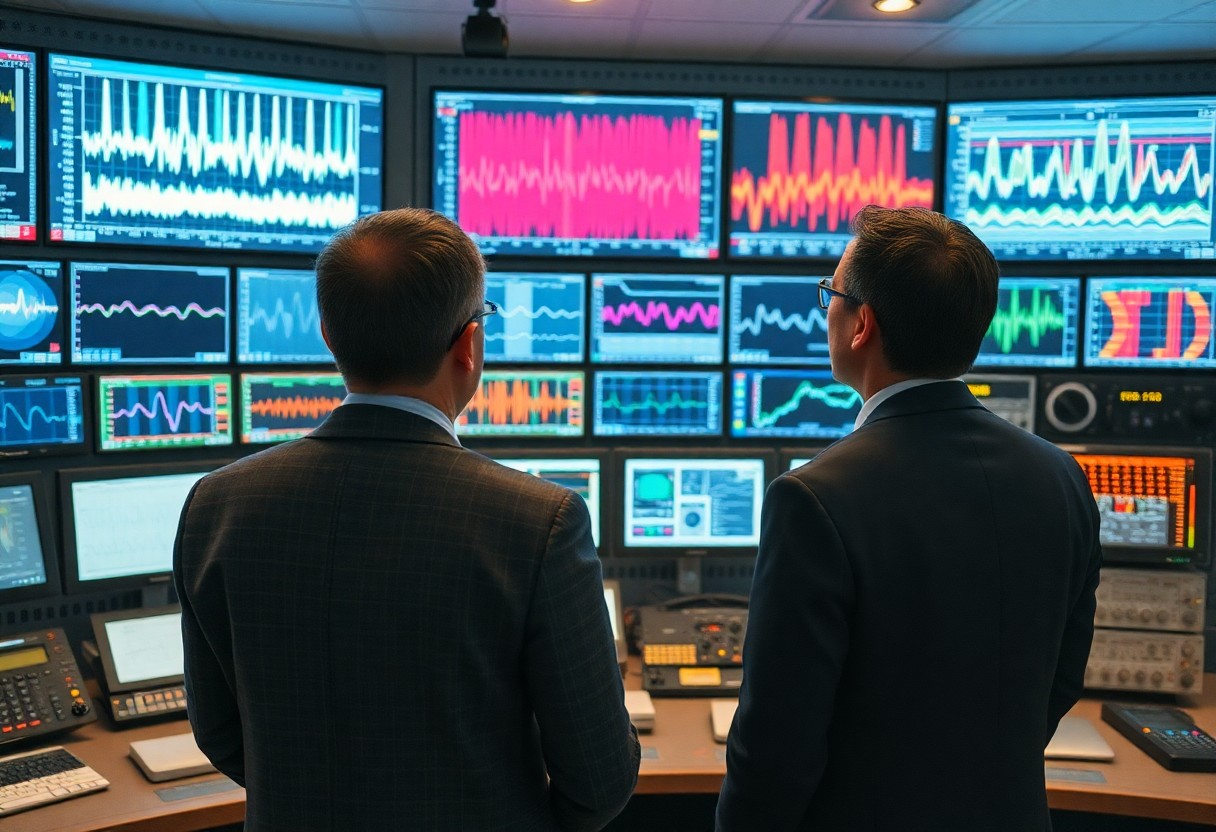
With increased scrutiny, I distill the subtle investigative signals regulators quietly watch-transactional anomalies, sudden leadership changes, selective disclosures-and show how you can interpret them to shore up your compliance, anticipate inquiries, and reduce regulatory risk.
The Role of Regulatory Bodies in Financial Surveillance
Overview of Regulatory Agencies
I monitor agencies such as FinCEN (est. 1990) for AML reporting, the SEC and CFTC for market abuse and derivatives, and conduct supervisors like the FCA, ESMA and MAS for firm-level compliance; international bodies like FATF (40 Recommendations) and IOSCO set typologies and information‑sharing standards that your compliance program must map to operational signals and thresholds.
Importance of Monitoring Signals
When I review alerts, I focus on how SARs/SAR‑equivalents, order‑book anomalies, transaction velocity and communication flags interrelate, because early pattern recognition can turn isolated indicators into investigable leads for fraud, insider trading or layering that you can escalate to supervisors.
I point to the LIBOR investigations, where chat logs plus trade timing created prosecutable evidence, and to cross‑border probes that relied on IOSCO cooperation; your surveillance should translate those typologies into measurable rules (e.g., price moves within X seconds, repetitive small deposits) so you can produce actionable intelligence.
Legal Framework Governing Surveillance
I operate against statutes and directives: the US Bank Secrecy Act and SAR regime, Dodd‑Frank (2010) for derivatives transparency, the EU 4th/5th AML Directives (2015/2018) and GDPR (2018) for data handling-each shapes what data you may collect, retain and share with supervisors or foreign counterparts.
I see frequent tension between regulators’ push for broader access and privacy limits; you must design MLAT‑aware workflows, internal legal holds and clear retention policies, because failures can trigger enforcement, heavy fines and license actions while obstructing legitimate cross‑border investigations.
Types of Signals Investigated by Regulators
| Market Manipulation | Spoofing/layering (Coscia conviction, 2015); Flash Crash link to Navinder Sarao, May 6, 2010 (Dow plunged ~1,000 points) |
| Insider Trading | Pre-announcement trades, repeated profitable patterns (Galleon/Rajaratnam case, convicted 2011); communication metadata cross-checks |
| Accounting Irregularities | Enron bankruptcy (Dec 2001), WorldCom $3.8B fraud; restatements, off-balance-sheet vehicles, unusual reserves |
| Suspicious Filings & Disclosures | Late 10‑Q/8‑K filings, repeated restatements, related-party transactions concealed in footnotes |
| Trading Pattern Anomalies | Wash trades, concentrated option volume 5–10x norm ahead of M&A, abnormal order-to-trade ratios (>10:1) |
Market Manipulation Indicators
I watch order-book dynamics: rapid order entry/cancellation, persistent layering at several price points, and execution spikes that don’t match newsflow. You should pay attention to order-to-trade ratios above 10:1 or cancellation rates exceeding 50% within seconds-both have surfaced in cases like Michael Coscia (spoofing, 2015) and the patterns tied to the May 6, 2010 Flash Crash when the Dow plunged roughly 1,000 points intraday.
Insider Trading Signals
I flag unusual pre-announcement activity in equities and options-especially concentrated buys 48–72 hours before material news. You can cross-check recurring counterparties, communications metadata, and option volume spikes that are multiple times the daily average; the Galleon investigation (Rajaratnam convicted 2011) hinged on such temporal and network patterns.
I dig deeper by building trade-communication linkages and network graphs: clusters of profitable trades tied to a small set of accounts, repeated upward revisions in P&L for those accounts, and option buys that are 3–5x normal volume signal coordination. You should also map phone/email contacts and counterparty relationships; regulators used that approach in the Galleon probes to connect tipsters to traders and secure dozens of convictions.
Accounting Irregularities
I screen for large one-off adjustments, cash-flow versus earnings divergence, and frequent restatements-classic markers seen in Enron’s collapse (Dec 2001) and WorldCom’s $3.8 billion fraud. You should watch for sudden reserve reversals or complex related-party disclosures buried in footnotes.
I then apply forensic checks: reconcile receivables growth to reported revenue, inspect off-balance-sheet vehicles, and trace intercompany flows and journal-entry timing. You’ll find that in major cases auditors flagged repeated manual journal entries at quarter-end and unusual increases in capitalized expenses-red flags that often trigger regulator subpoenas and deeper forensic accounting.
- Order-book analytics and trade surveillance thresholds I continuously tune to spot manipulation and timing anomalies.
- Cross-referencing communications, counterparties, and option/equity spikes helps me separate coincidence from patterned insider activity.
- Perceiving patterns across disparate datasets-trades, filings, communications-lets you and me prioritize the highest-risk investigations.
Technology and Tools Used in Monitoring
Data Analytics and Big Data
I deploy Hadoop and Spark clusters that routinely process terabytes to petabytes of telemetry, using Kafka for streaming ingestion and Elasticsearch for fast search; SQL, time-series databases and graph engines let me join transaction, device and identity data at scale. I run link analysis on 50–500 node clusters to reveal hidden relationships, and I tune aggregation windows and sampling to keep false positives manageable while preserving signal fidelity for your investigators.
Artificial Intelligence in Signal Detection
I apply supervised models (XGBoost, random forests) and deep learning for pattern recognition, and transformers for entity extraction from free-text fields; unsupervised methods like isolation forests and DBSCAN surface novel anomalies. I monitor model drift and retrain on rolling windows so precision/recall remain stable, and I’ve seen ML triage cut analyst review volumes by large percentages in production deployments.
I focus on feature engineering-behavioral velocity, device fingerprints, geolocation shifts and peer-group baselines-because labels are scarce and weak supervision often outperforms naïve labeling. I use active learning and human-in-the-loop feedback to bootstrap rare-event detection, and I rely on SHAP and LIME for explainability to satisfy audit and regulatory queries while keeping latency low for near-real-time scoring.
Blockchain Technology and Transparency
I combine on-chain analytics (Chainalysis, Elliptic, CipherTrace) with clustering heuristics to map address clusters and trace flows through mixers, bridges and exchanges; smart-contract event logs give immediate indicators of exploit patterns. I integrate labeled exchange addresses and sanctions lists so you can flag tainted funds before they hit fiat rails.
I scrutinize coinjoin heuristics, cross-chain bridge hops and ERC‑20 token approvals to reconstruct actor behavior, and I supplement on-chain graphs with off-chain KYC to resolve entities. I’ve traced illicit flows from a compromised wallet to an exchange within 48 hours by correlating deposit timestamps, withdrawal patterns and known on‑ramp addresses, which shortens investigation time significantly.
Case Studies of Notable Investigations
- Enron (2001): I highlight the December 2001 bankruptcy that erased roughly $74 billion in shareholder value, implicated Arthur Andersen in document shredding, and left employees with about $1.2 billion in lost 401(k) savings; the collapse reshaped accounting oversight and SEC enforcement priorities.
- Bernard L. Madoff Investment Securities (2008–2009): I note the Ponzi scheme that reported approximately $65 billion in client account losses (net recoverable claims far lower), led to a 150‑year sentence in 2009, and triggered sharper scrutiny of custody and audit practices.
- 2008 Financial Crisis (Lehman/AIG/TARP): I cite Lehman Brothers’ Sept 15, 2008 bankruptcy (over $600 billion in assets at filing), the $700 billion TARP authorization, and AIG emergency support totalling roughly $182 billion-events that forced regulatory reform like Dodd‑Frank (2010).
- Wirecard (2020): I point to the June 2020 insolvency after auditors reported €1.9 billion missing, exposing gaps in European supervision and audit firm reliance.
- Theranos (2016–2022): I reference the startup that raised about $700 million, reached a $9 billion private valuation, and whose founder’s conviction underscored failures in biotech validation and investor due diligence.
- FTX / Sam Bankman‑Fried (2022): I describe the November 2022 bankruptcy revealing an estimated $8–10 billion customer shortfall, rapid DOJ/SEC actions, and an ongoing re‑examination of crypto custody, commingling and exchange oversight.
The Enron Scandal
I treat Enron as a textbook profile of accounting abuse and regulatory wake‑up: the company declared bankruptcy in December 2001, investors lost about $74 billion in market value, and employees suffered roughly $1.2 billion in retirement losses; I watched how the misuse of SPEs and aggressive mark‑to‑market accounting prompted new SEC rules and tightened auditor accountability.
The 2008 Financial Crisis and its Aftermath
I frame 2008 around Lehman’s Sept 15 collapse and systemic interventions: Lehman filed with over $600 billion in assets, Congress authorized the $700 billion TARP, and AIG received roughly $182 billion in support-measures that compelled lawmakers to pass Dodd‑Frank in 2010 and expand regulatory tools.
I then track the operational changes that followed: regulators implemented annual stress tests (CCAR), expanded resolution planning for systemically important firms, and the Fed’s emergency liquidity programs deployed amounts exceeding $1 trillion at peak, while supervisors increased information‑sharing and cross‑border coordination to reduce contagion risk.
Recent High-Profile Cases
I summarize contemporary examples to show evolving risks: Wirecard’s €1.9 billion accounting hole (2020) revealed audit and supervision gaps; Theranos (≈$700 million raised, $9 billion valuation) exposed fraudulent claims around diagnostics; FTX’s 2022 collapse left an estimated $8–10 billion customer shortfall and accelerated crypto regulatory scrutiny.
I expand on patterns I see across these cases: auditors and gatekeepers often failed before enforcement stepped in, criminal and civil actions have increased (with asset freezes and recoveries), and regulators are now focusing on custody rules, third‑party oversight, whistleblower incentives, and cross‑jurisdiction coordination to detect similar failures earlier.
Challenges Faced by Regulators
Resource Limitations
I see agencies stretched thin: FinCEN receives over 2 million SARs annually while many enforcement units operate with fewer than 100 analysts and static budgets. When you add procurement cycles of 18–24 months for analytics tools and limited training slots, investigations backlog and alerts age out. That mismatch between data volume and human capacity drives missed leads, longer time-to-action, and higher reliance on automated scoring with known false-positive rates.
Evolving Financial Techniques
Cryptocurrency mixers, privacy coins, and DeFi protocols continually shift the terrain-Tornado Cash was sanctioned in 2022 for laundering flows, and you now see rapid chain-hopping across dozens of blockchains. I track patterns where small, repeated on-chain transactions and DEX routing obfuscate origin, making linkage to real-world subjects harder than traditional bank trails.
For example, the 2022 Ronin bridge hack ($625M) and Wormhole exploit (~$320M) showed how cross-chain bridges amplify theft and laundering opportunities; I rely on graph analytics, but zk-proofs and coinjoin-style privacy tools reduce traceroute fidelity. Trade-based techniques also persist: Global Financial Integrity estimates illicit trade mis-invoicing reaches hundreds of billions yearly, so I combine on-chain work with trade data, KYC gaps at OTC desks, and STRs to rebuild the money flow.
Jurisdictional Issues
Cross-border enforcement routinely slows investigations: MLATs and formal requests can take months to over a year, while laws on data sharing diverge-GDPR-style privacy limits, legacy bank-secrecy rules, and differing AML thresholds. I find that a suspect moving funds through a Swiss or Caribbean entity can turn a two-week trace into a multi-jurisdiction project requiring diplomatic coordination.
Historical cases show the impact: the Panama Papers (2016) exposed 11.5 million documents and about 214,488 offshore entities, while UBS’s 2009 settlement ($780M) and data handover illustrated how bilateral pressure can win cooperation. In practice I push parallel civil, administrative, and intelligence avenues because relying solely on one MLAT or court order often stalls timely action.
The Significance of Whistleblowers
Role of Whistleblowers in Uncovering Signals
I often find whistleblowers are the first to connect disparate signals-internal emails, anomalous ledgers, or off‑book transactions-and push regulators into action; SEC tips have helped trigger enforcement that led to more than $1 billion in awards since the program began, and DOJ qui tam referrals regularly expose fraud that agencies could not detect from public filings alone.
Protections for Whistleblowers
I tell people federal frameworks such as Dodd‑Frank and the False Claims Act provide anti‑retaliation protections, confidentiality mechanisms and financial incentives; under the FCA a successful relator typically receives roughly 15–30% of recoveries, and agencies like OSHA, SEC or DOJ can review retaliation and investigate substantive claims.
I urge you to note procedural specifics: FCA suits are usually filed under seal-commonly a 60‑day period while DOJ investigates-so documenting emails, transaction trails and witness statements in advance matters; award size hinges on the quality, timing and demonstrable impact of the evidence you provide, and remedies can include back pay, reinstatement and civil penalties.
Case Studies Involving Whistleblower Testimonies
I draw on examples where insiders shifted enforcement outcomes: Sherron Watkins’ warnings at Enron exposed accounting fraud, Bradley Birkenfeld’s disclosures led to a $104 million IRS award and major bank penalties, and qui tam relators have driven healthcare settlements that returned billions to the government.
- Enron (2001): Sherron Watkins’ internal memo helped expose accounting manipulations that precipitated bankruptcy and multiple criminal and civil actions.
- Bradley Birkenfeld / UBS (2008–2012): Birkenfeld’s information led to a $104 million IRS whistleblower award and contributed to UBS penalties and cross‑border investigations exceeding several hundred million dollars.
- Pfizer (2009 FCA settlement): company paid $2.3 billion over off‑label marketing and related claims; relator testimony was central to the civil fraud recovery.
I analyze these cases to show what increases impact: I look for documentary trails that quantify losses, corroborating third‑party data, and clear links between misconduct and corporate controls-those factors raise the likelihood of large recoveries and higher relator shares, which commonly range between 15–30% of the government’s recovery.
- SEC whistleblower program: paid more than $1 billion in total awards since inception; individual awards have exceeded $100 million in select, high‑impact matters.
- False Claims Act (DOJ): recovered more than $60 billion since 1986, with relator awards typically 15–30% depending on intervention and contribution.
- Pfizer (2009): $2.3 billion settlement where relators played a leading role in the investigation and recovery.
- UBS / Birkenfeld: $104 million whistleblower award; bank penalties and settlement components in the hundreds of millions tied to the disclosures.
Ethical Implications of Surveillance
Privacy Concerns
I assess how pervasive data collection can re-identify individuals from ostensibly anonymized logs, citing cases like the ICO’s GDPR fines for Marriott (£18.4m) and British Airways (£20m) as signals of reputational and financial risk when surveillance overreaches; you should expect regulators to weigh data minimization, DPIAs under GDPR Article 35, and targeted retention windows before endorsing intrusive monitoring of your systems.
Balancing Surveillance and Fair Market Practices
I argue that surveillance yields measurable public benefit when it uncovers cartel-like behavior-historically, rate‑rigging scandals such as LIBOR produced over $9 billion in combined fines-but you also face competitive chilling if monitoring is indiscriminate, so proportionality and legal thresholds must guide investigatory depth.
I recommend concrete controls: limit raw-access windows, use role‑based queries, require warrants or internal approvals for deep dives, and adopt automated anomaly flags that prioritize cases with corroborating evidence; deploying these steps helped enforcement teams focus scarce resources while reducing incidental exposure of non-targeted firms.
Ethical Guidelines for Regulators
I expect regulators to formalize principles-proportionality, transparency of methods, auditability, and independent oversight-leveraging GDPR frameworks and DPIAs to justify surveillance programs, and to publish redaction and retention metrics so you can evaluate whether a probe respects personal data safeguards.
I further urge adoption of practical safeguards: mandatory DPIAs for any new surveillance tool, independent ethics or judicial review for intrusive techniques, explainability requirements for algorithmic flags, strict access logs with quarterly external audits, and retention limits calibrated to investigation needs to keep oversight meaningful and your data exposure constrained.
The Impact of Regulation on Market Functionality
Effects on Investor Confidence
I track how specific rules restore trust: Dodd-Frank stress tests from 2010 and post-2010 circuit breakers after the Flash Crash tightened systemic oversight, while MiFID II in 2018 expanded pre- and post-trade transparency across EU markets. I’ve seen retail and institutional flows respond to those changes-volatility spikes fell after circuit breakers were codified and banks that passed stress tests saw deposit inflows, signaling that clear, enforced standards raise the willingness of investors to re-enter stressed markets.
Regulation vs. Innovation
I watch regulatory sandboxes and enforcement side-by-side: the UK FCA’s sandbox (launched 2015) accelerated 3rd-party APIs and open-banking services, whereas ambiguous US crypto oversight led to high-profile actions against Binance and Coinbase in 2023 that forced product rollbacks and slowed listings. You feel the trade-off when startups gain market access in a sandbox but hit barriers when national regulators tighten interpretation.
I dig deeper into the mechanics: Basel III’s CET1 minimum of 4.5% plus a 2.5% conservation buffer tightened banks’ capital models, which constrained lending but improved shock absorption, while PSD2 and GDPR in Europe reshaped data access and privacy rules that fintechs had to build around. I’ve measured how compliance projects can consume 12–18 months of engineering effort at scale, pushing some firms to pivot from innovation toward regulatory engineering; conversely, well-designed rules like PSD2 created new APIs and business models, showing that regulation can both inhibit and catalyze innovation depending on clarity, harmonization, and proportionality.
Long-term Market Implications
I track structural shifts that emerge over years: higher capital and reporting standards incentivize consolidation among firms that can absorb fixed compliance costs, while gaps spur regulatory arbitrage into less-regulated venues. You’ll notice episodic stress-2013’s taper tantrum and March 2020’s COVID shock-where regulatory design determined how quickly liquidity returned, and where central bank backstops became the ultimate market-maker.
In longer view, I watch three durable effects: first, tougher prudential rules and stress testing have raised resilience but also tilled the competitive landscape toward larger incumbents who spread compliance costs; second, shadow-banking and non-bank credit intermediation grow where rules bite, exemplified by market-making shifts away from dealer balance sheets into principal trading and ETFs; third, cross-border coordination (BCBS, IOSCO, ESMA) reduces pure regulatory arbitrage but leaves room for venue-shopping-Brexit passporting changes being a clear case-so your strategy must account for higher fixed compliance costs, periodic central-bank backstops (notably the Fed’s March 2020 facility suite), and a persistent tension between concentration and innovation.
Cross-border Cooperation among Regulatory Bodies
International Regulatory Standards
I track concrete frameworks like Basel III (CET1 4.5%, total capital 8% plus buffers), the FATF’s 40+9 recommendations on AML/CFT, and IOSCO standards for market conduct; you can see how these set measurable baselines your compliance programs must meet. I point to adoption timelines-many jurisdictions phased Basel III between 2013–2019-so your risk models should align with both local implementation and the international floor.
Information Sharing Agreements
I rely on MOUs, supervisory colleges and FIU networks to move data across borders, noting the Egmont Group’s 160+ Financial Intelligence Units as a key channel; you should expect formal protocols on scope, data formats and confidentiality when your case crosses jurisdictions. I emphasize that these agreements define what data can be shared, how quickly, and under what legal protections.
I often examine MOU clauses-retention limits, permitted uses, encryption standards and SLAs-and you benefit when your investigations map to those clauses; for example, Egmont’s secure platform and bilateral MOUs routinely stipulate 48–72 hour initial responses for urgent AML leads, which affects how I prioritize evidence collection and how your legal team drafts disclosure approvals.
Case Examples of Global Cooperation
I point to LIBOR probes-coordinated actions by US, UK, EU and Swiss authorities that produced over $9 billion in fines and widespread document sharing-and to FATCA’s rollout with 100+ intergovernmental agreements that forced cross-border tax reporting; you can see how joint enforcement changes the playbook for multinational entities. I use these cases to show operational impact on investigations and compliance.
In practice, I study how agencies exchanged interview notes, transaction logs and forensic analyses in the LIBOR and Panama Papers inquiries, and you should adapt your evidence chains to that level of scrutiny; multijurisdictional cases often require synchronized subpoenas and parallel civil/criminal strategies, so your response timelines and privilege assessments must be coordinated across legal teams.
The Future of Financial Surveillance
Trends in Regulatory Practices
I see regulators consolidating oversight-the EU’s AMLA initiative and national agencies increasingly demand centralized reporting and cross-border data exchange, while sandboxes from the FCA (since 2015) and MAS accelerate RegTech pilots; you’ll also notice real-time surveillance pressure from instant-payment rails like FedNow (2023) and wider ISO 20022 adoption, forcing firms to supply richer payment metadata and reducing reliance on after-the-fact batch reviews.
Predictions for Technology Integration
I expect broader deployment of AI/ML, graph analytics, and blockchain tracing-vendors such as Chainalysis and Elliptic will remain influential-paired with mandatory explainability under regimes like the EU AI Act, and increasing use of federated learning or homomorphic encryption so your data can be analyzed without full exposure.
I anticipate practical shifts: federated learning pilots will let banks collaboratively train AML models without sharing raw customer records, and homomorphic encryption will enable encrypted scoring in PROD; banks already report false-positive rates often above 90%, and with hybrid graph‑ML pipelines, some have cut investigation volume by 40–60% in pilot programs. I also expect formal model cards, continuous backtesting requirements, and audit trails (LIME/SHAP-style explanations) to become standard regulator requests.
Potential Changes in Legislation
I predict laws will expand scope and access: mandatory BOI reporting (via acts like the U.S. Corporate Transparency Act), tighter rules for Virtual Asset Service Providers under FATF travel‑rule extensions, and enhanced cross-border data-sharing accords that give supervisors quicker access to transaction-level data while testing privacy safeguards.
More specifically, I expect governments to lower thresholds for suspicious-activity reporting, mandate interoperable KYC utilities and APIs, and press for legal safe harbors for firms using synthetic or anonymized datasets for model validation; regulators will also target gatekeepers-cloud and analytics providers-with compliance obligations, and increase administrative fines and remediation timelines to expedite corrective action.
Training and Resources for Regulatory Personnel
Ongoing Education Programs
I maintain 20–40 hours of structured continuing education annually, blending ICH E2E and GVP modules with hands-on workshops in R, Python, and epidemiologic methods. Case-based drills-such as the dabigatran bleeding signal review in 2011-help me practice turning early signals into rapid regulatory assessments and label updates.
Resources for Signal Identification
I rely on a toolkit that includes FDA Sentinel, WHO VigiBase, EudraVigilance, de-identified EHR and claims data, plus disproportionality methods (PRR, EBGM) and temporal scans to surface candidate signals. You should pair automated detection with clinician adjudication to limit false positives.
In operations I run weekly disproportionality screens, flagging PRR>2 with chi-square>4 or EBGM>2, then apply TreeScan for time-cluster detection and use NLP to mine free-text notes. Sentinel’s distributed-query model covers well over 100 million person-years, so I often triangulate across systems and follow up with rapid propensity-score matched cohort studies to estimate relative risks and onset timing.
Collaboration with Academic Institutions
I run 6–12 month projects and host 1–2 fellows annually with universities, exchanging methods and sharing de-identified datasets under DUAs. Academic partners often supply advanced causal-inference techniques and specialized cohorts that strengthen signal validation and peer-reviewed outputs.
Mechanically I set up DUAs and IRB approvals, create shared GitHub repositories for reproducible code, and hold weekly protocol reviews; one 9‑month collaboration used linked EHR and lab data to confirm a drug-event association and produced a published validation that informed regulatory communication. These partnerships also let you scale analytic capacity quickly while training the next generation of safety scientists.
Public Awareness and Financial Literacy
Importance of Educating Investors
I emphasize how investor education reduces vulnerability to schemes — the Bernie Madoff fraud ($65 billion claimed losses) and the 2021 GameStop episode show how gaps in market understanding amplify harm; I urge you to focus on risk literacy, diversification basics, and red flags so your decision to chase yield or leverage is anchored in clear criteria rather than hype or herd behavior.
Resources for Understanding Regulatory Processes
I direct you to practical sources: SEC Investor.gov for plain-language guides and enforcement summaries, FINRA’s Investor Education Center and BrokerCheck for background on brokers, and OECD/INFE toolkits for standardized financial‑literacy frameworks that regulators reference when designing outreach.
I can walk you through using each resource: start with EDGAR filings to read an issuer’s 10‑K and 10‑Q (EDGAR contains millions of filings), then cross-check advisors in BrokerCheck for disciplinary history, and consult Investor.gov’s enforcement releases to see how rules are applied in real cases; if you track a regulator’s past orders you’ll spot patterns in what triggers investigations, which helps you assess risk before you invest.
Campaigns to Encourage Reporting of Irregularities
I highlight whistleblower and public‑awareness campaigns: the SEC Whistleblower Office has awarded over $1 billion since 2012, and regulators run targeted outreach to get retail investors and employees to report suspicious activity through secure channels rather than staying silent.
I advise preserving contemporaneous records and using official channels: submit tips to the SEC via Form TCR or your state regulator’s online portal, use company hotlines when appropriate, and document communications and transaction timestamps-regulatory campaigns now emphasize anonymity options, anti‑retaliation rules, and example cases to show how a tip can trigger inquiries and enforcement, so your timely, well‑documented report increases the chance of regulatory follow‑through.
Feedback and Adaptation Mechanisms
How Regulators Adjust to Market Feedback
I monitor how regulators use structured consultations, 30–90 day comment windows, and trade‑repository analytics to recalibrate rules; you see rapid guidance during stress and slower legislative changes after 12–24 month post‑implementation reviews. They combine supervisory letters, sandbox results, and surveillance metrics-order book depth, spread widening, and trade volumes-to tweak thresholds or carve outs without wholesale rewrites.
Case Examples of Policy Changes
I point to Basel III reforms-raising CET1 minimum to 4.5% and total capital to 8%, plus a 2.5% conservation buffer and a countercyclical buffer up to 2.5% phased 2013–2019-and to MiFID II (effective Jan 2018), where ESMA issued tick‑size and transparency adjustments in 2019 after liquidity data signaled fragmentation.
I also note the FCA’s regulatory sandbox launched in 2015 as a deliberate experiment: sandbox outcomes informed guidance on consumer safeguards and accelerated authorizations for roughly a dozen business models in fintech, while post‑MiFID II market data revealed specific asset classes needing bespoke relief, prompting targeted RTS amendments rather than full policy reversals.
Importance of Continuous Learning
I expect regulators to run continuous learning cycles-monthly dashboards, anomaly detection on high‑frequency feeds, and stakeholder workshops-so you get iterative fixes instead of binary on/off rules; post‑implementation reviews typically occur 12–24 months after rollout to capture behavioral and market‑structure effects.
I see this play out in formal post‑implementation reviews and fitness‑checks: agencies publish quantitative PIRs, combine survey responses with trade data, then open follow‑on consultations within 6–12 months. That loop lets supervisory models be retuned, enforcement priorities reset, and guidance recalibrated based on measured outcomes rather than intuition.
To wrap up
Following this, I conclude that regulators quietly prioritize investigative signals such as unusual trading patterns, inconsistent disclosures, rapid executive departures, related-party transactions, whistleblower tips and anomalous data flows. I expect you to keep your compliance frameworks, audit trails and disclosure controls robust so I can evaluate explanations efficiently and you can remediate issues before escalation.
FAQ
Q: What market-trading signals do regulators quietly monitor for potential misconduct?
A: Regulators watch order-book anomalies (layering, spoofing), sudden spikes in volume or price without news, repeated wash or round‑trip trades, out‑of‑hours execution patterns, and clusters of small orders designed to manipulate quotes. They also track abnormal fill rates, unusually low latency arbitrage from a single participant, mismatches between position reports and custody records, and repeated cancel‑and‑replace behavior that indicates gaming of price discovery.
Q: Which client-facing or complaint-based signals raise investigative flags?
A: A sudden cluster of similar complaints, identical language across separate complainants, coordinated account openings, or a spike in chargebacks can trigger review. Regulators note patterns such as repeated refusals to provide documentation, sudden increases in high‑risk client accounts, whistleblower submissions that corroborate other data, and rapid escalation of dispute volumes tied to the same desk, product, or salesperson.
Q: What IT and data-access signals suggest internal misconduct or data leakage?
A: Unusual privileged‑account activity, large off‑hours downloads of client or transaction data, repeated failed login attempts followed by a successful access, logins from unexpected geographies or anonymized IP addresses, and mass transfers of sensitive files to external cloud storage are red flags. Regulators also look for evidence of tampered audit trails, disabled logging, and unexplained changes to system clocks or permissions that could hide wrongdoing.
Q: Which accounting, reporting, or reconciliation signals prompt regulatory scrutiny?
A: Late or frequent restatements, unexplained journal entries near period close, recurring reconciliation exceptions that go unresolved, sudden changes in valuation methods, related‑party transactions lacking clear commercial rationale, and inconsistent cash‑flow postings are key signals. Regulators pay close attention to mismatches between internal records and custodian or counterparty confirmations and to compressed timelines for filing required reports.
Q: How do regulators prioritize and act on these investigative signals?
A: Signals are scored and triangulated-automated analytics flag anomalies that are then cross‑checked against complaints, surveillance tapes, and market data. High‑severity clusters prompt targeted requests for documents, subpoenas, or on‑site exams; lower‑scored items may lead to monitoring or industry‑wide notices. Regulators also coordinate with other agencies, use forensic IT reviews, and weigh whistleblower credibility, potential investor harm, and systemic risk when deciding whether to open a formal inquiry.