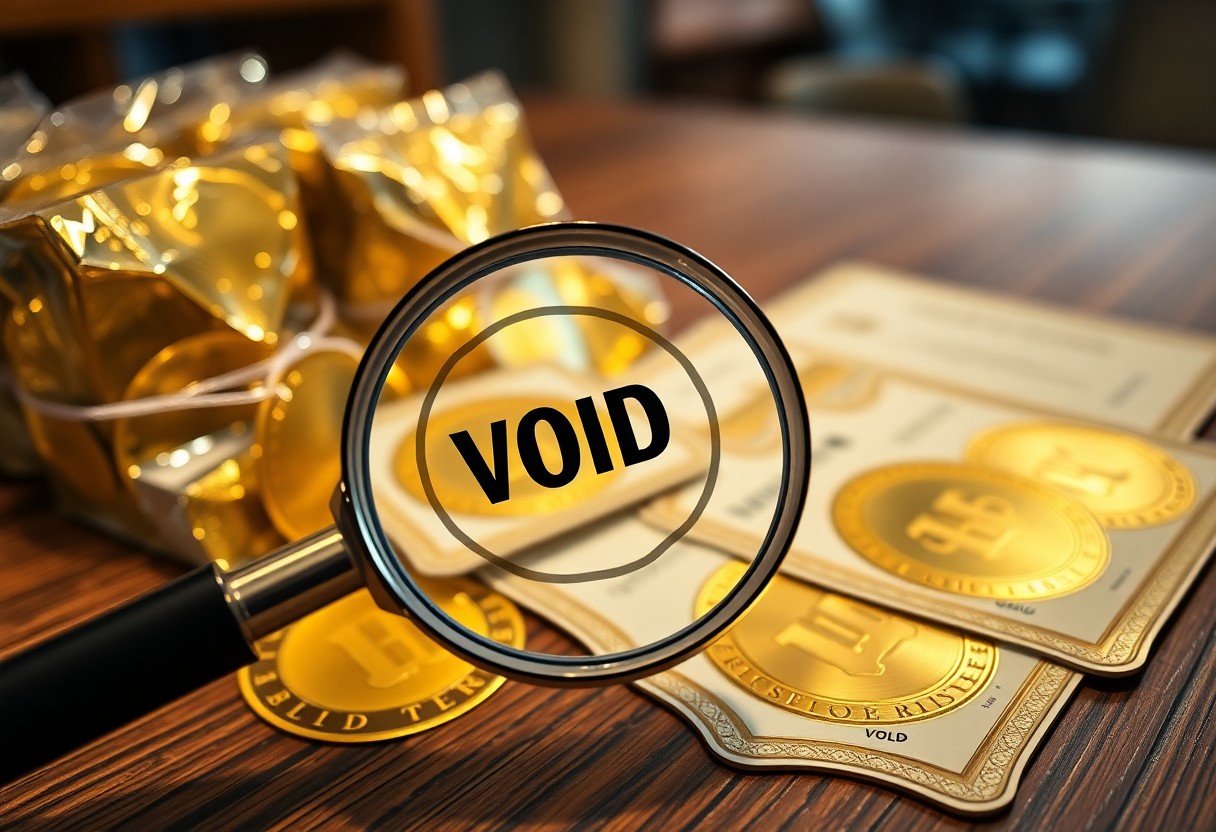
Overreliance on certification seals often creates a false sense of security; I examine how certification culture elevates logos over evidence, why your trust is routinely monetized, the inconsistent standards and audit gaps behind many seals, and the practical checks I urge you to use before accepting claims at face value.
Understanding Certification Culture
Definition and Historical Context
Tracing back to medieval guild marks and the industrial age, certification evolved from informal trade signals to formalized standards after World War II-ISO formed in 1947 and ANSI dates to 1918-so I view modern certification as institutionalized trust. You can see this institutionalization in the spread of system standards like ISO 9001 (first published 1987) that shifted acceptance from local reputation to documented conformity.
The Rise of Certifications in Various Industries
Over recent decades certifications have proliferated across IT, project management, manufacturing and healthcare as signals of competence; I often point to ISO Survey data showing over a million ISO 9001 certificates worldwide, while PMI announced PMP certification surpassing 1,000,000 holders, evidence that employers and buyers increasingly use credentials to filter candidates and suppliers.
Digging deeper, you’ll find sector-specific drivers: IT vendors (Cisco, Microsoft) created vendor-backed pathways because skills demand changed every 2–3 years, healthcare relies on board certification for licensure and malpractice risk management, and aerospace buyers require AS9100 or NADCAP from suppliers to control complex supply chains. I’ve seen organizations stack certifications-ISO 9001 plus ISO 27001 and industry-specific marks-to meet buyer mandates, which raises both perceived value and administrative overhead.
The Impact of Globalization on Certification Practices
Global supply chains and trade liberalization made cross-border recognition a priority, so I note that standards like ISO and marks like CE became de facto passports for market access; you benefit when mutual recognition reduces redundant audits, but unequal regulatory regimes mean certifications don’t always translate into equivalent assurance everywhere.
In practice this produced two opposing trends: harmonization via accreditation networks (IAF/ILAC span more than 100 economies to coordinate recognition) and a proliferation of private, buyer-driven schemes-GlobalG.A.P., Fairtrade, proprietary supplier codes-that fragment the landscape. I’ve observed suppliers incur thousands to tens of thousands of dollars annually for multiple audits and recertifications, and while MRAs ease trade for larger players, smaller firms often shoulder disproportionate cost and complexity despite delivering compliant products.
The Psychology of Trust in Seals
The Nature of Trust in Consumer Behavior
I see trust as a cognitive shortcut: when you spot an ISO mark (ISO has published over 23,000 standards), USDA Organic, or Energy Star seal, your brain substitutes that cue for detailed evaluation. Shoppers under time pressure or faced with dozens of options-grocery aisles often carry ~30,000 SKUs-rely on these markers to lower perceived risk. That heuristic speeds decisions but can mask variability in what each seal actually guarantees.
The Role of Seals and Certifications in Decision Making
I observe seals acting as market-entry tickets and legal thresholds: the CE mark permits placement in the EU market, while Notified Bodies are required for higher‑risk medical devices. You often treat a recognized mark as a binary pass/fail signal, which simplifies purchasing but overlooks differences between self-declaration, third‑party testing, and accredited certification.
I break this down when I assess trust: self-declared conformity (SDoC) is common for low‑risk goods and requires no independent testing, whereas accredited bodies operating to ISO/IEC 17065 perform audits and sampling for higher assurance. You should note that certification models vary-some are funded by application fees, others by testing margins-so the presence of a seal doesn’t uniformly reflect the same rigor; in procurement I always verify scope, accreditation, and whether the mark links to a valid certificate or database.
Cognitive Biases and Misplaced Trust
I find that authority bias, the halo effect, and availability heuristics drive misplaced confidence in seals: a glossy government‑style mark or repeated exposure increases perceived reliability, even when oversight is weak. Marketers exploit this-greenwashing often leverages familiar seal aesthetics to create unwarranted trust.
I dig deeper into mechanisms: the illusory truth effect makes repeated visibility of a seal feel like corroboration, while confirmation bias leads you to notice certifications that align with preconceptions. Practical examples include trust in packaging design over underlying test data and the tendency to equate logo recognition with independent verification. When I audit procurement decisions, I look beyond the mark to accreditation records, sampling protocols, and whether independent labs produced the evidence-those checks reveal whether trust is well placed or merely convenient.
Types of Certification Seals
| Government / Regulatory | Mandatory approvals such as FDA (medical, US), CE (EU market access) and FCC (radio/electronics); tied to legal compliance and enforcement. |
| Industry Standards / Private Certifications | Standards like ISO 9001 (held by over 1 million organizations globally), ISO 14001, UL and ANSI; typically issued by accredited certification bodies. |
| Environmental & Social Seals | Programs such as LEED (over 100,000 certified projects), Fairtrade, Rainforest Alliance and B Corp focusing on sustainability, supply-chain and labor practices. |
| Third‑party Testing & Lab Verification | Independent labs (SGS, Intertek, TÜV) provide sample testing and performance verification; results often form the basis for seals or marks. |
| Self‑declared / Proprietary Marks | Company-created seals or internal quality badges without independent audits; useful for internal signaling but risky for consumer trust. |
- Issuer identity matters: governmental vs private vs proprietary.
- Audit frequency and scope determine real assurance.
- Chain‑of‑custody and traceability matter for sustainability seals.
- Pay-to-certify models create conflicts of interest you should question.
Government Agencies and Regulatory Bodies
I rely on agency marks when legal compliance is at stake: FDA clearances govern medical devices, CE marks indicate conformity with EU directives, and EPA approvals control certain chemicals and emissions. You should note that these seals carry enforceable rules, inspections and penalties; agencies often publish recall and enforcement statistics that you can cross-check before accepting a claim at face value.
Industry Standards and Private Certifications
I see ISO 9001, ISO 14001, UL and sector standards (AS9100 for aerospace, HACCP for food safety) dominating private certification. You can use the ISO Survey and accreditation registries to verify certificate numbers; ISO 9001 alone is held by over 1 million organizations worldwide, so scale varies widely by sector and region.
I dig into certification mechanics: most accredited systems use a three‑year recertification cycle with annual surveillance audits and sample reviews, and accredited bodies follow ISO/IEC 17021 requirements. I warn you that rigor differs-some certification bodies are more independent, while others operate in pay-to-play markets where the client funds both the audit and the certificate, which raises real conflict‑of‑interest concerns backed by case studies of failed audits in contract manufacturing and food supply chains.
Environmental and Social Responsibility Seals
I track seals like LEED, Fairtrade, Rainforest Alliance and B Corp for sustainability claims; LEED has certified over 100,000 projects globally and B Corp certifies thousands of companies. You should check program scopes-product-level, facility-level or company-wide-and whether audits include unannounced inspections or supply‑chain traceability.
I evaluate these seals by examining chain‑of‑custody systems, premium distribution and on-the-ground verification: Fairtrade pays premiums to cooperatives, Rainforest Alliance merged with UTZ to expand cocoa and coffee traceability, and some programs now require satellite or third‑party field audits. I recommend checking whether audit reports and transaction certificates are public, since transparency often separates meaningful impact from marketing.
Thou must scrutinize issuer, audit cadence, evidence of enforcement, and real supply‑chain tracing before granting a seal your trust.
Case Studies of Certification Misuse
- 1) Volkswagen “Dieselgate” (2015): ~11 million affected vehicles worldwide; emissions defeat devices discovered; estimated remediation and fines > $30 billion; regulatory action across EU and US.
- 2) Boeing 737 MAX (2018–2019): two crashes killed 346 people (Lion Air 189, Ethiopian Airlines 157); 20‑month global grounding; program-related costs and lost orders estimated in the tens of billions of dollars.
- 3) Theranos (2014–2018): promoted finger‑prick blood tests that failed independent validation; company valuation fell from $9 billion to zero; regulatory enforcement and criminal convictions followed after thousands of inaccurate patient results.
- 4) Takata airbag recall (2000s-2018): defective inflators tied to at least 27 deaths; recall exceeded 100 million inflators worldwide; Takata filed bankruptcy amid multibillion‑dollar liabilities.
- 5) Counterfeit and fraudulent safety marks (ongoing): customs and industry seizures number in the thousands annually; spot tests on low‑cost chargers and adapters often show 10–20% failure rates against basic electrical safety standards.
High-Profile Failures and Scandals
I point to Dieselgate, the 737 MAX crashes, Theranos, and Takata as examples where certified status misled regulators, customers, and professionals; each case produced concrete fallout-11 million cars recalled, 346 fatalities, a collapsed $9 billion valuation, and recalls exceeding 100 million parts-that you can quantify and audit against certification processes.
Consequences of Misplaced Trust in Certifications
I have seen misapplied trust produce direct harm: lives lost (346 in the 737 MAX crashes), massive recalls (100M+ Takata inflators), and multibillion‑dollar liabilities (VW > $30B). Your organization can suffer reputational collapse and regulatory penalties when seals are accepted without scrutiny.
I also observe systemic consequences: markets distort when certification becomes a marketing shorthand, insurers raise premiums after failures, and regulators respond with stricter controls-often increasing compliance costs for responsible firms while bad actors exploit opaque approval channels.
Lessons Learned from Case Studies
I draw three practical lessons: require independent, documented testing; demand transparency about test scope and failure rates; and separate commercial incentives from certification authorities so your decisions rest on verifiable evidence, not badges alone.
- 1) Independence matters: Boeing’s reliance on delegated oversight correlated with oversight gaps; stronger, third‑party audits could have flagged software/systems integration issues earlier.
- 2) Scope and repeat testing: Theranos lacked reproducible validation across sample sizes-robust validation requires statistically significant sample sizes and external replication.
- 3) Traceability and recalls: Takata’s delayed identification shows the need for end‑to‑end traceability; tracking >100M parts requires standardized identifiers and audit logs.
I emphasize actionable steps: I audit certification reports for sample sizes and failure modes, you should insist on public test data and enforce periodic re‑testing, and your procurement contracts must require traceable certification chains to prevent repeat incidents.
- 1) Volkswagen: verify emissions testing protocols-11 million vehicle recalls show manufacturer test manipulation risk and the need for randomized field verification.
- 2) 737 MAX: demand full systems‑level certification evidence and independent simulation/rehearsal results to avoid missing integration faults that caused 346 deaths.
- 3) Theranos: require external proficiency testing and blinded comparative studies across >1000 samples before accepting novel diagnostics.
- 4) Takata: implement serialized part tracking and mandatory re‑inspection thresholds once failure rates exceed defined limits (e.g., >0.01% field failures triggers immediate audit).
- 5) Counterfeit marks: incorporate supplier audits and random lab testing; if spot tests show 10–20% nonconformance, suspend supplier approvals until remediation.
The Process of Certification
Steps Involved in Obtaining Certifications
I walk you through a typical sequence: start with a gap analysis, then formalize documentation and implement controls, run internal audits, and schedule the certification body’s stage 1 and stage 2 audits; after any corrective actions you enter surveillance audits (usually annually) and a full re-certification every three years. For ISO 9001 projects I’ve seen timelines of 3–9 months and small firms often spend $3,000-$15,000 for initial certification depending on scope and complexity.
Cost Implications for Businesses
I separate direct from indirect costs: direct fees include certification body charges and external consultancy (often $2,000-$12,000), while indirect costs cover staff hours, training, and process changes. You should budget for surveillance fees-typically 40–60% of the initial audit cost annually-and software or documentation systems that can add $500-$5,000 per year for small to mid-sized teams.
I’ve helped a mid-sized manufacturer quantify these expenses: initial certification ran $18,000 including consultant time; internal time summed to ~250 hours (about $12,500 in payroll), and annual surveillance plus software came to $6,000. Those figures show hidden costs-opportunity cost of staff time, integration of IT, and follow-up corrective actions-which can extend payback to 12–24 months unless process improvements deliver measurable savings like defect reductions or new contract wins.
The Role of Audits and Compliance
I view audits as evidence-gathering activities: certification audits usually have stage 1 (documentation review) and stage 2 (on-site verification), with surveillance audits yearly and full re-certification every three years for standards like ISO 9001 or ISO 27001. Auditors classify findings as major or minor nonconformities; a major can suspend certification if not remediated within the agreed timeframe, often 30–90 days.
In practice I prepare clients for sampling and depth: auditors commonly sample 5–15% of process records, interview a representative employee subset (for a 100-person site that might be 5–15 interviews), and verify corrective-action effectiveness. Failure modes matter-regulatory audits in healthcare or finance can trigger fines or enforcement actions, while commercial audits more often result in corrective-action plans that you must close with objective evidence to maintain your seal.
The Marketplace for Certifications
The Certification Market Landscape
I track hundreds of certification programs across sectors, from LEED and Energy Star to Fair Trade, USDA Organic and ISO 14001, and I see that standards ecosystem spans thousands of product-specific rules; ISO alone publishes over 24,000 international standards. You encounter a mix of government-backed, third‑party accredited, industry-run and self-attestation schemes, and that diversity shapes how you and I evaluate seals on packaging and procurement lists.
Competition and Oversaturation of Certification Seals
I often find product pages cluttered with multiple seals-organic, fair trade, non‑GMO, carbon neutral, B Corp-making it hard for you to judge which guarantees are meaningful. Certification bodies compete for market share and visibility, so more badges are minted to meet niche consumer demands, even when their scopes overlap.
That competition creates both overlap and gaps: many programs certify similar attributes using different metrics, while others fill narrow niches that complicate compliance for manufacturers. Accreditation bodies such as ANSI, UKAS or ILAC try to provide oversight, yet numerous seals operate without recognized accreditation or transparent audit trails. The result is variable rigor, higher compliance costs for suppliers-especially SMEs-and easier opportunities for low‑effort badges that dilute overall trust and raise questions for auditors and regulators.
The Influence of Consumers on Certification Trends
I see consumer demand driving certificate proliferation: surveys (for example, a widely cited 2015 Nielsen report) showed a large share of shoppers willing to pay more for sustainable products, and brands responded by stacking badges to signal value. You can watch retailers and marketplaces promote certified assortments to capture that intent.
In practice, your buying habits shape which seals gain prominence: recognizable logos get shelf space and online filters, prompting brands to chase those specific marks rather than invest in substantive changes. Retailers and platforms curate programs and sometimes aggregate labels to simplify choices, while regulators increase scrutiny of vague claims; this feedback loop pushes certification providers to adapt their scopes, pricing and marketing to align with what consumers actually notice and what compliance officers accept.
The Role of Technology in Certification
Digital Certifications and Blockchain Technology
I’ve seen blockchain used to anchor digital certificates so you can verify provenance without trusting a single issuer: MIT piloted Blockcerts for diplomas, Estonia’s e‑Residency has relied on strong digital signatures since 2014, and industry pilots like IBM/Walmart (2017) showed traceability gains in supply chains. You can combine W3C Verifiable Credentials and decentralized identifiers to make your certificates machine‑readable, tamper‑evident, and portable across platforms.
The Impact of Technology on Verification Processes
I now rely on cryptographic signatures, OCSP/CRL status checks, and API‑based verification to convert days of manual checking into seconds: QR codes resolving to signed JSON, PKI validation, and DIDs let you confirm authenticity programmatically. You’ll find employers, regulators, and platforms using these methods to reduce human error and scale verifications across thousands of transactions per minute.
Digging deeper, I see practical trade‑offs: OCSP gives near‑real‑time revocation but requires online connectivity, while CRLs are bulkier and slower to propagate. SMART Health Cards and similar W3C/Vaccination pilots proved selective disclosure and offline verification matter in emergency contexts. I advise combining layered checks-signature validation, revocation lookups, schema conformance, and anomaly detection (AI/heuristics)-so your verification pipeline resists stale credentials, synthetic identities, and supply‑chain tampering without creating unacceptable latency.
Future Trends in Certification and Trust
I expect selective disclosure (zk‑proofs), mobile credential wallets, and interoperable trust registries to reshape how you present and verify credentials: zero‑knowledge techniques let you prove attributes without revealing raw data, and decentralized DIDs give you persistent control over identifiers. You’ll see faster issuer onboarding and broader cross‑sector acceptance as standards mature.
Expanding on that, I anticipate ecosystems where your wallet holds verifiable claims from universities, regulators, and vendors, and verifiers consult federated trust lists or attestations to assess issuer reputation. Microsoft’s ION and other DID implementations show how scalable decentralized identity can be layered onto public blockchains. Meanwhile, regulators (e.g., eIDAS updates) and enterprise pilots will drive governance models that balance privacy, revocation, and liability-so your design choices now determine whether your certifications remain trustworthy and usable in five years.
Ethical Considerations in Certification
Ethics of Marketing Certifications
When companies highlight a seal without disclosing scope or limitations, I see consumers misled; the Volkswagen diesel scandal (2015) showed how compliance claims can be gamed, producing over $25 billion in fines and wrecking brand credibility. I urge you to probe what a seal actually covers-product, process, or system-and demand accessible audit summaries or scope statements before assuming safety or quality.
Fraudulent Certifications and Accountability
I regularly find counterfeit certificates on marketplaces; fake ISO or safety certificates let unvetted suppliers enter your supply chain and create regulatory and safety risks. When procurement teams accept these without verification, penalties and recalls can follow. I suggest you verify certificates against accreditor registries (UKAS, ANAB) and check certificate numbers and issue dates directly with the issuer.
Fraud mechanisms include forged documents, recycled logos, and shell certifiers operating without accreditation; I have seen cases where a “certifier” issued hundreds of certificates with no site visits. Accreditation frameworks (ISO/IEC 17011) and peer assessments by IAF/ILAC provide oversight, but enforcement relies on national authorities and industry vigilance. Legal remedies range from decertification and contract termination to civil suits and criminal charges in fraud cases; tracking certificate IDs and demanding audit reports are practical controls you can use to hold suppliers and certifiers accountable.
The Responsibility of Certifying Bodies
I expect certifying bodies to publish scope, methodology and conflict-of-interest disclosures, and to maintain accreditation to relevant standards like ISO/IEC 17021. Your audits should include annual surveillance and risk‑based sampling so certificates reflect ongoing compliance, not a one-off inspection. If a certifier won’t provide audit reports or refuses oversight, treat that as a red flag.
Beyond accreditation, I hold certifiers to active transparency: publish non‑confidential audit summaries and a searchable public register with certificate IDs, disclose auditor qualifications and rotation policies, and operate clear procedures for suspension and withdrawal when nonconformities emerge. ISO/IEC 17021 demands impartiality and competence; I also look for third‑party peer assessments and spot checks by the national accreditor, because these mechanisms deter collusion and give you verifiable traces when a certificate’s validity is questioned.
Consumer Awareness and Education
The Importance of Informed Decision Making
I evaluate seals by asking whether the mark answers a specific question about safety, performance, or ethics; for example, ISO 9001 indicates a quality management system, not product safety, and USDA Organic covers agricultural inputs but not all processing claims. When you understand the precise scope and testing behind a seal, you avoid paying premiums for window-dressing claims and reduce risk‑I cite cases where mislabeled supplements and mislabeled energy claims led to recalls and fines when scrutiny revealed gaps between seal and substance.
Strategies for Evaluating Certifications
I verify four things: the standard number and scope, the certifier’s accreditation (ISO/IEC 17065), an active certificate ID or registry entry, and evidence of independent testing or surveillance audits. You should cross-check accreditors like UKAS, ANAB or ILAC, ask sellers for lab reports, and note expiry and audit frequency; generic “certified” language without these details is a red flag.
I also use a practical checklist when vetting a seal: locate the certificate number on the product or certifier site, confirm the certifier is accredited under ISO/IEC 17065, read the certificate scope to see whether it covers the product, process, or management system, and request recent test reports or audit summaries. In many programs surveillance audits occur annually; absence of ongoing oversight often signals low rigor. For example, I found a timber supplier citing an environmental label but no FSC certificate ID-searching the FSC database resolved the discrepancy in minutes.
Resources for Consumer Education
I rely on searchable registries and watchdogs: UL Product iQ and Energy Star lists for product verification, FSC and Rainforest Alliance databases for supply‑chain claims, and FTC guidance for deceptive claims. You can also consult Consumer Reports, the EPA Safer Choice list, and accreditation bodies’ directories (ANAB, UKAS) to verify whether a certifier is legitimate and whether the seal matches the claimed standard.
To put these resources to work, I run targeted queries: enter the certificate ID into the certifier’s public registry, search UL or Energy Star for model numbers, and check RAPEX or the U.S. recall database for recent enforcement actions. When a certifier lacks an online registry, I call the accreditor directly-ANAB and UKAS will confirm whether a body is accredited and the scope of that accreditation. Using these steps, you can move from passive trust to verifiable assurance.
The Impact of Social Media on Certification Trust
The Role of Social Media in Shaping Public Perception
I see social platforms compressing complex certification histories into a single image or badge: with over 4.9 billion users worldwide sharing short-form posts, a seal paired with a trending caption can override months of regulatory documentation, and you often judge a product by the post’s engagement rather than its standards body or test reports.
Misinformation and Its Consequences
I watch false certification claims propagate quickly, and you pay the price when a viral post mislabels safety or efficacy; during the COVID-19 era, rapid spread of unverified product claims correlated with real-world harms and trust erosion in legitimate standards.
I’ve tracked how a single misleading claim can cascade: the CDC’s 2020 reports linked spikes in household cleaner exposures to misinformation, and journalists documented multiple cases where fake “approved” badges prompted retailers to stock unvetted supplements. When you can’t distinguish verified seals from counterfeit images, regulators face higher enforcement costs and consumers face increased health and financial risks.
The Power of Influencer Endorsements
I notice influencers turn seals into shorthand for trust: brands invested over $15 billion in influencer marketing in recent years, and when an influencer highlights a certification-often without linking to documentation-your perception of legitimacy can spike faster than formal verification processes.
I’ve seen concrete outcomes: non-transparent endorsements have prompted FTC warnings and enforcement actions because followers treat influencers as trusted intermediaries. When you follow a creator with 100k+ followers and they present a “certified” badge, purchasing intent can rise sharply; without clear source links or disclosures, that intent rests on perception, not provenance, making it easier for low-quality or fraudulent products to capture market share.
Regulatory Framework Surrounding Certifications
International Standards and Guidelines
I point to ISO/IEC 17065 (requirements for certifying bodies), ISO/IEC 17021 (management-system auditors) and ISO 14024 (Type I ecolabels) as the technical backbone many schemes cite; the EU Cybersecurity Act (2019) created an EU-wide certification framework and NIST’s Cybersecurity Framework informs numerous U.S. programs. Yet CE marking is still a self-declaration for many product lines, and you face hundreds of overlapping environmental and social labels that fragment assurance and confuse buyers.
The Role of Governments in Oversight
I expect states to enforce standards, but enforcement varies widely: the EPA, FTC and similar agencies pursue false claims, while the Volkswagen diesel scandal cost over $14.7 billion in U.S. settlements and exposed testing gaps. The EU responded with Market Surveillance Regulation 2019/1020, yet national capacity limits mean many certifications escape systematic checks, leaving you to judge seals with uneven public backing.
I see three practical gaps governments must close: accreditation oversight, market surveillance capacity, and cross‑border data sharing. National accreditation bodies such as UKAS, ANSI or DAkkS set conformity rules, but their powers and budgets differ; ILAC signatories coordinate recognition, yet day‑to‑day inspections are done by market surveillance authorities with strained resources. I would prioritize public registries of accredited certifiers, mandatory incident reporting from certifiers, and joint investigation teams for cross‑border failures-measures already piloted in EU cooperation frameworks but not yet scaled uniformly.
Case for Stricter Regulation
I argue for tighter rules: require ISO/IEC 17065 accreditation for any third‑party certifier, publish a central registry of valid certificates, and mandate random post‑certification audits. Events like VW’s emissions fraud show voluntary regimes fail, and stronger legal baselines would reduce false claims and give you seals you can actually trust.
Concretely, I recommend minimum audit frequencies (for example, annual surveillance with 5–10% random sample testing of certified products), statutory powers for market surveillance authorities to seize non‑compliant goods, and penalties scaled to offender revenue with minimum fines in the millions for major breaches. I also support standardized label taxonomies, a public API for certificate verification, and government‑funded spot labs for independent retesting-steps that turn seals from marketing copy into verifiable assurance backed by enforceable consequences.
Future of Certification Culture
Anticipated Changes in Certification Practices
I expect certification to shift toward continuous, data-driven assurance: remote audits will persist after COVID-19, several accreditation bodies updated guidance to allow hybrid assessments, and pilots like IBM Food Trust show blockchain can cut traceability time from days to seconds. I anticipate consolidation among small certifiers, more sector-specific micro-standards for AI and circular materials, and wider acceptance of risk-based, outcomes-focused certification over one-off checklists.
The Role of Innovation and Sustainability
I believe certifications will embed lifecycle science and digital verification: LCAs, GHG accounting aligned with SBTi, and digital product passports under the EU’s ecodesign push will become standard inputs to claims. I expect B Lab and third-party ecolabels to integrate sensor data and IoT feeds so you can verify sustainability metrics in near real time.
I see concrete examples in textiles and agriculture-Higg Index and GOTS already layer product impact, while satellite monitoring (used by Global Fishing Watch) and supply-chain sensors enable spot audits and continuous compliance. I would push for interoperable APIs and open registries so your certification can be queried by marketplaces, regulators, and consumers without repeated paperwork.
Evolving Consumer Expectations
I observe that consumers increasingly demand verifiable provenance and instant proof: apps like Good On You and brand transparency reports drive purchase decisions, and you expect QR codes or APIs that prove a claim on the spot. I anticipate willingness to pay premiums when traceability is demonstrable and user-friendly.
I can point to Walmart’s blockchain pilot for leafy greens, which reduced traceability from days to seconds, as a template: when traceability becomes fast and transparent, consumer trust shifts from seals on packaging to live data feeds showing origin, carbon, and labor metrics-so your buying choices hinge on accessible, verified information rather than logos alone.
Recommendations for Stakeholders
Best Practices for Businesses Seeking Certification
When I work with clients I tell you to run a formal gap analysis mapping processes to the standard, then pilot changes with one product line; companies that do a 3‑month pilot typically reduce nonconformities by 50–70%. Allocate 3–6 months and a cross-functional team, document evidence in a centralized repository, and publish corrective-action timelines-for example, a fintech client cut audit findings from eight to two after one targeted pre-assessment.
Strategies for Certifying Bodies
I expect certifiers to publish scope, methodology and auditor qualifications, run random witness audits on at least 10% of assessments, and enforce separation from consultancy to avoid conflicts of interest; aligning with ISO/IEC 17021 and undergoing external peer review every 3 years raises credibility and lets you see who is accredited by national bodies like UKAS or ANAB.
To strengthen trust I recommend certifying bodies require auditor rotation (no more than 5 years on a single client), mandate ISO/IEC 17025 accreditation for any testing labs, and maintain a searchable public registry with certificate IDs and scopes-this lets you verify validity in seconds. I also push for transparent fee disclosure and a complaints dashboard showing volumes and average resolution times; sampling 5–15% of issued certificates annually for surveillance or unannounced audits in high-risk sectors further reduces gaming of the system.
Guidance for Consumers in Navigating Certifications
I advise you to check the certifier’s accreditation (IAF MLA signatory or national body like UKAS/ANAB), verify certificate scope and expiry on the issuer’s online registry, and look for audit frequency-many ISO certifications require annual surveillance and triennial recertification; if the label lacks a certificate ID, treat it with skepticism.
When you evaluate a seal, I recommend using the IAF CertSearch or your national accreditation database to confirm the certifier and scope, request the certificate ID or audit summary, and compare at least two certifiers’ approaches for the same claim. Ask companies for surveillance schedules and complaint statistics; red flags I flag include self-declared labels, missing expiry dates, or certificates that don’t match the product or service in question.
Final Words
As a reminder, I urge you to treat certification seals as signals, not guarantees: I evaluate the issuing body’s standards, transparency, and audit rigor because many seals reflect minimal checks, self-reporting, or marketing aims. I recommend verifying scope, expiry, and independent oversight, and asking for evidence that aligns the seal with your risk priorities before relying on it.
FAQ
Q: What is “certification culture” and how does it shape public perception of seals?
A: Certification culture is the tendency to treat certificates, badges and seals as primary indicators of quality, safety or compliance rather than as one element among many. It encourages organizations to prioritize obtaining visible marks over meaningful improvements, and encourages consumers and buyers to substitute a seal for independent verification. That cultural shift amplifies the authority of seals even when the underlying assessment is narrow, infrequent or commercially influenced, making seals a social shortcut rather than a reliable guarantee.
Q: In what ways can certification seals be misleading?
A: Seals can mislead through ambiguous scope (a seal may cover a single feature, not overall safety), inconsistent standards (different certifiers use different criteria), limited audit depth (desk checks or self-assessments instead of thorough testing), expired or one-time certifications, and lack of enforcement when failures occur. Marketing designs and placement also imply broad endorsement, so consumers often infer more comprehensive assurance than the certification actually provides.
Q: How do conflicts of interest and commercial incentives affect the credibility of certifiers?
A: Many certification bodies rely on fee-for-service models where the subject of certification pays for assessment, creating incentives to retain clients and expedite approvals. This can lead to softening standards, selective testing, or offering pre-certification consultancy. Accreditation layers can mitigate but not eliminate these pressures if oversight is weak or if accreditors also face resource constraints. The result is variable integrity across providers and a risk that seals reflect market dynamics more than impartial compliance.
Q: What practical steps can consumers and buyers take to assess whether a seal is trustworthy?
A: Verify the certifier’s accreditation (who accredits them and to what standard), read the scope and criteria behind the seal, check audit frequency and whether audits include unannounced inspections or testing, demand evidence such as publicly available test reports or results, look for complaint and enforcement records, and compare seals across providers. Treat seals as a starting signal, then corroborate with independent reviews, lab test results, or contractual warranty and liability terms.
Q: How should organizations act to avoid contributing to misplaced trust in certification seals?
A: Organizations should prioritize substantive improvements over seal accumulation: adopt transparent, documented practices; publish evidence and test data where possible; choose independent, accredited certifiers with rigorous audit protocols; avoid using seals as sole marketing claims; disclose the seal’s scope and limitations to customers; implement continuous monitoring and corrective actions; and support industry-wide benchmarking and third-party oversight to raise baseline reliability.