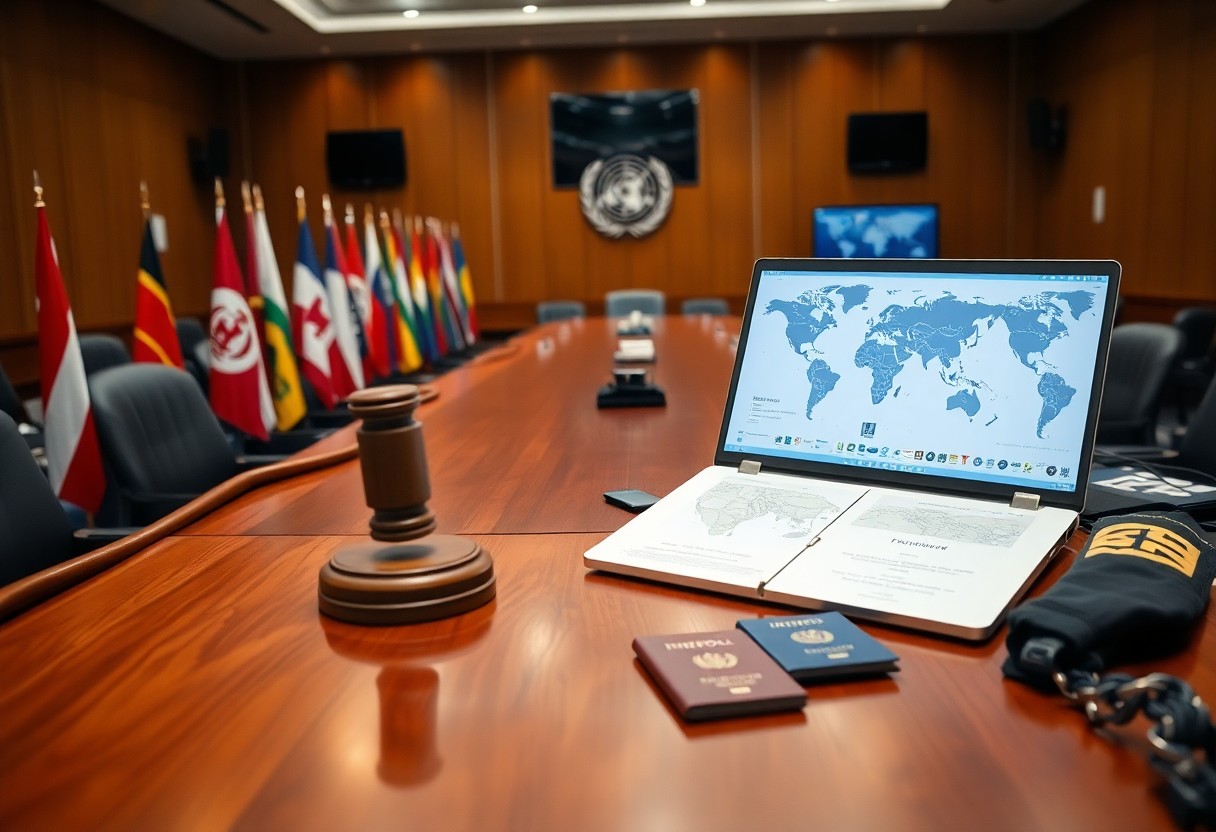
Enforcement on a global scale faces numerous challenges, from differing legal frameworks to varying political wills. I examine whether effective international enforcement is achievable and what factors play a role in shaping its potential. You may be surprised by the complexities involved.
The Illusion of Supranational Authority
Sovereignty as an Impenetrable Shield
States often wield sovereignty as a defense against international enforcement. This concept allows nations to prioritize their own interests over global mandates, rendering international law less effective. In practice, you’ll find that many countries resist outside influence, claiming a right to self-determination.
Your nation’s sovereignty can create barriers that undermine international efforts. Attempts to hold states accountable frequently run aground because governments prioritize national laws and cultural values over supranational directives.
The Paradox of the Veto Power
The veto power held by a few nations complicates international enforcement mechanisms. When one country can block collective decisions, the authority of international bodies becomes questionable. You may wonder how this concentration of power undermines global governance systems.
With significant authority resting in the hands of a few, the efficacy of international resolutions diminishes. This creates a system where collective will is frequently stymied, leading to inaction on pressing global issues. Consequently, the effectiveness of international agreements often hinges on the whims of a select few nations.
Might as the Arbiter of Right
Selective Justice in a Polarized World
Conflicting interests often lead to inconsistent applications of justice on the international stage. You’ll find that powerful nations selectively enforce laws, sidelining smaller or less influential countries while imposing strict measures on their rivals. This selective justice undermines the legitimacy of international law, creating skepticism among nations about its effectiveness.
When subjective interpretations of right and wrong guide actions, the impact can be devastating. Trust in international institutions erodes, as countries adjust their policies to align with those of stronger allies rather than seek common ground. Your sense of fairness may diminish when you observe this uneven application of power.
The Economic Levers of Compliance
States often respond more effectively to economic incentives than to moral appeals. By imposing sanctions or providing aid, influential countries can encourage compliance with international norms. You may notice that the threat of economic repercussions encourages nations to adhere to agreements they might otherwise overlook.
Economic incentives can also drive countries to align their policies with international standards. Countries that rely on trade relationships may comply with certain regulations, prioritizing their economic stability over sovereignty. This dynamic shows how effective economic tools can be when encouraging adherence to international norms.
The interplay between economics and compliance underscores the effectiveness of financial incentives in international relations. You can see how economic dependencies shape behavior and encourage nations to align with international expectations. As a result, understanding the economic mechanisms at play is crucial for assessing the effectiveness of international enforcement efforts.
The Fragility of International Law
Treaties Without Teeth
Treaties often lack effective enforcement mechanisms, rendering them more symbolic than practical. I find that nations frequently sign agreements with good intentions but neglect to implement the necessary follow-through. This results in a cycle of broken promises and diminishing trust among states.
Compliance becomes problematic when the consequences for violations are unclear or weak. You may notice that countries often prioritize national interests over international commitments, leading to a frequent disregard for the terms established by these treaties.
The Failure of Moral Suasion
Moral suasion has proven insufficient in compelling states to adhere to international norms. I observe that, despite widespread calls for ethical conduct, many governments routinely dismiss these appeals. Often, these moral appeals lack the urgency needed to spur action.
Expecting nations to act on moral grounds alone can lead to disappointment. You might find that states prioritize their own strategic interests over ethical considerations, undermining the effectiveness of international law in holding them accountable.
Trust in moral appeals as a method of governance illustrates a critical gap in international relations. States often favor tangible benefits over abstract ideals, leading to a pervasive reluctance to comply with moral exhortations. I see this dynamic eroding the potential for collaborative action while emphasizing the need for stronger enforcement mechanisms.
Bureaucratic Inertia and Diplomatic Paralysis
The Sclerotic Nature of Global Institutions
Global institutions often operate at a painfully slow pace. You will find that bureaucratic processes can hinder prompt responses to international crises. This slowness fosters disillusionment among member states, as they witness urgent issues languishing in red tape.
Relying on established protocols limits innovative approaches to governance. Decision-making often remains entangled in lengthy debates, where outcomes become diluted and ineffective. As a result, you may question the sincerity of these institutions in implementing real change.
Words as a Substitute for Action
Statements of intent frequently replace tangible actions. You may observe that resolutions and agreements often serve as mere lip service rather than commitments to enforce change. This culture of empty promises frustrates activists and negotiators alike.
In diplomatic circles, rhetoric often appears more palatable than confrontational measures. Member states hesitate to commit to actions that might jeopardize their interests, choosing instead to issue declarations that lack enforceable consequences. This pattern underscores a profound ambivalence toward accountability.
The reliance on rhetoric not only undermines trust but also allows violations to go unchecked. By repeatedly issuing strong statements without backing them with actions, the gap between intention and reality widens. You might find it increasingly difficult to take these pronouncements seriously, as they often yield no real consequences for wrongdoing. The cycle perpetuates, and urgent issues may continue to be overlooked in favor of appeasing diplomatic sensibilities.
The Shadow of Realpolitik
National Interest vs. Global Good
Conflicts often arise when national interests clash with the global good. Countries tend to prioritize their own security and economic stability over international cooperation. This self-interest inhibits collective action, resulting in selective enforcement of international laws. Power dynamics play a significant role, with powerful nations frequently dictating terms to weaker states.
Your perspective can shift when you consider how these interests influence diplomatic relations. Many states opt for pragmatic approaches that often disregard ethical obligations. As long as national interests dominate, effective international enforcement remains elusive.
The Futility of Universal Jurisdiction
Universal jurisdiction aims to hold perpetrators of serious crimes accountable, regardless of where the offenses occur. However, practical gaps exist that hinder its effectiveness. Many nations resist relinquishing sovereignty, leading to inconsistent application of justice. You may find that this resistance creates an environment of impunity for offenders.
With limited political will and cooperation, universal jurisdiction struggles to deliver meaningful justice. You may observe that powerful nations often avoid prosecution, undermining the very principles that underpin this legal framework. Exploring these challenges reveals the complexities that stand in the way of justice at an international level.
The Future of Global Coercion
Technological Frontiers of Enforcement
Technology continues to reshape enforcement mechanisms on a global scale. Digital advancements enable real-time surveillance and data analysis, allowing states to monitor compliance and deter violations more effectively. Emerging technologies, such as artificial intelligence, create opportunities for predictive policing and automated regulatory frameworks that can enhance international compliance.
Cybersecurity measures have become paramount in this context. States are investing heavily in safeguarding their systems against external threats, which complicates enforcement. As you consider these advancements, the balance between privacy and security will likely remain a contentious issue impacting global cooperation.
The Shift Toward Regional Hegemony
Emerging trends indicate a move toward regional hegemony as powerful states assert their influence over weaker neighbors. You might observe that regional alliances are becoming more pivotal in addressing enforcement challenges, as nations collaborate to set shared standards and expectations. While this approach can foster consistency, it may also lead to exclusionary practices that marginalize less powerful states.
The dynamics of regional hegemony change the traditional enforcement model. Instead of relying solely on international institutions, countries are increasingly looking inward, forming coalitions to advance their own interests while sidelining global consensus. As this trend grows, the conversation around effective enforcement will need to adapt, focusing more on regional rather than global strategies.
Conclusion
To wrap up, international enforcement faces significant challenges that often hinder its effectiveness. I see complexities arising from varying legal systems, political motivations, and enforcement capabilities across nations. These factors create inconsistencies that compromise the reliability of international interventions.
I believe that while some frameworks may offer a degree of success, true effectiveness remains elusive. Your understanding of these limitations is necessary in recognizing that while we strive for global accountability, practical solutions still require considerable development and collaboration.
Q: What are the main challenges to international enforcement effectiveness?
A: Challenges include differing legal systems, lack of political will among states, and inconsistent compliance with international treaties. Some nations may refuse to cooperate due to national interests or political considerations, undermining enforcement efforts. Additionally, varying interpretations of laws complicate mutual understanding and cooperation.
Q: How do cultural differences impact international enforcement?
A: Cultural differences play a significant role in shaping attitudes towards law and regulation. Varying views on justice and authority can hinder cooperation between countries. Disparities in values also influence how laws are interpreted and enforced, leading to potential conflicts in international agreements.
Q: Can technology enhance the effectiveness of international enforcement?
A: Technology can provide tools for better communication and coordination among enforcement agencies. Digital platforms facilitate information sharing, while data analytics improve tracking and monitoring of international crimes. However, reliance on technology must be balanced with concerns about privacy and security, which can also complicate enforcement efforts.