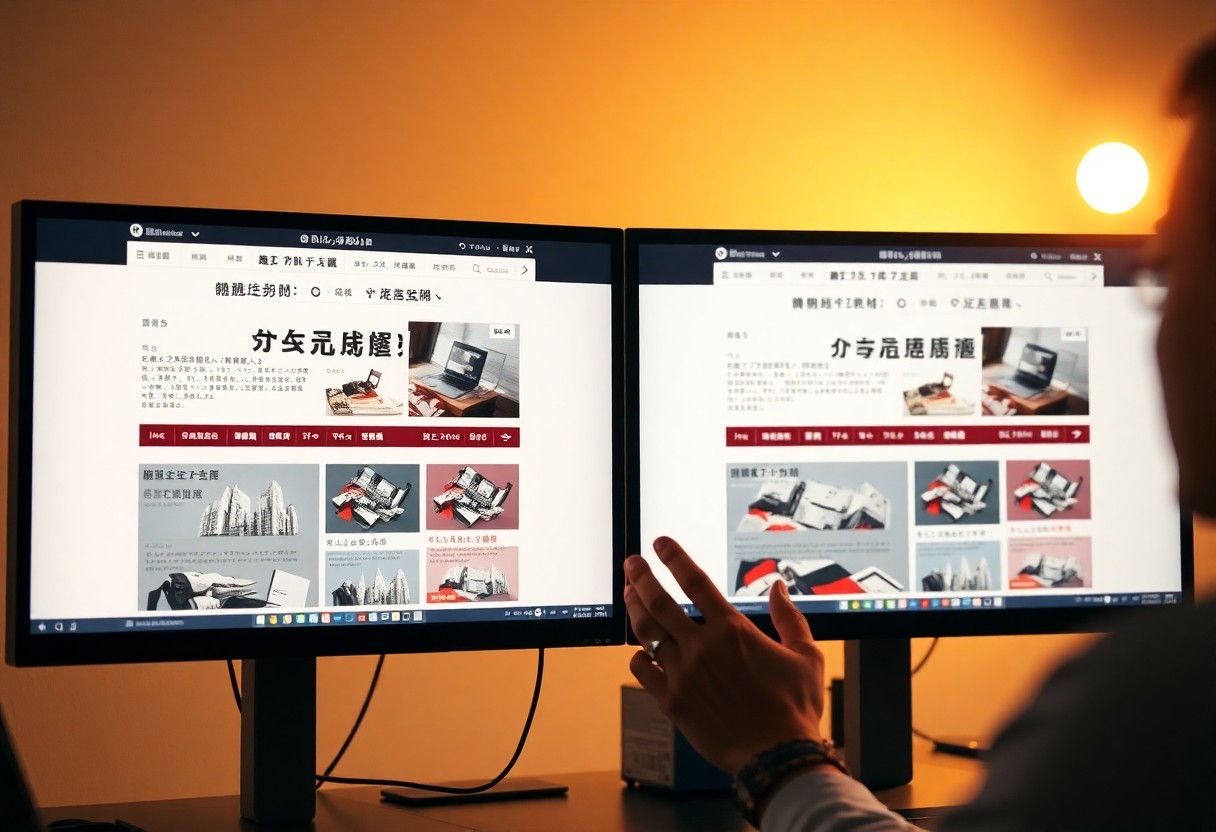
With the increasing demand for bilingual websites, it’s vital to be aware of common web design mistakes that can hinder your site’s effectiveness. I have identified key pitfalls that I see often, and I want to ensure you avoid them. From inconsistent language switching to neglecting cultural context, your site should respect and cater to your diverse audience. Join me as I explore these mistakes and offer solutions to create a seamless bilingual experience that engages all your users.
Understanding Bilingual Web Design
While creating bilingual websites can enhance reach and engagement, I recognize that it’s imperative to understand the unique challenges involved in bilingual web design. By acknowledging the different factors that influence usability for diverse audiences, I can craft a more effective online presence.
Importance of Bilingual Websites
At its core, a bilingual website serves to connect with a wider audience, breaking down language barriers that might prevent potential customers from accessing your content. It can significantly increase your brand’s visibility and foster stronger relationships with clients from various cultural backgrounds.
Cultural Considerations in Web Design
Bilingual websites often cater to users belonging to different cultures, which means design elements must resonate with both groups. This includes not only language but also traditions, colors, and symbols that might carry different meanings across cultures.
Another key aspect of cultural considerations is understanding that design preferences can vary significantly from one demographic to another. What appeals to one audience may not resonate with another, so I strive to incorporate elements that speak to both cultures while being sensitive to their unique differences.
Accessibility Challenges
Importance of accessibility extends beyond just language; it involves ensuring all users, including those with disabilities, can navigate and engage with your website effectively. This means I need to implement features that accommodate a diverse range of users.
Challenges arise when languages have different reading orders or text directions, particularly for languages that read from right to left. Additionally, I must ensure that my design remains visually accessible, using color contrasts and font sizes that cater to all users, regardless of their language preference or abilities.
Common Mistakes in Bilingual Sites
The creation of bilingual websites often comes with various pitfalls that can detract from user experience and accessibility. I want to share some common mistakes that I’ve observed, as they can significantly impact the effectiveness of your bilingual site.
Ignoring Local Cultures and Preferences
The key to engaging a diverse audience is understanding and respecting the local cultures and preferences of your target languages. Failing to do so can alienate users and deter them from exploring your site further.
Poor Translation Practices
Around my experience, I’ve often noticed businesses relying solely on automated translation tools without any human oversight. This can lead to nonsensical phrases and a lack of nuance in language that risks miscommunication and misunderstandings.
At times, poor translation practices can stem from a lack of context during the translation process. When I translate content without a complete understanding of how certain phrases are used culturally or idiomatically, the result can be awkward or inaccurate language that does not resonate with your audience. By using professional translators who are fluent in both the source and target languages and who understand the regional dialects, you can create a richer, more engaging experience for your users.
Static Content without Variable Language Options
Alongside translation, you may overlook the importance of dynamic content that accommodates variable language options. Sticking to static content can lead to missed opportunities in personalization and relevance for diverse audiences.
Bilingual websites that only present static content fail to address unique user needs and preferences. I believe that by integrating variable language options and allowing users to select their preferred dialect, you can create a more engaging platform that adapts to different linguistic groups. This not only aids in comprehension but also fosters a sense of belonging and respect for cultural differences across your user base.
Navigation and User Experience Issues
Not addressing navigation and user experience can lead to frustration for your bilingual site’s visitors. When users encounter difficulties in navigating your site, they may leave, ultimately affecting engagement and retention.
Inconsistent Navigation Elements
Navigation across your bilingual site should be consistent in layout and terminology. If I find different menus or icons between languages, it can create confusion and impede my ability to locate necessary information. Consistency helps users intuitively understand where to go next, regardless of the language they choose.
Lack of Language Toggle Options
On a bilingual website, a visible and easily accessible language toggle is necessary for a seamless user experience. Without it, users may struggle to find a way to switch languages or may even become frustrated if they can’t easily navigate back to their preferred language.
Toggle buttons should be prominently displayed and straightforward to use. Whenever I am exploring a bilingual site, I look for a toggle option that doesn’t require excessive scrolling or searching. A well-placed language switcher enhances your site’s usability, making it simpler for me to access content in the language of my choice.
Differences in User Flow per Language
Any differences in user flow between languages can lead to disorientation for users. If the design and structure vary, it creates an uneven experience, making it challenging for visitors to achieve their goals on your site.
Plus, understanding user behavior in different languages can lead to varied expectations based on cultural context. For example, if my flow is streamlined in one language but cumbersome in another, I may feel frustrated and less inclined to engage further. Ensuring a cohesive experience across languages will enhance user satisfaction and help build loyalty to your brand.
SEO Shortcomings
To ensure your bilingual site achieves optimal visibility, it’s necessary to avoid common SEO pitfalls. Effective multilingual SEO requires not just translation but strategic planning to cater to search engines and users in different languages. Implementing proper hreflang tags, for example, can signal to search engines the relationship between your multilingual pages, improving indexing and relevance.
Neglecting Multilingual SEO Best Practices
Before submerging into bilingual site creation, you must familiarize yourself with multilingual SEO best practices. Ignoring elements like keyword localization and proper structure can significantly hinder your website’s performance in search results across different languages.
Duplicate Content Problems
Along the way, you may encounter duplicate content issues if the same content is accessible in multiple languages without appropriate differentiation. Search engines may have difficulty recognizing your content’s intent, leading to lower rankings and reduced visibility.
With bilingual sites, it’s vital to ensure that each language version is treated as unique content. Utilizing hreflang tags correctly helps to avoid confusion over which version should appear in search results. Failing to do this can lead to competing pages, ultimately diluting your SEO efforts and confusing search engines about which content to prioritize.
Failure to Optimize for Local Search Engines
Across different regions, users rely on local search engines, and failing to optimize for these platforms can severely limit your visibility. It’s not enough to translate content; you must adapt it to better suit local expectations and search behaviors.
Practices like integrating local keywords and engaging with region-specific trends can significantly enhance your site’s effectiveness. Localizing your SEO strategy ensures that your content not only appeals to users in their language but also resonates with their cultural and search behaviors, thereby improving your overall reach and engagement.
Design and Aesthetic Choices
Keep in mind that aesthetics play a vital role when designing bilingual sites. It’s important to ensure that your design is user-friendly and appealing to speakers of both languages.
Using Non-Responsive Design
Choices that do not prioritize responsive design can lead to issues in accessibility and user experience. With more users accessing websites through various devices, I find that creating a mobile-friendly layout is crucial for attracting and retaining an audience.
Overlooking Font Variations in Different Languages
Overlooking differences in font variations can hinder your site’s readability and professionalism. Each language has unique characters and styles that may not display well in a standard font, which could confuse or frustrate users.
It’s vital to select fonts that support the specific characters and styles used in all languages on your site. For instance, languages like Arabic or Chinese require different typefaces that accommodate their scripts. I recommend testing the legibility of the fonts you choose across all target languages to ensure every user has a seamless reading experience.
Color and Symbol Misinterpretations
Across cultures, colors and symbols can hold divergent meanings that may impact how your message is received. This makes it crucial to consider the cultural context when designing your bilingual site.
Misinterpretations can arise from using colors or symbols that have different connotations in various cultures. For instance, while white is often associated with purity in Western cultures, it may symbolize mourning in some Asian cultures. I advise conducting thorough research on cultural color symbolism to avoid offending or alienating any segment of your audience.
Testing and Quality Assurance
After all your hard work in creating a bilingual site, the next step is ensuring that it functions seamlessly for all users. Testing and quality assurance can either make or break your site’s effectiveness. This phase allows you to identify and correct any potential issues that could arise from improper translations, formatting, or navigation in different languages.
Importance of Comprehensive Testing
Beside ensuring language accuracy, comprehensive testing evaluates user experience across various devices and browsers. It’s necessary to check not just for translation errors but also for functionality, ensuring every feature works correctly in both languages.
Addressing Device Compatibility Issues
Quality assurance means you must test your site across multiple devices to guarantee compatibility. The site should render properly on smartphones, tablets, and desktops, accommodating different screen sizes and operating systems. This thorough approach ensures a consistent user experience regardless of the device used.
In fact, failing to address device compatibility could lead to significant user frustration. Every time a reader accesses your site, whether they’re on a mobile device or a desktop, they should encounter a visually appealing and highly functional interface that delivers your content in their preferred language seamlessly.
User Feedback and Iteration
Assurance comes from actively seeking user feedback post-launch. I encourage you to gather insights from your audience to refine the bilingual experience. Understanding how users interact with your site can highlight areas needing improvement.
Device audits alone aren’t enough to ensure your site’s effectiveness. User feedback can provide insights that technology simply cannot measure, allowing your bilingual site to evolve with your audience’s needs. Iterate on their suggestions to enhance navigation, content clarity, and overall satisfaction, leading to a polished, user-centric experience.
Future-Proofing Your Bilingual Site
For anyone looking to create a bilingual website, it’s important to think ahead and ensure your site remains relevant and functional as technology and user preferences evolve.
Embracing Emerging Technologies
Below, I encourage you to keep an eye on emerging technologies like AI and machine learning. These tools can significantly enhance user experience by offering personalized content or even real-time translation, making your bilingual site more adaptable to user needs.
Staying Updated on Language Trends
Any effective bilingual site requires you to stay informed about language trends. Language is always evolving, and shifts in phrasing, colloquialisms, and popular jargon can impact how your audience interacts with your content. By keeping your finger on the pulse of these changes, you enhance your site’s relevance.
Further, I recommend subscribing to language-related newsletters or forums that track these trends. This proactive approach ensures that your bilingual content resonates with users today and adapts smoothly to linguistic shifts over time.
Continuous Optimization and Maintenance
For a truly effective bilingual site, optimization and maintenance should be ongoing processes. I advise regularly reviewing site performance, user engagement, and content relevancy to determine what improvements are needed.
Updated analytics and user feedback provide invaluable insights into how your bilingual content is performing. By routinely analyzing this data, I can make necessary adjustments to enhance usability and overall structure, ensuring that my website remains a reliable resource for both language audiences.
To wrap up
Ultimately, avoiding common web design mistakes when creating bilingual sites is key to ensuring an effective user experience. I encourage you to pay attention to language placement, maintain cultural relevance, and implement consistent navigation across languages. By prioritizing accessibility and readability, you can enhance user engagement and accommodate diverse audiences. The effort you put into refining your bilingual site will greatly impact how users interact with your content, ultimately leaving a positive impression that fosters loyalty and trust.
FAQ
Q: What are common web design mistakes to avoid when creating bilingual sites?
A: Some common mistakes include inconsistent language display, overlooking cultural differences in design, not providing an easy way to switch languages, failing to optimize for SEO in both languages, and neglecting to test user experience in both languages. It’s important to ensure that both versions are fully functional and user-friendly.
Q: Why is consistency in language display important for bilingual websites?
A: Consistency in language display helps users feel comfortable navigating the site. Mixing languages can confuse visitors and disrupt the flow of information. It’s advisable to maintain clear separation between languages while ensuring that the switching mechanism is intuitive and easy to find.
Q: How do cultural differences impact web design for bilingual sites?
A: Cultural differences can greatly influence user experience. Colors, images, and layouts may have different meanings in different cultures. It’s crucial to adapt design elements to resonate with both language-speaking audiences. This might involve researching cultural preferences and customizing elements accordingly.
Q: What SEO strategies should be employed for bilingual websites?
A: For effective SEO, it’s important to create separate URLs for each language version and use hreflang tags to tell search engines which languages the pages are targeting. Additionally, optimizing meta tags, keywords, and content for both languages ensures that each version ranks well in appropriate search results.
Q: How can I effectively test the user experience on bilingual websites?
A: To test user experience, engage native speakers of both languages to navigate the site. They can provide feedback on ease of use, clarity of content, and overall functionality. You can also use analytics tools to monitor visitor behavior on both language pages, ensuring that each version meets the needs of its audience.