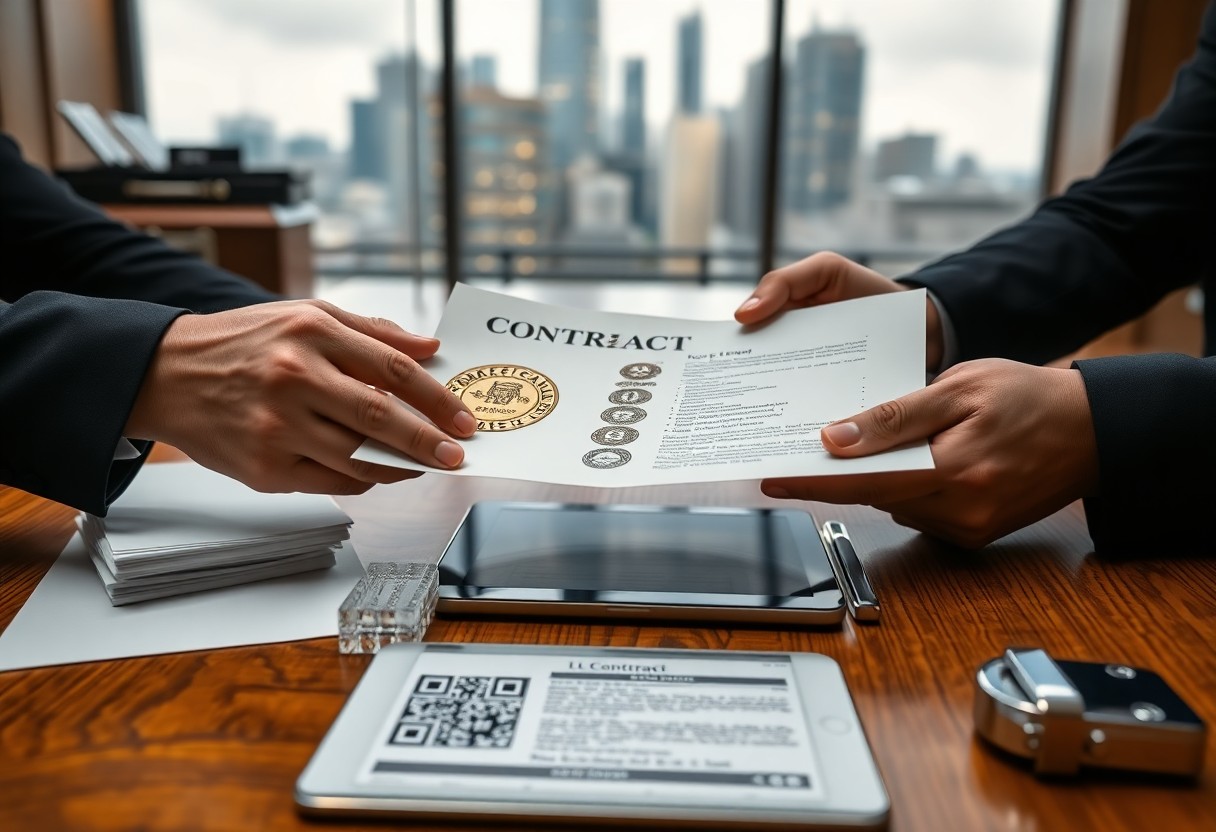
Verification is key in today’s society, where trust forms the foundation of our interactions. You rely on documents to confirm identities, agreements, and histories. Understanding this relationship will enhance your approach to personal and professional dealings, ensuring mutual confidence in every transaction.
The Illusion of the Handshake
The Decay of Oral Traditions
Trust used to thrive on spoken agreements, where a handshake symbolized commitment. Over time, this reliance on oral traditions has waned, replaced by a culture demanding written verification. Conversations that once held weight are now often dismissed unless documented, diluting the essence of genuine trust.
Your ability to connect through mere words has diminished. People increasingly resort to contracts and formalities, eroding the once-vibrant practice of oral agreements. This shift reflects a broader societal change, prioritizing legal backing over personal integrity.
Institutional Skepticism as a Standard
Trust in institutions has eroded, leading to a collective cynicism. When a promise lacks documentation, it can quickly dissolve into doubt. As skepticism becomes the norm, it extends beyond personal relationships into business and governance.
This skepticism serves as a defense mechanism in a world where deception is rampant. Those once inclined to believe in good faith transactions now demand paperwork to back every agreement. The need for validation has overshadowed the trust that used to exist.
Institutional skepticism manifests across various sectors, where paper trails are prioritized over personal convictions. Each signature and stamp transforms interactions into a spectacle of bureaucracy. This shift not only disrupts relationships but also creates barriers to trust, making interaction transactional rather than relational.
The Death of the Gentleman’s Agreement
Gentlemen’s agreements, once a hallmark of business done on trust, have faded into obscurity. When mutual respect was underpinned by a simple understanding, parties relied less on formal contracts. Today, any informal agreement risks exploitation, prompting a shift towards rigid documentation.
You may find this decline troubling. What was once a handshake between friends or partners now requires legalese to ensure compliance, effectively siphoning the humanity from business dealings.
The death of the gentleman’s agreement signifies a shift toward rigidity in human interactions. With trust replaced by formal procedures, relationships suffer, becoming bureaucratic transactions devoid of warmth and understanding. This transition underscores our deepening reliance on verification over faith in others.
A world built on trust but verified through documents
Defining Identity Through Ledger Entries
Every entry in a ledger carries a story about identity. It’s where your past intertwines with the present, defining not just who you are, but how you exist within a society. These written accounts hold your experiences, rights, and affiliations, marking your place in a collective narrative.
Through meticulous documentation, you establish a lineage that transcends generations. Each signature and transaction becomes a thread in the fabric of your identity. Missing entries can fragment this tapestry, leading to ambiguity in your social standing and legal rights.
The Weight of the Notarized Seal
The notarized seal embodies authority and authenticity. Each stamp signifies that your document has passed scrutiny, assuring others of its legitimacy. This seal acts as an invisible thread tethering you to a community that recognizes the significance of validated transactions.
In a world where trust is paramount, the notarized seal serves as a symbol of security. It transforms a simple agreement into a binding contract, providing peace of mind that your commitments are upheld. This assurance cultivates deeper relationships built on mutual recognition and respect.
This seal, observed by all, carries profound implications for personal and communal interactions. Owning documents adorned with a notarized stamp creates an atmosphere of confidence, reinforcing the belief that promises made will be honored. Such authenticity enhances trust, facilitating smoother interpersonal exchanges and legal compliance.
The Citizen as a Serial Number
Society often reduces individuality to a mere serial number. Your identity is linked to a numerical code, facilitating governmental and organizational processes. This method simplifies administrative tasks but risks dehumanizing the relationships that define you.
Transitioning from a name to a number raises questions about authenticity and belonging. Engaging with a bureaucracy can feel impersonal, yet these numbers serve a purpose: they streamline identification and access to resources. Recognizing the duality of this system can help reclaim your narrative within it.
Becoming a serial number might strip away your personal story, framing you instead as just another entity in a vast database. However, understanding this system allows you to navigate it effectively while maintaining a sense of identity beyond the digits. Balancing numerical identity with personal experience is necessary in a connected world.
Paper Walls and Iron Gates
Bureaucracy as the Guardian of Truth
Bureaucratic systems act as gatekeepers of information, ensuring that only verified facts enter the public domain. When I engage with these structures, I realize their role in maintaining order by documenting agreements and transactions meticulously. Documentation serves as proof, transforming trust into tangible evidence that can withstand scrutiny.
Your experience might reveal how bureaucracy prevents disputes by providing a clear trail of accountability. This foundation fosters trust, yet reliance on it can also create bottlenecks, as individuals navigate complex protocols to obtain the needed verification.
The Fragility of Unrecorded Agreements
Unwritten agreements hold a precarious position in any transactional context. I’ve seen firsthand how relying on verbal understandings can lead to confusion and conflict, often leaving vital details open to interpretation. Without documentation, trust may dissolve quickly, leaving parties vulnerable.
Trust without a written record often relies on memory, which can be unreliable. I’ve witnessed relationships deteriorate when unrecorded terms clash, illustrating that while trust is necessary, it must be supported by tangible evidence to maintain its integrity.
The Archive as a Tool of Control
Archives play a dual role in society; they preserve history while also wielding power. I understand that access to documents can dictate the narratives we accept as truth. When institutions control the information within these archives, they shape public perception and influence decisions.
Controlling what gets archived and how it is presented can manipulate the context in which events are understood. As you explore this concept, consider how archives can either empower individuals with knowledge or restrict them through selective information dissemination.
Digital Echoes of the Physical Stamp
Cryptographic Proof in a Post-Paper Era
In a digital world, the need for authenticity has never been more pressing. Cryptographic proof now serves as the bedrock of trust in transactions, validating identities and ensuring data integrity without reliance on traditional paper documentation. This technology replaces physical stamps, providing a secure, immutable ledger through blockchain and similar systems.
You may wonder how this process guarantees security. Cryptographic methods use complex algorithms and public-private key pairs, creating a fortress around sensitive information. These digital signatures verify that the data has not been altered, preserving its authenticity even in a fast-paced virtual environment.
Algorithmic Verification Systems
Algorithmic verification systems transform traditional methods of validation into dynamic processes. These systems assess and verify data in real time, ensuring trust in the digital exchange of information. By cross-referencing multiple sources and employing machine learning techniques, these algorithms can detect inconsistencies and fraudulent activities quickly.
Your transactions gain an extra layer of assurance through these advanced methodologies. I’ve found that such systems are not only efficient but remarkably accurate, making them indispensable for a world increasingly reliant on digital endorsements.
Algorithmic verification processes utilize intricate mathematical models to evaluate data structures for integrity. By combining artificial intelligence with existing databases, these systems maintain up-to-date information, allowing for immediate identification of discrepancies. You’ll discover that this proactive approach minimizes risks associated with identity theft and fraud, reaffirming trust in the digital ecosystem.
The Cost of Perpetual Scrutiny
Erosion of Spontaneous Cooperation
I have observed that trust once sparked immediate collaboration among individuals, but now, suspicion often dampens enthusiasm for mutual aid. When every action requires documentation, you might hesitate to help a neighbor or share resources, fearing repercussions or needing proof of your intentions.
The Burden of Proof on the Individual
Each of us now faces a growing expectation to justify our decisions and actions. Instead of spontaneity, you are likely spending time gathering evidence to support your choices, leaving little room for trust-based interactions. This shift imposes pressure, as you are often left standing alone to validate your credibility.
Anyone can feel overwhelmed by the demand for constant proof. Required documentation for the simplest arrangements complicates daily life, turning casual interactions into transactional exchanges that lack warmth. You may question whether it’s worth investing effort into building relationships at all.
The burden of proof on the individual not only complicates interactions but also breeds anxiety. You might find yourself second-guessing decisions you’ve made for years, stifling your instincts in favor of documentation. Every small exchange shifts to transactional inquiry, making human connection feel transactional rather than relational.
The Architecture of Modern Credibility
Certification as a Social Prerequisite
Certification serves as a fundamental expectation in many professions today. You might find that obtaining a specific credential is often non-negotiable for career advancement or even entry. This requirement acts as a societal contract, ensuring that you possess a standardized level of knowledge and skills, which in turn builds trust in your capabilities.
Your confidence in certified professionals often hinges on these established benchmarks. Many industries rely heavily on this validation to prevent fraud and incompetence, enforcing a norm where documentation equates to credibility. Without this layer of verification, the risks involved in various transactions could become significantly heightened.
The Paradox of Faith in Documentation
Distrust can sometimes color our perception of documents. While you rely on certifications to ascertain credibility, it’s necessary to recognize that these documents can also be manipulated or misrepresented. What happens when the very instruments designed to verify trust introduce uncertainty?
This paradox reveals an inherent tension between faith in validation and skepticism about authenticity. Although documentation is your safety net, it can fail to capture the essence of a person’s capabilities or ethics, thus complicating the notion of trust in a modern context.
This complexity often forces us to question what we genuinely trust. Are we placing our faith in the document itself or the system that issues it? As I navigate this intricate web, I realize that understanding the limitations of documentation doesn’t diminish its role but underscores the need for vigilance in evaluating both the certifiers and the certified. That balance between faith and scrutiny becomes necessary in building a trustworthy social fabric.
Conclusion
From above, I see a world where trust forms the foundation of our interactions. While I want to believe in the integrity of my relationships, I understand the necessity of backing that trust up with proper documentation. You must recognize that documents serve as the safety net, verifying agreements and ensuring accountability.
Your acceptance of this duality strengthens not just personal connections but also professional ones. In a society where trust and verification coexist, I can build lasting relationships with confidence, knowing that my words and actions are supported by tangible evidence.
Q: What does it mean for a world to be built on trust but verified through documents?
A: This concept emphasizes the importance of mutual trust among individuals and organizations, while also highlighting the need for formal documentation to validate that trust. Trust forms the foundation of relationships, but documents serve as proof to ensure accountability and authenticity.
Q: How do documents enhance trust in transactions?
A: Documents provide a clear record of agreements, commitments, and actions taken. This transparency reduces misunderstandings and disputes, allowing parties to rely on factual evidence when conflicts arise. Having documented proof reassures stakeholders about the integrity of the agreement.
Q: Can trust exist without documentation?
A: While trust can exist informally, it risks being unsubstantiated and prone to misunderstandings. Documentation offers a safeguard, ensuring that even in trust-based relationships, there is tangible evidence to support expectations and protect all parties involved.