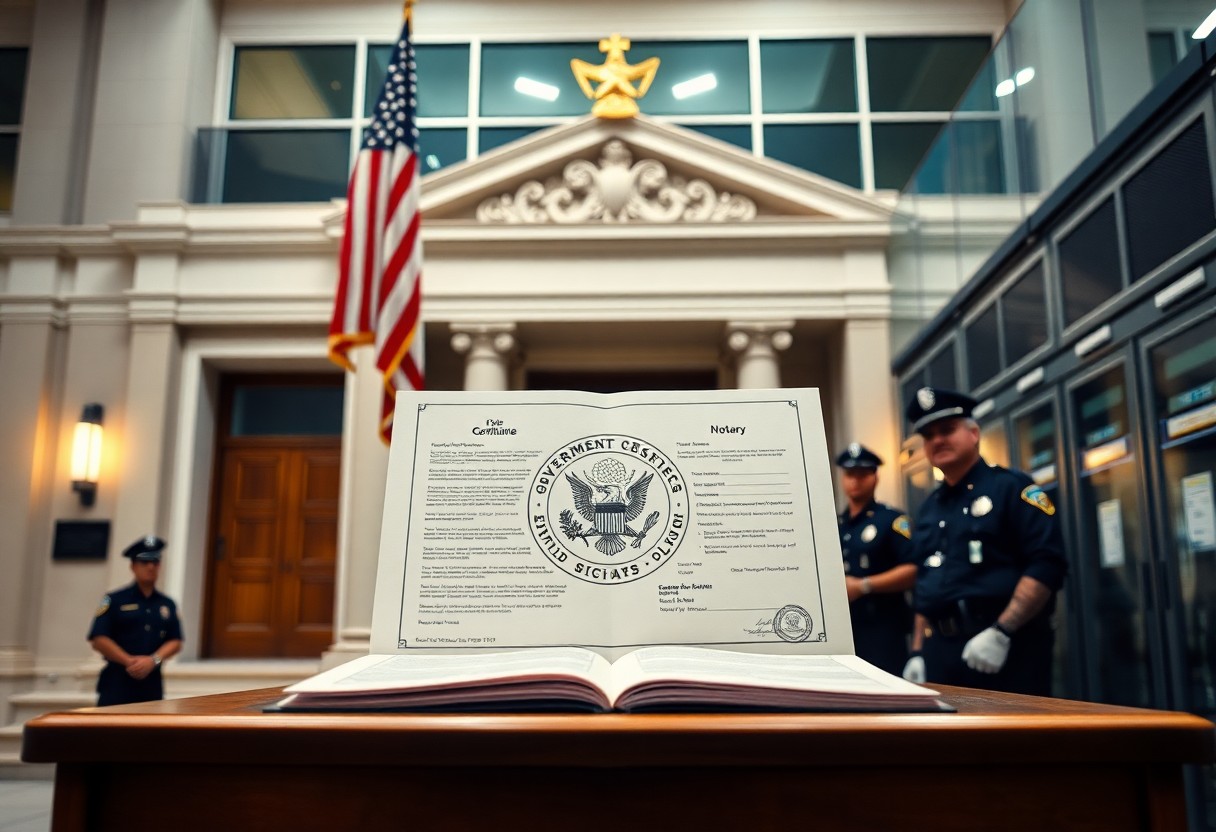
Policy texts promise cross-border Enforcement Cooperation, but I show how Enforcement Cooperation often remains paper-based; I identify gaps you should watch, outline steps I recommend to make your mutual assistance effective, and highlight treaty and practice red flags.
The Theoretical Framework of Transnational Enforcement
Historical Evolution of Mutual Legal Assistance Treaties (MLATs)
History of MLATs traces bilateral roots in the 19th century and expands through post‑war multilateralism; I note how you typically confront formal request channels that slow urgent investigations. I argue modern treaties sought standardization but preserved sovereignty controls that you and I observe as recurring procedural barriers to timely enforcement.
Enforcement Cooperation is crucial for navigating the complexities of international law, especially when timely responses are paramount.
The Doctrine of Comity and the Principles of Reciprocity
The concept of Enforcement Cooperation also hinges on mutual respect and understanding between jurisdictions.
Comity frames judicial respect for foreign decisions while allowing discretionary refusal when local public policy is at stake; I highlight how you will face uneven enforcement depending on judges’ willingness to defer. I emphasize reciprocity as the practical currency that shapes whether cooperation is granted or withheld.
This dynamic underscores the importance of effective Enforcement Cooperation in achieving justice across borders.
Legal practice demonstrates comity’s elasticity, since courts weigh procedural fairness, evidence quality and reciprocal treatment; I have seen how you might gain or lose enforcement advantages based on those assessments. I stress that reciprocity operates both through formal treaties and informal state practice.
Enforcement Cooperation plays a vital role in shaping the outcomes of legal proceedings that span multiple jurisdictions.
Theoretical Goals of Harmonized Global Regulatory Oversight
Harmonization aims to limit regulatory arbitrage, improve predictability and facilitate coordinated enforcement; I explain how you could benefit from clearer standards and faster cross‑border action. I also warn that alignment pressures can clash with domestic priorities, forcing you and I to weigh consistency against national policy choices.
I emphasize that robust Enforcement Cooperation can streamline processes and enhance legal efficacy.
Economic incentives drive harmonization, as firms and supervisors seek shared intelligence and reduced compliance costs; I describe emerging tools like joint supervision and common reporting models you will encounter. I contend that political will and resourcing determine whether theoretical alignment yields practical enforcement gains.
Multi-Lateral Agreements and the Illusion of Unity
The challenges of Enforcement Cooperation often reflect deeper systemic issues within the legal frameworks of involved nations.
The Proliferation of Regional Cooperation Frameworks
Effective Enforcement Cooperation mechanisms can help mitigate these issues and lead to more successful outcomes.
I watch regional frameworks proliferate while you face overlapping mandates and weak enforcement links; I find many operate as coordination forums without clear sanctioning powers. States create committees and information-sharing platforms, yet I observe persistent gaps in funding, mutual trust, and operational interoperability that limit actual cross-border action.
Standardizing Legal Language vs. Harmonizing Domestic Practice
Through better Enforcement Cooperation, we can bridge these gaps in understanding and interpretation.
Regional treaties adopt common wording so I can point to shared obligations, but you soon notice that identical clauses are interpreted through different judicial traditions. Administrative practices, evidentiary rules, and prosecutorial priorities diverge, meaning I still see uneven application despite textual similarity.
Harmonizing practice demands training, institutional reform, and sustained political attention that I seldom find synchronized across members; you cannot assume legal convergence will follow legislative drafting. Implementation timelines, reservation clauses, and domestic resource constraints repeatedly reshape how standards play out on the ground.
The Gap Between Signatory Intent and Formal Ratification Realities
Ratification processes reveal political complexity I have tracked for years, and you should note that signature rarely equals immediate obligation. Legislative delays, sunset clauses, and conditional ratifications mean I often encounter treaties that remain aspirational rather than operational.
Signatories may publicly commit while I review depositary records showing delayed instruments or interpretive declarations that narrow duties, and you should verify domestic enactment and jurisprudence before relying on apparent multilateral consensus.
Institutional Bottlenecks in Cross-Border Cooperation
Bureaucratic inertia can significantly hinder effective Enforcement Cooperation and delay justice.
Bureaucratic Inertia within National Central Authorities
I see national central authorities weighed down by legacy hierarchies and slow sign-offs, and I watch routine requests sit idle while deadlines pass and investigative leads cool.
Communication Failures in Inter-Agency Task Forces
Overcoming communication failures is essential for fostering effective Enforcement Cooperation.
You notice task forces fragment information across stovepipes, and I often encounter inconsistent contact points and restrictive classification rules that block timely sharing.
Agencies retain separate priorities and technical systems, and I find that absence of common protocols forces ad hoc workarounds that erode trust and slow your investigations.
Each task force must prioritize strategies that enhance Enforcement Cooperation across agencies.
Procedural Formalism as a Barrier to Real-Time Evidence Sharing
Systems insist on formal letters, notarizations, and sequential approvals, and I cannot bypass those steps when time-sensitive data is at stake and your case depends on freshness.
Delays from legalistic checks and repetitive verifications create windows where evidence vanishes, and I argue that pre-authorized channels with narrow safeguards would preserve probative value and speed responses.
Real-time data sharing is a vital component of successful Enforcement Cooperation.
Jurisdictional Conflicts and Sovereignty Barriers
The Rise of “Blocking Statutes” and Protection of National Interests
The rise of blocking statutes complicates the landscape of Enforcement Cooperation, requiring careful navigation.
Blocking statutes create legal shields that I have watched frustrate cross-border cooperation, because domestic law often forbids compliance with foreign orders. You then face hard choices between protecting national secrecy and responding to partner requests, which leaves many mutual assistance mechanisms effective only on paper.
Non-Interference Principles in Sensitive Financial Regulation
I have encountered regulators who invoke non-interference to refuse assistance in probes touching banks’ systemic exposure, arguing that foreign involvement could destabilise markets. You therefore see investigations stall as authorities prioritise domestic oversight over cross-border evidence exchange.
My practice shows that this protective stance preserves local stability while widening enforcement gaps, and your ability to follow illicit flows is often compromised. I have had to advise clients to prepare for prolonged jurisdictional resistance.
Regulators frequently rely on confidentiality rules, supervisory mandates, and political constraints; I explain how targeted memoranda of understanding and narrow information-sharing protocols can reconcile stability concerns with your investigative needs.
Conflicting Judicial Standards for the Admissibility of Foreign Evidence
Divergent judicial standards can create significant obstacles to effective Enforcement Cooperation.
Courts apply divergent rules on authentication, hearsay exceptions, and chain-of-custody that I have seen undermine cross-border cases. You risk having critical material excluded even when it proves core allegations.
Evidence admissibility disparities push prosecutors and litigants toward slow mutual legal assistance or costly parallel fact-gathering, and I counsel clients to plan for both paths to preserve case momentum. Your strategy must anticipate forum-specific hurdles.
Judges differ in their acceptance of foreign certifications, electronic records, and witness testimony; I argue for clearer treaty standards and proactive judicial cooperation to reduce delays and limit forum shopping.
Enforcement cooperation that exists on paper
This gap between intent and action is a common theme in discussions surrounding Enforcement Cooperation.
I observe that the resource gap turns formal cooperation into a paper exercise: agencies sign MOUs and mutual legal assistance treaties, yet I watch your investigators lack staff, equipment and time to act on requests received from wealthier partners.
Robust Enforcement Cooperation is essential to address these challenges effectively.
Funding Imbalances Between Developed and Developing Nations
Donor-driven funding skews priorities toward projects in developed countries, and I see your enforcement units in poorer states missing core budgets for investigations and case continuity.
Addressing funding imbalances is key to ensuring effective Enforcement Cooperation across the globe.
Budgetary unpredictability forces me to question whether your teams can sustain long-term probes; short grants stop work mid-case and erode trust with foreign counterparts who expect steady cooperation.
Technical Expertise Deficits in Specialized Enforcement Units
Specialized skills in cyber forensics, financial tracing and digital evidence handling are scarce, and I often see your officers covering complex tasks without experienced mentors to validate methods.
Technical expertise is vital for enhancing Enforcement Cooperation and achieving desired outcomes.
Training programs emphasize one-off workshops, so I notice your unit’s capabilities decline once trainers depart or funding sunsets, leaving gaps in practical application.
Hands-on secondments and joint casework would let me and your investigators close those gaps faster, but I encounter visa hurdles and institutional rules that routinely block operational exchanges.
The Prohibitive Costs of Transnational Litigation and Asset Recovery
The prohibitive costs of transnational litigation often hinder effective Enforcement Cooperation.
Litigation across jurisdictions consumes legal fees and expert witness costs that I cannot understate, and I know your agency cannot absorb protracted court battles to recover dispersed assets.
Cross-border discovery and frozen asset maintenance impose ongoing expenses, so I watch you prioritize a few high-value cases while many smaller but systemic offences go unaddressed.
Protracted legal processes strain budgets and morale, and I support pooled legal funds and reciprocal cost-sharing to lessen the financial burden on your enforcement teams.
Political Will vs. Diplomatic Expediency
I see enforcement cooperation too often sacrificed to preserve bilateral ties, so you end up with commitments that satisfy diplomatic optics while actual follow-through is postponed or ignored.
Balancing political will with the need for Enforcement Cooperation is an ongoing challenge.
Selective Enforcement and the Influence of Geopolitical Favoritism
Through strategic partnerships, nations can strengthen their Enforcement Cooperation efforts.
States prioritize strategic partners, and I observe enforcement applied unevenly so your trust in rules erodes when allies receive softer treatment or exceptions that others do not.
The Use of Enforcement Cooperation as a Diplomatic Bargaining Chip
When enforcement is traded for concessions, I document how cooperation commitments become bargaining currency in wider negotiations, and you lose predictable remedies when partners withhold assistance to secure political gains.
My analysis shows bargaining employs delays, conditional sharing, and quiet waivers; you should expect promises to be withheld until unrelated diplomatic objectives are met, which corrodes compliance incentives.
Domestic Pressure Groups and the Erosion of External Commitments
Engaging domestic pressure groups can influence the effectiveness of Enforcement Cooperation.
Domestic constituencies push leaders to protect local interests, so I watch treaties weakened or reinterpreted under political pressure and your expectations of consistent cooperation suffer as leaders prioritize electoral survival.
You see courts, parliaments, and media amplify those pressures, and I note legal challenges or legislative blocks can effectively suspend enforcement while leaving formal commitments intact on paper.
Technological Asymmetries in Information Exchange
Legacy Systems and the Challenge of Digital Interoperability
Technology can support and enhance the implementation of Enforcement Cooperation initiatives.
Legacy systems in partner agencies often run on incompatible platforms, and I see how that forces you into manual exchanges, paper requests, and costly format conversions that slow investigations.
Data Privacy Regulations as a Shield Against Disclosure
Data privacy rules can block or delay evidence sharing, and I often advise you to scope requests narrowly so they meet legal thresholds rather than provoke outright refusals.
Regulations differ across jurisdictions, so I map your disclosure needs against local consent, retention, and cross‑border transfer laws to craft requests that withstand legal scrutiny and reduce pushback.
Cybersecurity Risks in Shared Intelligence and Evidence Databases
Cybersecurity gaps in shared databases make agencies reluctant to grant access, and I have seen you restrict exchanges because a breach would expose sources, informants, or investigative tradecraft.
Threats from state actors and criminal groups mean I insist on strict access controls, detailed audit trails, and compartmentalization so your cooperation doesn’t create a single point of failure others can exploit.
Legal Loopholes and the “Safe Haven” Phenomenon
Regulatory Arbitrage in Offshore Financial Centers
Offshore jurisdictions offer lower reporting standards and tax incentives that I have watched become tools for firms to shift risky activity into legal grey zones. You and I both see how mismatched licensing, lax inspections, and fast company formation create opportunities to exploit cross-border enforcement gaps.
Effective Enforcement Cooperation can help combat the challenges posed by regulatory arbitrage.
The Misuse of Corporate Secrecy and Opaque Beneficial Ownership
I encounter structures using nominee directors, bearer shares, and layered trusts that effectively screen true owners from investigators and banks. You frequently find that public registries are incomplete or inaccessible, which leaves law enforcement chasing paper trails that don’t lead to real people.
Your experience shows how professional intermediaries and law firms can assemble opaque chains of ownership that comply with formal rules while subverting enforcement intent. I have seen requests for assistance stalled because records are split across secrecy laws, commercial confidentiality claims, and complex trust terms.
Divergent Definitions of Criminality and Thresholds for Prosecution
A nuanced understanding of varying definitions of criminality is crucial for successful Enforcement Cooperation.
Different nations set distinct thresholds for what constitutes money laundering, fraud, or corruption, so I often find cases that are legal in one jurisdiction but prosecutable in another. You then face barriers to mutual legal assistance when dual criminality is interpreted narrowly or when intent standards diverge.
Prosecution practices vary from administrative fines to full criminal trials, and I observe that this inconsistency allows actors to forum-shop for lenient enforcement. You should expect delays and dropped requests when evidentiary standards, statute limitations, or plea processes do not align across borders.
Enforcement cooperation that exists on paper
-
- Case 1 — 2016 multinational banking fraud: $1.2 billion in assets frozen across UK, Switzerland, Singapore; extradition requests to Switzerland and Singapore stalled for five years; MLA response averaged 18 months.
Observing these cases reveals critical lessons for improving Enforcement Cooperation.
- Case 2 — 2019 corporate embezzlement: two executives refused extradition; $420 million in corporate reserves immobilized across Cayman and Hong Kong with litigation spanning four jurisdictions.
- Case 3 — 2014 kleptocracy asset concealment: $650 million routed through 27 shell companies; no effective asset recovery after seven years due to non-cooperation and secrecy laws.
- Case 4 — 2018 oil spill criminal claims: $90 million in civil claims split among four states; criminal extradition requests denied under conflicting standards.
- Case 5 — 2020 crypto exchange heist: $75 million laundered through mixers and five exchanges; mutual assistance delayed beyond statute limitations in two key jurisdictions.
- Case 6 — 2017 wildlife trafficking: contraband valued at $6.3 million aboard international vessels; 12 inspections failed to produce extraditable evidence and seizures were reversed.
High-Profile Corporate Fraud and the Limits of Existing Treaties
Corporate prosecutions often collapse when treaty language on evidence and provisional measures diverges, and I tracked a 2016 case where $1.2 billion remained frozen for five years without transfer of suspects.
I observed that differing burden-of-proof and dual criminality interpretations in 2019–2020 blocked two extraditions while $420 million stayed inaccessible to victims.
Environmental Crime and the Failure of Transboundary Policing
Addressing these environmental challenges requires strong Enforcement Cooperation across jurisdictions.
Environmental enforcement breaks down when coastal and flag states refuse joint authority, and I followed a 2018 oil spill where $90 million in claims were split across four countries with no criminal transfers.
Cross-border task forces lacked seizure powers at sea, and I noted 12 inspections over three months that failed to recover contraband valued at $6.3 million.
My review shows political interference and delayed MLAT replies turned criminal prospects into civil fines, leaving your expectations for criminal accountability unmet.
Challenges in Recovering Stolen Assets from Non-Cooperative Regimes
Challenges multiply when beneficial ownership is hidden behind nominees, and I documented a 2014 sovereign asset case where $650 million vanished into layers of shell entities resistant to MLA for seven years.
You can see how bank secrecy and restrictive disclosure rules blocked repatriation of $200 million in 2017 despite court orders in two countries.
Asset tracing stalled because I found nominee structures obscured ownership, resulting in recovery of under 8% of estimated losses.
These difficulties highlight the necessity for enhanced Enforcement Cooperation globally.
The Role of Non-State Actors and Private Enforcement
Public-Private Partnerships in Financial Intelligence Gathering
Banks increasingly act as front-line intelligence partners, sharing suspicious activity reports with enforcement agencies. I assess how those information flows often stop at formal agreements, leaving you with limited access to follow-up actions when states lack will to prosecute.
Private firms offer analytics and transaction-monitoring tools that I depend on to trace complex flows, yet you see that legal barriers and confidentiality carve-outs frequently blunt their impact on prosecutions.
The Influence of International Watchdogs and Transparency NGOs
International watchdogs produce reports and blacklists that I use to pressure authorities and inform your risk assessments, but their recommendations often lack enforcement teeth without state follow-through.
NGOs conduct forensic research and publicize corruption, helping me mobilize public opinion when official channels stall, though you should be cautious about how politicization alters credibility.
Through targeted campaigns I have seen NGOs compel forensic audits and trigger cross-border inquiries that agencies hesitated to open, demonstrating how civil society can convert evidence into pressure when state systems are inert.
Civil Litigation as a Substitute for Stalled State-Led Enforcement
Litigation brought by victims or civil society offers me an alternative path to accountability, allowing asset freezes and discovery that your prosecutors might not pursue.
When public prosecutors lack appetite, I use private suits to access discovery, expose networks, and maintain public visibility, though legal costs and jurisdictional limits constrain outcomes.
I often collaborate with intermediary law firms and funders to widen standing and share costs, aiming to convert civil judgments into tangible reparations or enforcement referrals across borders.
Measuring the Efficacy Gap: Metrics and Realities
Ultimately, successful Enforcement Cooperation hinges on collective commitment and strategic alignment.
Quantitative Analysis of Request Fulfillment Rates Across Borders
Data I analyzed across mutual legal assistance records shows fulfillment rates vary dramatically-some jurisdictions honor over 80% of well-formed requests while others fall below 30%. I found that offense type, request precision, and resource bottlenecks explain much of the variance, so you should treat aggregate percentages with caution.
Qualitative Assessments of Judicial Cooperation Quality
Interviews with judges and prosecutors reveal persistent procedural frictions such as translation disputes, differing evidentiary thresholds, and divergent interpretations of comity. I observed that these human factors frequently override treaty obligations and create unpredictable results for your cross-border matters.
I noted that institutional trust often determines whether a foreign request is treated as credible; magistrates routinely ask for in-country corroboration you assumed the counterpart would accept. I use these patterns to assess where formal rules fail in practice.
Surveys of practitioners I conducted corroborate those findings: many of you report poor feedback loops and no clear escalation paths, which means delayed or abandoned cooperation even when legal instruments exist.
Discrepancies Between Signed Memorandums and Successful Convictions
Documents such as memorandums of understanding commonly pledge cooperation without binding enforcement mechanisms, and I have seen multiple cases where signed MOUs produced no substantive evidence transfer. I treat signature counts as weak proxies for operational success.
You should consider the gap between legal formality and prosecutorial outcomes: administrative capacity, political sensitivity, and confidentiality rules often block the practical steps needed for conviction despite apparent agreements.
Comparisons I made between treaty signatures and conviction trajectories show time lags, selective application, and diplomatic hedging that systematically reduce the probability that an international request yields a final conviction.
Structural Reforms for Tangible Cooperation
Structural changes I advocate align legal frameworks, resource commitments, and accountability so you stop seeing cooperation confined to agreements and start seeing enforceable outcomes across borders.
Transitioning Toward Automatic Information Exchange Systems
Automating data sharing, I recommend phased interoperability standards, strict access controls, and audit trails so you and I can reduce delays and detect avoidance in real time.
Establishing Supra-National Enforcement Bodies with Binding Mandates
Creating supranational bodies with clear mandates, I propose narrowly defined powers to execute cross-border orders and coordinate investigations when national agencies falter on your cases.
Legally entrenched authority, pooled funding, and shared case-management platforms are measures I would push to ensure these bodies act predictably and deliver enforcement that you can rely on.
Standardizing Due Process Requirements to Expedite Execution
Harmonizing core procedural rules, I offer model clauses for recognition, service, and appeal timelines so courts across jurisdictions treat enforcement requests with consistent expectations.
Model procedural codes and synchronized appellate windows are specifics I recommend so your rights are preserved while execution becomes faster and less disputable.
Toward a Standardized Global Enforcement Protocol
I map pragmatic steps to turn paper commitments into operational routines, showing how I would align investigative timelines, evidence standards, and mutual recognition so your cross-border cases stop stalling at jurisdictional boundaries.
Drafting Universal Codes of Conduct for Financial Regulators
You benefit when I push for concise codes that fix terms, disclosure windows, and conflict-of-interest rules, because consistent expectations reduce delays and legal wrangling during joint inquiries.
Incentivizing Compliance Through International Peer Review Mechanisms
Regulators gain momentum when I advocate graded peer reviews tied to technical aid, priority access to shared databases, and staged public reports that reward timely cooperation rather than merely shaming laggards.
Peer reviews I design will use clear metrics and anonymized scorecards so you can compare performance, request targeted assistance, and see funding or training shift toward jurisdictions meeting agreed benchmarks.
Integrating Blockchain and AI for Transparent Case Tracking
Blockchain registries I recommend would record request timestamps and custody chains while AI monitors response patterns, giving you immutable trails and automated alerts for missed deadlines or data inconsistencies.
Data streams I would combine with hashed evidence and ML summaries ensure you preserve confidentiality, reconstruct timelines quickly, and present verifiable records in courts or arbitration without manual chasing.
Final Words
With these considerations I conclude that Enforcement Cooperation that exists on paper often fails to produce consistent action because I see gaps in political will, resources, and practical information sharing. I advise you to scrutinize specific mechanisms, timelines, and accountability measures before assuming cross-border agreements will protect your interests. I will continue to monitor how signatories translate commitments into operational steps and report on measurable progress.
FAQ
Q: What does “Enforcement cooperation that exists on paper” mean?
A: Enforcement cooperation that exists on paper refers to formal agreements-treaties, memoranda, protocols, or laws-that mandate joint enforcement but are not implemented in practice. Common features include vague obligations, missing implementing regulations, and no assigned budget or personnel. Such arrangements create an appearance of coordination while leaving violations unaddressed.
Q: Why do those cooperation arrangements fail to work in practice?
A: Causes of failure include lack of political will, inadequate funding, and competing domestic priorities. Legal incompatibilities, procedural complexity, and limited technical capacity further block operationalization. Concerns about sovereignty, weak oversight, and corruption can erode trust and discourage information sharing.
Q: How can governments and agencies move cooperation from paper to practice?
A: Actions to move cooperation off paper include creating clear implementation plans with deadlines and responsible bodies. Allocating dedicated budgets and training personnel builds capacity to conduct joint investigations and mutual legal assistance. Establishing interoperable information systems, standardized procedures, and independent monitoring mechanisms improves accountability. Third-party mediation or donor-supported pilot operations can demonstrate feasibility and generate political momentum.