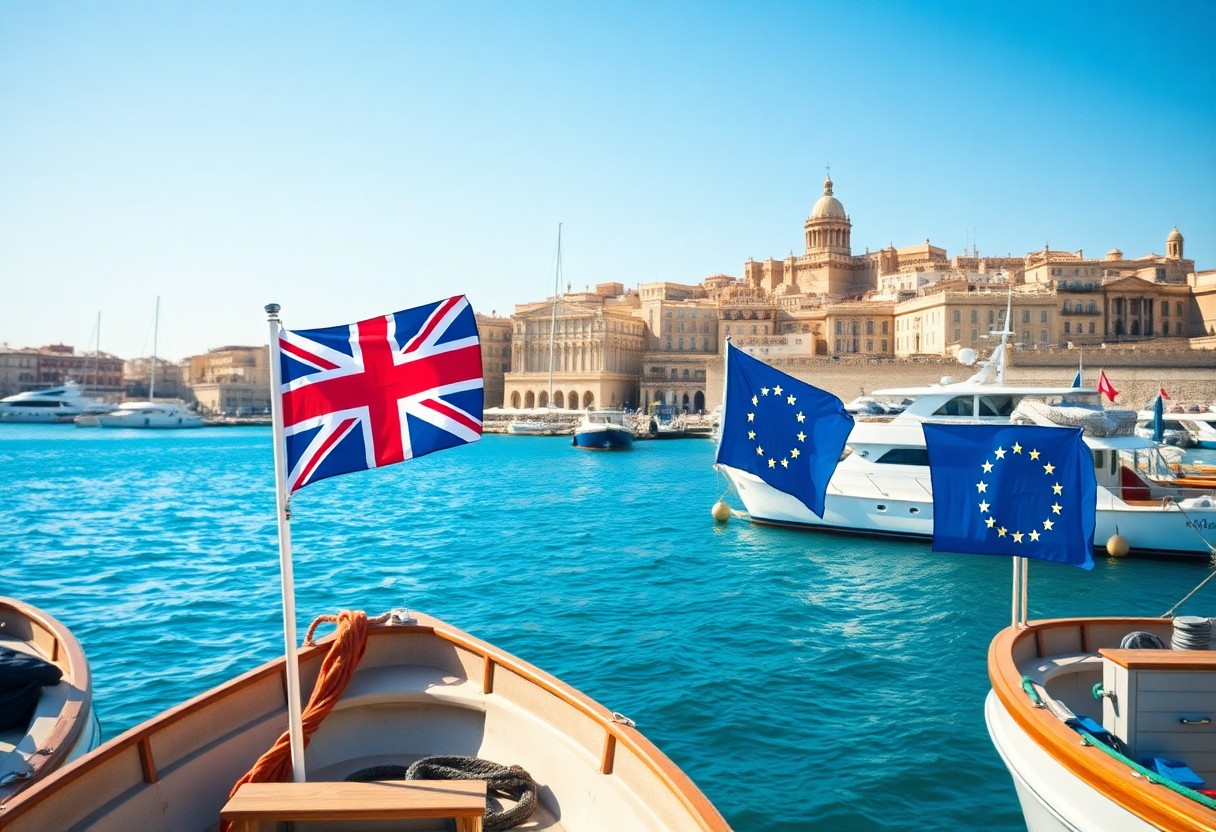
Many businesses and investors recognize Malta’s unique geographical and political position as a bridge between the UK and the EU. This strategic location not only facilitates access to diverse markets but also offers a favorable regulatory environment that enhances trade and economic growth. With its English-speaking workforce, robust financial services sector, and strong ties to both regions, Malta serves as an attractive hub for companies looking to navigate the complexities of post-Brexit dynamics while leveraging European opportunities.
Key Takeaways:
- Malta acts as a strategic gateway for businesses seeking access to both the European Union and the United Kingdom markets.
- The island’s favorable tax regime attracts foreign investment, benefiting companies operating in the region.
- Malta’s unique linguistic and cultural ties facilitate smoother communication and collaboration between UK and EU entities.
Historical Context of Malta’s Relationship with the UK and EU
Malta’s relationship with the UK and EU is deeply rooted in its colonial history and strategic location in the Mediterranean. After gaining independence from British colonial rule in 1964, Malta maintained close ties to the UK, especially in defense and trade. The island formally joined the European Union in 2004, allowing it to shift its alliances while still benefiting from its legacy ties, making it a bridge between the two political entities in terms of economic and diplomatic relations.
Colonial Legacy and EU Accession
The legacy of British colonialism influences Malta’s political landscape, legal systems, and economic strategies. Upon EU accession, Malta leveraged its historical connection to attract investments and foster trade relations with both the UK and the EU. This dual affiliation enables Malta to serve as a hub for businesses seeking to navigate regulatory frameworks across both regions, enhancing its competitive advantage in the global market.
Current Political Dynamics
Today, Malta navigates a complex political landscape influenced by its historical connections. The Labour Party dominates the current government, emphasizing pro-EU positions while retaining positive relations with the UK, particularly in sectors like finance and commerce. The island balances its EU obligations against the backdrop of UK departures, fostering initiatives that appeal to both markets, evidenced by its favorable regulatory environment and business-friendly policies.
Amid changing global dynamics, Malta actively engages in dialogues that reflect its unique positioning, focusing on leveraging its historical ties to attract foreign direct investment. Recent governmental strategies prioritize digital innovation and financial services, drawing in UK businesses while complying with EU regulations. By integrating the interests of both entities, Malta positions itself as a focal point for trade, strengthened by its robust legal framework and multilingual workforce, ensuring ongoing relevance in the evolving political climate.
Economic Advantages of Malta’s Location
Malta’s strategic position in the Mediterranean enhances its economic attractiveness, benefiting from trade routes that connect Europe, North Africa, and the Middle East. This geographical advantage has catalyzed its growth as a bustling hub for international commerce and investment. With a favorable regulatory environment and a pro-business atmosphere, Malta has established itself as a prime destination for companies looking to capitalize on its unique location and multicultural workforce.
Trade Opportunities
The integration of Malta into the EU’s single market allows seamless trade with member states while maintaining strong ties to the UK. Its efficient port facilities facilitate the rapid movement of goods, making it an appealing choice for exporters and importers alike. Furthermore, Malta enjoys various trade agreements that enhance its business relationships across continents, driving economic growth.
Financial Services Sector
Malta’s financial services sector is a key pillar of its economy, drawing firms with its robust regulatory framework and favorable tax regime. The jurisdiction is particularly attractive for fintech companies and services related to blockchain technology due to its innovative approach and supportive government policies.
Evidence of Malta’s appeal in the financial sector is reflected in its introduction of the Malta Financial Services Authority’s regulatory framework, which has successfully attracted over 300 companies in fintech alone. This includes major players like Binance, which have established operational bases in Malta. Additionally, its participation in the EU system provides local firms with substantial leverage in international markets, further solidifying Malta’s reputation as a global financial center. The ongoing development of financial technology regulations positions Malta at the forefront of industry growth, fostering innovation and attracting investment from around the world.
Malta as a Hub for International Business
Malta has emerged as a prominent hub for international business, leveraging its strategic location and favorable economic conditions. With a robust financial services sector, diverse industries, and a skilled workforce, the island attracts companies looking to establish a foothold in both the EU and the UK markets. The nation’s rapid development of technology and innovation sectors further enhances its appeal, positioning it as a competitive environment for global enterprises seeking growth opportunities.
Regulatory Framework
The regulatory framework in Malta is designed to facilitate business operations while ensuring compliance with EU standards. This structure includes transparent legal guidelines, efficient licensing processes, and a responsive government that supports foreign businesses. Malta’s regulations cover various sectors, including finance, gaming, and technology, promoting a safe and reliable environment for investors.
Attracting Foreign Investment
Malta has successfully positioned itself as a destination for foreign investment, evidenced by a steady influx of capital in recent years. Incentives such as tax rebates, investment grants, and streamlined processes for company registration make the island an attractive option for foreign businesses. Statistics indicate a significant rise in foreign direct investment, highlighting Malta’s ability to foster a supportive ecosystem for international ventures.
The Maltese government actively promotes foreign investment through initiatives like the Malta Enterprise, which provides tailored support for investors. Incentives such as reduced corporate tax rates, financial grants for startups, and supportive legislation attract sectors including fintech and blockchain. In 2021 alone, foreign investment in Malta reached over €1 billion, showcasing the island’s effectiveness in creating a dynamic business environment that appeals to various industries.
Challenges Faced by Malta
Malta’s unique position brings certain challenges, particularly in navigating the complexities of relations with both the UK and the EU. As a small nation, it strives to leverage economic benefits while ensuring political stability. Competition from larger nations can overshadow its interests, putting pressure on Malta to maintain a delicate balance to secure favorable agreements and support from both sides.
Balancing Interests of the UK and EU
Navigating the divergent interests of the UK and EU can be complicated for Malta. The country must strategically position itself to attract investments and maintain trade relationships, all while adhering to the regulatory frameworks imposed by both entities. Maintaining this equilibrium is crucial, as any misstep could result in losing out on potential economic boosters.
Domestic Political Considerations
Malta’s domestic political landscape significantly influences its ability to manage external relations. Political parties often have differing views on approaching the UK and EU, creating a consistent need for dialogue and compromise. Additionally, public sentiment around issues like immigration and taxation further complicates Malta’s political maneuvers.
Recent elections illustrate how domestic politics shape Malta’s foreign policy. The ruling party’s stance on EU regulations often contrasts with public opinion, reflecting broader concerns about sovereignty and immigration. For instance, the debate surrounding labor market policies tied to EU directives has sparked considerable discussion, potentially affecting public support for government initiatives aimed at fostering closer ties with the UK. As Malta navigates its place in global politics, aligning these domestic interests with its international relations becomes increasingly crucial for sustained economic growth.
Strategic Opportunities for Development
Malta’s geographical positioning not only facilitates access to European markets but also paves the way for innovative sectors to flourish. The archipelago’s status as a non-EU country with strong ties to the UK provides a unique dual-access advantage, attracting foreign investments. Leveraging its regulatory framework, Malta can develop niche markets in various sectors, including finance, gaming, and blockchain technology, thereby enhancing its economic landscape and creating sustainable growth pathways.
Innovation and Technology
The burgeoning innovation and technology scene in Malta is evident through government-backed initiatives fostering a startup ecosystem. With incentives for research and development, the country has successfully attracted tech companies and skilled professionals. Notable success stories include various blockchain firms and fintech startups that have established headquarters in Malta, leveraging its regulatory clarity and favorable business environment.
Tourism and Cultural Exchange
Tourism continues to be a foundational pillar of Malta’s economy, supported by its rich history and cultural heritage. With over 2.7 million tourists visiting annually, the country capitalizes on a blend of natural beauty and historic sites. The Maltese government promotes cultural exchange programs that engage tourists with local traditions, resulting in enhanced experiences and increased economic activity within regions outside urban centers.
Malta’s rich tapestry of cultural heritage includes ancient Megalithic temples, vibrant festivals, and unique culinary experiences that draw global visitors. Initiatives like the Valletta Cultural Capital and investments in heritage conservation highlight the government’s commitment to sustainable tourism. By promoting local artisans and traditional crafts during events such as the Malta Arts Festival, the country enhances not only visitor engagement but also strengthens its cultural identity and economic resilience. This blend of history and modernity positions Malta as a unique destination for travelers seeking both exploration and connection.
Future Outlook: Malta’s Role in Global Affairs
As Malta continues to enhance its diplomatic footprint, the island nation is poised to play an increasingly pivotal role in global affairs, bridging the gap between the UK and EU amidst evolving geopolitical landscapes. By actively engaging in international diplomacy and multilateral initiatives, Malta aims to position itself as a key player in addressing global challenges such as climate change, migration, and cybersecurity, fostering collaboration beyond its traditional European connections.
Navigating Geopolitical Changes
Malta’s geopolitical position necessitates a proactive approach in adapting to shifting alliances and trade relations. With ongoing developments such as Brexit and the rise of emerging markets, Malta must leverage its established ties while remaining agile to navigate new opportunities and challenges that arise within an increasingly multipolar world.
Strengthening Ties with Global Partners
To enhance its global influence, Malta focuses on strengthening relationships with key international partners while diversifying its diplomatic efforts. This includes forging strategic alliances with non-EU countries, participating in global forums, and promoting bilateral trade agreements, all aimed at amplifying Malta’s voice on the world stage.
Recent initiatives, such as Malta’s engagement with Asian markets and participation in the Commonwealth, underscore its commitment to expanding partnerships globally. The establishment of the Malta-Africa network exemplifies efforts to foster economic cooperation with African nations, facilitating investment opportunities and technological exchanges. With Malta’s proactive diplomacy, these strengthened ties enhance the island’s economic resilience and expand its role in shaping international policies that resonate with its strategic interests.
To wrap up
The strategic location of Malta, nestled between the UK and the EU, positions it as a unique conduit for trade and investment. This geographical advantage facilitates access to diverse markets and enhances collaboration across sectors, including finance, technology, and tourism. As both the EU and UK seek to strengthen economic ties post-Brexit, Malta’s dual alignment offers businesses an attractive base for operations, fostering innovation and allowing for comprehensive market outreach. The synergy created by its dual affiliations presents Malta as a pivotal player in the evolving European economic landscape.
FAQ
Q: How does Malta’s location benefit businesses between the UK and EU?
A: Malta’s strategic position in the Mediterranean provides businesses with easy access to both UK and EU markets, facilitating efficient trade and logistics.
Q: What role does Malta play in post-Brexit trade relations?
A: Malta acts as a gateway for UK companies seeking to access EU markets post-Brexit, enabling smooth distribution and regulatory compliance.
Q: How does Malta’s regulatory framework attract foreign investment?
A: Malta offers a favorable regulatory environment with competitive tax incentives and EU membership, making it an attractive destination for foreign investors.
Q: In what ways does Malta’s workforce support international businesses?
A: Malta has a skilled, multilingual workforce capable of catering to diverse international clients, enhancing service delivery and customer relations for businesses.
Q: Can Malta’s dual status as an EU member and Commonwealth nation create specific advantages?
A: Yes, Malta’s dual status allows it to capitalize on ties with both the EU and Commonwealth countries, enabling enhanced trade relations and access to emerging markets.